Nordic combined has been on the Olympic program since the first Winter Games, in Chamonix in 1924. In Milan and Cortina, the sport stands out - but not in a positive way.
All other sports now have competitions for both men and women, but not Nordic combined.
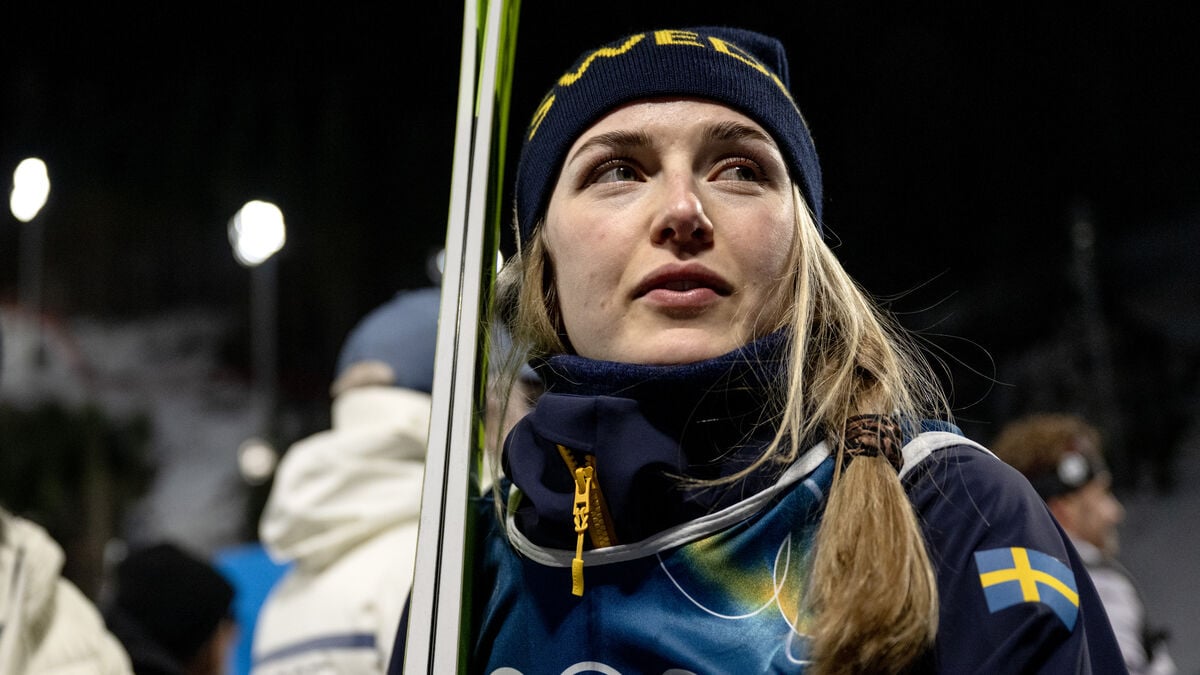
"I think it's very sad. They can take part in all other competitions, like the World Cup. It's only the Olympics where they can't take part," says Swedish ski jumper Frida Westman.
Close to Swedish medal
Ski jumping took another step towards gender equality with this year's Olympics. For the first time, women were allowed to compete on a large hill, and Westman made a splash there when she finished fourth on Sunday evening, just a few points shy of a bronze medal.
The joy of competing at the Olympics is great, says the 25-year-old Swede. But so is the disappointment that one of her friends is forced to stay home.
In November, Annika Malacinski, an American Nordic combined skier, wrote a long post on Instagram in which she stated:
"Hi, my name is Annika and my Olympic dream has been taken away from me. Not because of my achievements but because of my gender."
"We've become pretty close friends, so it feels very sad. I'm here but she's not allowed to be here," says Frida Westman, who, like Malacinski, lives and trains in Trondheim, Norway.
“Completely indefensible”
Westman is not the only one who has reacted to the International Olympic Committee's (IOC) reluctance to add women's Nordic combined events. Malacinski's compatriot, Olympic cross-country skier Zak Ketterson, was not lenient in his criticism when the issue was raised earlier in the Games:
"It feels completely indefensible on the part of the IOC," said Ketterson.
"You can see how much they spend on getting Snoop Dogg and other weird stuff here, but they can't afford to spend a little money to include women in Nordic combined. I can't understand it."
The IOC's response is that Nordic combined is more likely to be removed from the Olympics altogether. The justification is that there are very few countries competing and viewership figures are declining.
The 2026 Olympics will serve as an evaluation of the sport's Olympic future, the IOC has announced. That doesn't bode well, says Frida Westman.
"The women are an important part of this. Because if they don't bring in Nordic combined for women, they'll eventually take away the men. And that's not great. But I hope they see everyone who's really fighting for it, and bring it in for the next Olympics."