When the US and Israel started the war against Iran, much of the response came in the form of the Shahed-136, a type of drone developed by Iran and which has been widely used by Russia in Ukraine for several years.
Drones are relatively slow and simple compared to the US's expensive robots and other cutting-edge technology. But that's precisely why they can be easily mass-produced, and sent out in hundreds to overwhelm enemy defenses.
Militarily, it signals a shift back to a warfare where quantity may be at least as important as quality.
It's not just a top-performance duel; volume or mass has come back, says Andreas Hörnedal, who is research leader at the Swedish Defence Research Institute (FOI).
It has taken a while for this to sink in with Western militaries.
Own solutions
For Ukraine, it has been a bloody everyday life for several years. "With a knife to the throat," as Hörnedal puts it, they have developed their own solutions. A defense that mimics the attack; relatively simple things that can be quickly manufactured in large quantities.
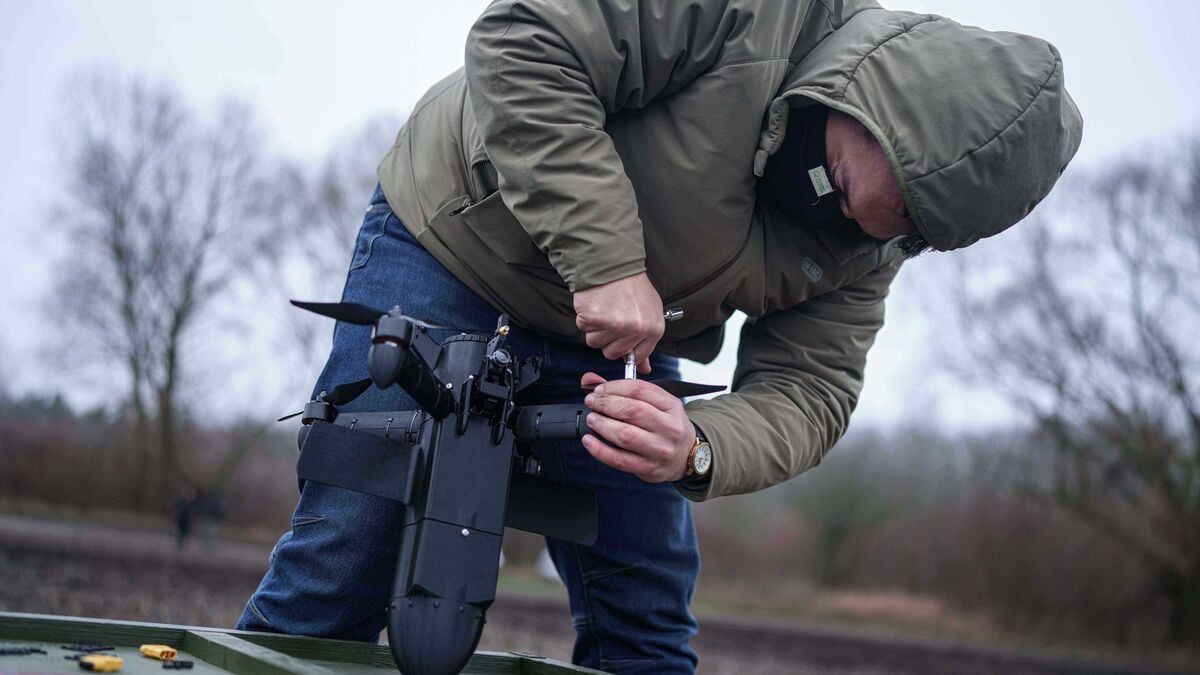
They have a propeller-driven air-defense drone with an electric motor that has enough speed and maneuverability to take down Shahed drones.
It may sound easy, but apparently even the United States, the world's largest defense force, now needs advice on how to do it.
"They do this every night," says Hörnedal about Ukraine's military.
You should integrate early warning, measure how many there are. And then somehow apportion your defense so that you don't overreact to every attack, so that you defend yourself in an effective but still resource-efficient way.
Getting all this to play together is really not the easiest thing.
Urgent for the USA
Countries like Sweden, Denmark, and other European NATO members have also begun working with Kyiv to learn from Ukraine. The difference is that the US is now doing so in an acute combat situation.
When asked whether the US and President Donald Trump should have been better prepared, Hörnedal replies:
There is a certain risk that the top-level leadership didn't really understand it, but simply gave orders.
But he adds that even within the armed forces there can be difficulty in adapting.
The military world can sometimes be plagued by a certain, how should I say, inertia in changing. And this is pretty much about a mental shift that needs to be made.