The study, published in the Proceedings of the Royal Society, is based on comparisons of the anatomy of 176 species of predatory dinosaurs from the Jurassic and Cretaceous periods.
While the majority of predatory dinosaurs were small or medium-sized, and remained so, another clear trend could be seen in three families in particular: Abelisauridae, Carcharodontosauridae and Tyrannosauridae.
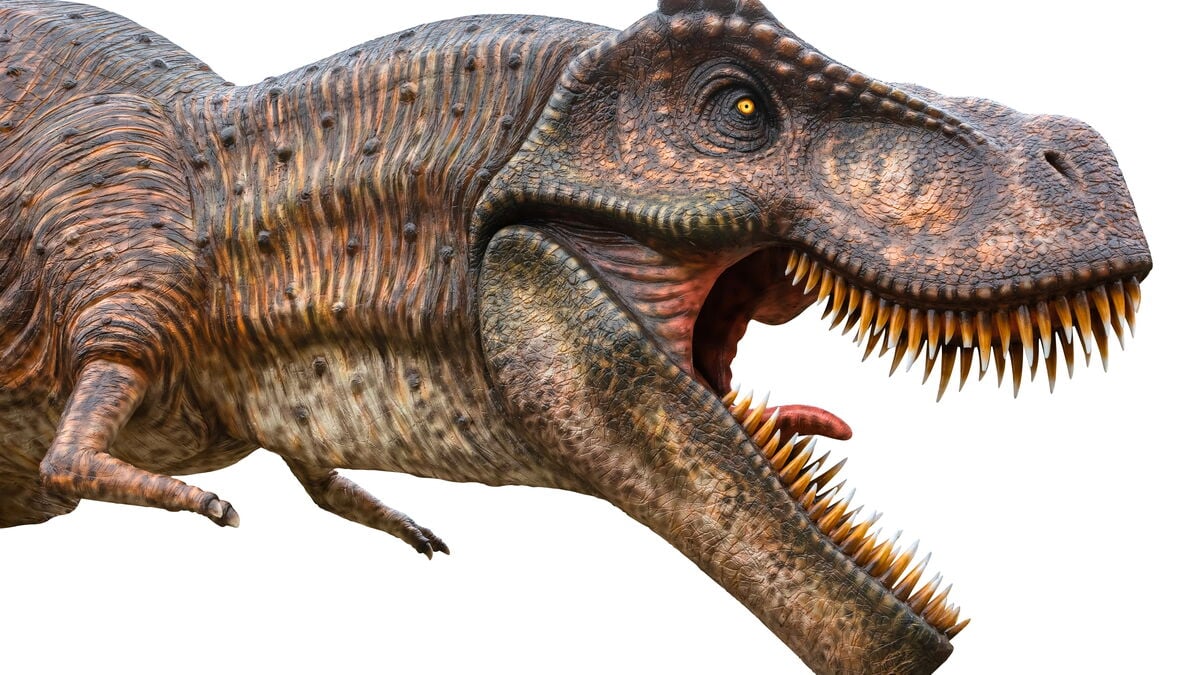
In all three cases, the species became larger over time, with increasingly massive skulls and jaws - and at the same time smaller arms, which by all accounts no longer served any function.
Massive jaws
It all culminated with Tyrannosaurus rex from the late Cretaceous period. The colossal beast weighed 8.5 tons - as much as two Indian elephants - and had extremely powerful jaws. But other giants from the Cretaceous period, like Giganotosaurus, also had enormous heads with extremely powerful jaws. All had almost ridiculously small arms.
This distinguishes them from a number of medium-sized predatory dinosaurs, such as the well-known Allosaurus, which retained their arms and hands and used them to grab prey.
Big changes
Scientists believe that the trend towards massive heads was driven by a shift towards increasingly larger prey. During the Jurassic and Cretaceous, there were a number of large herbivorous dinosaurs that were likely difficult for carnivorous dinosaurs to catch and kill. Both strength and heavy armament were required to take down such prey. This led to increasing gigantism among predatory dinosaurs and increasingly powerful jaws.
Instead of grabbing prey with clawed arms, they switched to a hunting method where one or more massive bites quickly tore and bled them to death. In the process, their arms became redundant. There was no point in wasting energy building limbs that were no longer needed.
Predatory dinosaurs, theropods, are a diverse suborder of dinosaurs that arose during the Triassic period 233 million years ago. With the exception of birds, which descended from small predatory dinosaurs and are de facto flying dinosaurs, all other species died out in the great catastrophe when an asteroid collided with the Earth 66 million years ago.
Well-known smaller predatory dinosaurs include Velociraptor and Deinonychus, but it is mainly the gigantic species, such as Tyrannosaurus, that have achieved fame. They were all enormously heavy, weighing eight tons or more, and had massive heads and extremely large teeth.
Source: Proceedings of the Royal Society.