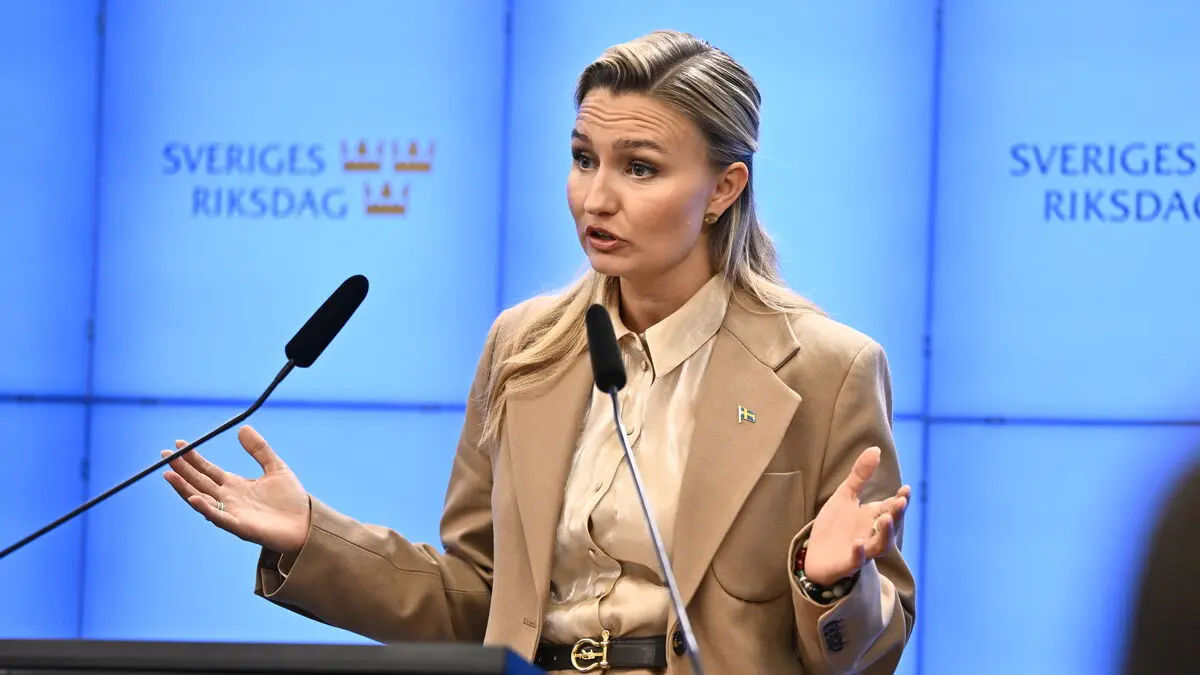
"You must have been convicted of a crime, and the crime must be so serious that it carries at least two years in prison on the penalty scale," says Rebecca Heinemann, chamber secretary at the Chamber Office.
The twists and turns surrounding the case of SD MP Katja Nyberg raise questions about when a member of parliament can remain in parliament, despite being suspected of a crime. Nyberg is being investigated for drunk driving after being stopped by police on Värmdö in recent days. She has had her driver's license revoked after test results showed that she had drugs in her blood.
Katja Nyberg denies any wrongdoing, and no charges have yet been filed. She has said she will leave the SD, but keep her seat in parliament.
Court decides
The rules state that a member of parliament can be removed from office if, according to the parliamentary administration, he or she has been shown to be clearly unfit for office because of a crime. A court decides, and the crime must therefore be serious. This means that crimes such as drunk driving, minor drug offences and minor assault do not qualify.
The demand for the member to resign can be raised either by the prosecutor or by the court, and this takes place within the framework of the criminal proceedings themselves.
"It is then the court that decides. If that happens, we will receive a notification from the court that the member has been removed from his or her position," says Rebecca Heinemann.
“Very rare”
According to the Riksdag administration, a member of parliament has only been removed in this way on two occasions.
In 1996, a Moderate lost his seat in parliament after being convicted of gross fraud. And in 2001, another Moderate was forced to leave his seat after being convicted of assault and molestation, among other things.
"So it's very rare," says Rebecca Heinemann.
However, there may also be cases where members of parliament suspected of crimes have chosen to leave their seats voluntarily, without having to go as far as court proceedings. The parliamentary administration has no statistics or overview of this.