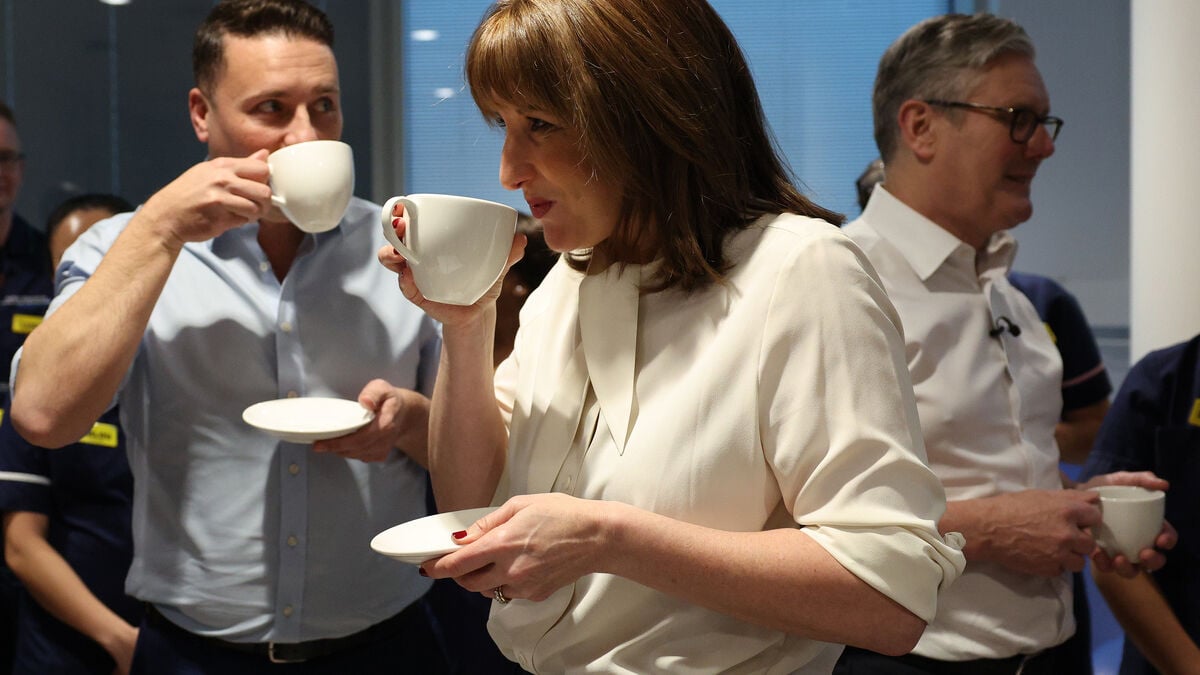
In his nearly 1,000-word resignation letter on Thursday, Health Secretary Wes Streeting wrote that the party lacks leadership and that Starmer must resign. But he did not explicitly say he intends to challenge Starmer.
According to several media outlets, sources close to the former health minister state that he has no intention of doing so right now.
"It wouldn't be right for the party," a source tells Sky News - words similar to those the BBC received from within Streeting's camp.
Elections not until the fall?
According to MP Alan Gemmell, Streeting has the support of the necessary 20 percent of Labour's members of the House of Commons - currently 81 MPs - to trigger a leadership election. But Starmer remains relatively popular within Labour's right-wing faction, according to The Times, and a challenger is far from a sure victory.
According to The Times, Streeting wants to postpone the leadership election until the autumn, when a different politician could also run. He is not the only candidate, and apparently not the most popular.
Instead, Andy Burnham is being touted as leader. He is the mayor of Manchester and is not a member of parliament - a formal requirement to become leader.
He could, however, take the step to Westminster via a by-election after MP Josh Simons gave up his seat in Makerfield outside Manchester to make way for Burnham. But a win there is not certain for Burnham. Simons won in 2024 only by a narrow margin ahead of the right-wing populist Reform candidate.
Slow procedure
Another left-wing candidate is waiting in the wings, Angela Rayner, who was Starmer's deputy leader until last year. She is ready to run, the BBC reports, but she is also close to Burnham and, according to the broadcaster's earlier reporting, could give up a candidacy in favor of him.
However, the election process is slow and the timeframe is set by a committee, the NEC. Any election could last all the way to the party congress in September, the BBC reports.
Labour lacks a tradition of leadership challenges. There have only been four internal elections in the party's 126-year history, with the incumbent winning on each occasion.
Simply losing a vote of no confidence within the party parliamentary group is not enough to trigger an election.
Instead, a challenger - who must sit in the House of Commons - must receive the support of 20 percent of the party’s members of the House of Commons to demand a vote, which currently means the support of 81 of Labour’s 403 MPs. The challenger also needs the support of five percent in one of Labour’s constituency parties or party-affiliated groups, such as the party’s women’s wing or youth wing.
When this happens, the party's executive committee (NEC) will set the ball rolling for an election. Other parliamentarians who receive the support of 81 members will then also be allowed to stand. The party leader automatically becomes a candidate, without having to hunt for votes.
There are no rules about how quickly the NEC must act, or when the election should be held, but the committee is said to allow other candidates to gather enough support before an election is called.
When everything is ready for the election, all Labour members who have paid membership fees for at least six months can vote by ranking the candidates.
Only three party leaders have been challenged for the post and forced to go through a leadership election. Hugh Gaitskell (1960 and 1961), Neil Kinnock (1988) and most recently Jeremy Corbyn (2016) all survived and were re-elected by the party.
Neither of them was prime minister at the time, and if Starmer is challenged, it will be a historic event.
Source: BBC, The Times