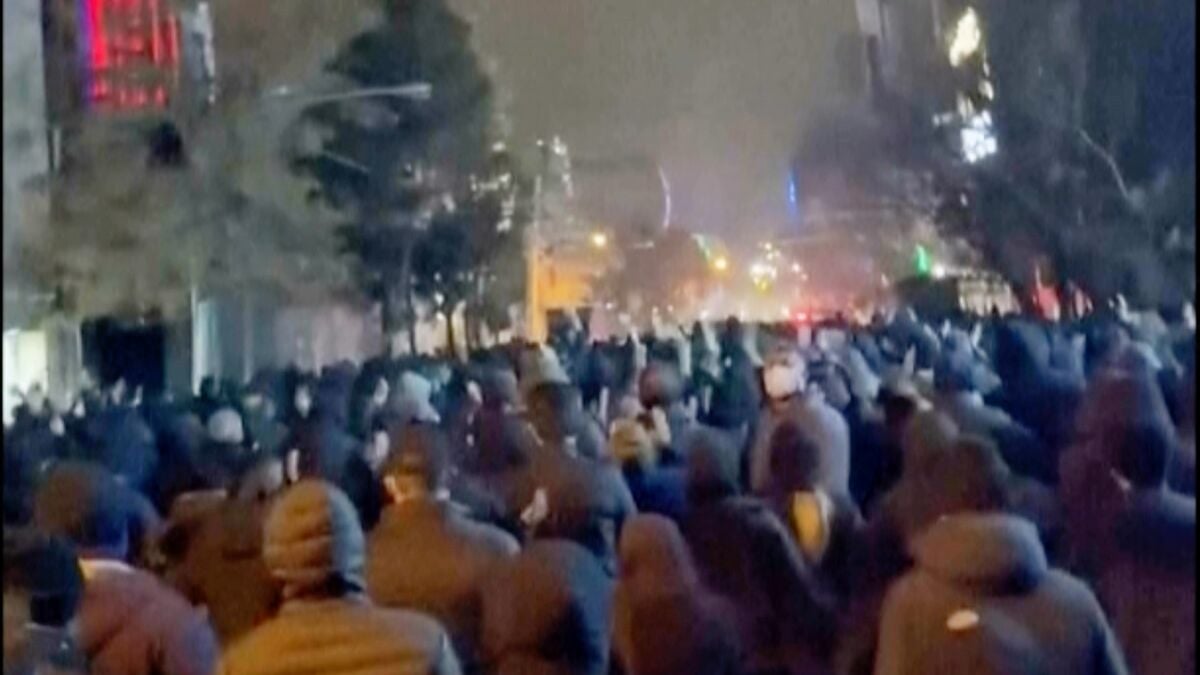
The latest figures for deaths and arrests come from the US-based Human Rights Activists News Agency (HRANA). HRANA said 490 protesters and 48 security forces had been killed.
That is significantly higher than the death toll reported earlier on Sunday by Norway-based Iran Human Rights (IHR). However, IHR stated that the real death toll could be over 2,000.
“Reports indicate widespread killings of protesters in various parts of Iran, but mainly in Tehran,” IHR wrote, citing sources in the country.
Data from hospitals - reported by the BBC and US-based Center for Human Rights in Iran (CHRI), among others - indicate that hospitals in Mashhad and Karaj, as well as in the capital Tehran, are unable to treat many seriously injured protesters. Data are lacking from other parts of the country.
In addition to the dead, HRANA states that a total of over 10,600 people were arrested during the protests.
On Sunday, residents of Iran remained cut off from the outside world after internet and telephone traffic was shut down on Thursday afternoon, according to international organization Netblocks.
Hospitals overcrowded
Meanwhile, signals from the totalitarian regime in Tehran are mixed. President Masoud Pezeshkian tried to strike a conciliatory tone on Sunday when he expressed condolences for those killed:
"Let's sit down and solve the problems," he said, according to Bloomberg news agency.
But there is nothing to indicate that the regime is prepared to negotiate.
Mohammad Movahedi Azad, who is roughly equivalent to the attorney general in Iran, issued a warning on Saturday that protests are being compared to the most serious crime in Iran, being an "enemy of God", which can lead to the death penalty.
Iran's parliament met on Sunday to discuss the protests, with members reportedly chanting slogans in support of the government and against the United States.
“The United States is ready to help”
US President Donald Trump has threatened to “hit very hard” if protesters are killed in Iran. On Saturday, he also extended a hand to the protest movement.
“Iran is facing freedom, possibly like never before. The United States is ready to help,” he wrote in a post on Truth Social.
Corrected: In an earlier version of the text, Mohammad Movahedi Azad was given the wrong title.
The demonstrations in Iran began in late December when shopkeepers took to the streets to express their dissatisfaction with skyrocketing costs and falling living standards. Since then, other protests have grown and now encompass the entire country.
The discontent is rooted in the abysmal economy with skyrocketing inflation and a currency, the rial, that has collapsed. But like the wave of protests after the death of the young Mahsa Zhina Amini at the hands of the so-called morality police in 2022, the anger is directed at the regime at large.