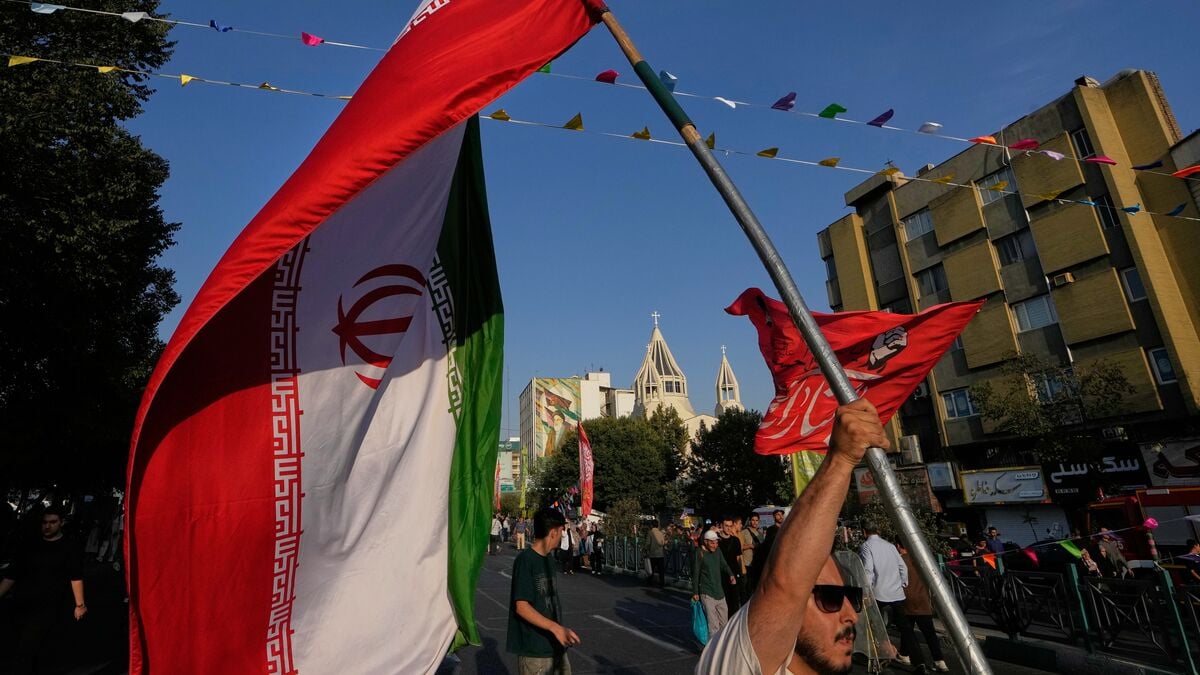
The Strait of Hormuz is one of the world's most important shipping lanes for oil and fossil gas, which characterizes the conflict between the United States and Iran.
This weekend, the US struck two missile launchers on the island of Larak, where Iran, according to the US, was in the process of launching mines into the strait. Iran responded with its own missile attacks targeting US bases in Jordan and an air base in the United Arab Emirates, but it is unclear whether the projectiles reached their targets.
After more than six months, the war continues, which the US thought would be over in a few weeks.
Iran is trying to use the Strait of Hormuz and the trade disruptions there to drag out this conflict and tire out the US, says Erika Holmquist, analyst and research leader at the Swedish National Defense Research Institute (FOI).
On the other hand, the United States hopes that the very tough economic pressure on Iran will soon force it to the negotiating table.
Iran knows very well
A closed strait means that oil prices are pushed up - a domestic political powder keg in the US.
That way, Iran could get a more favorable long-term peace agreement with sanctions relief and continued control over the strait.
Iran also knows very well that this war is very unpopular in the United States, says Holmquist.
Before the war, about 20 million barrels a day passed through the Strait of Hormuz. Iran claims the strait is closed, but the US military has protected oil ships passing through the southern part of the strait.
Too early to say
American sources estimated a couple of weeks ago, according to Axios, that it was ten million barrels per day, analysts have talked about at least six to seven million.
Over the past two weeks, we have seen that the US seems to have succeeded in creating the conditions for some traffic to pass through.
Erika Holmquist says it is too early to say whether it is enough to force Iran to talk.
But if they lose Hormuz as a bargaining chip, then I think they will be more inclined to negotiate.
It is unclear how the attacks, blockades and tightened sanctions of recent months have affected Iran.
Iran's big Achilles heel is its internal situation. The question is how much economic pressure can they withstand? How bad an economy can they handle and what is their military capacity like? None of these questions are particularly easy to answer.