Estonian Prime Minister Kaja Kallas is hopeful after signals this weekend that Hungary's outgoing Prime Minister Viktor Orbán may lift his veto against the multi-billion-euro loan, perhaps as early as Wednesday's regular ambassadors' meeting in Brussels.
"I expect a positive decision on the 90 billion-euro loan within the next 24 hours," Kallas said at the press conference after Tuesday's EU foreign ministers' meeting in Luxembourg.
Mid-May
Ukrainian President Volodymyr Zelenskyy announced on Tuesday afternoon that Ukrainian experts had repaired the war-damaged Druzhba pipeline - which transports Russian oil through Ukraine to Hungary - and that it could now be put back into operation. It is a key piece of the puzzle for the loan to be released.
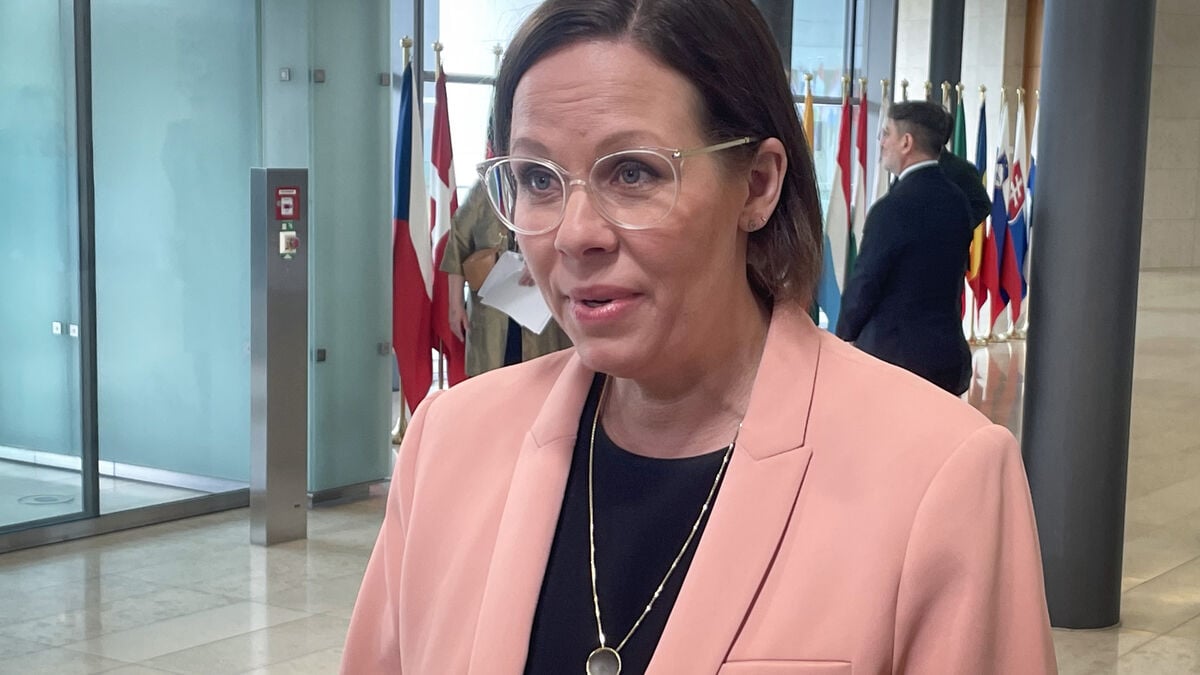
Sweden's Foreign Minister Maria Malmer Stenergard (M) is hopeful but expects that Ukraine will have to wait a few more weeks for the money.
"Now we are going to carry out tests on the Druzhba pipeline, and we hope they go well so we can then receive a positive response from Hungary, perhaps even earlier than we had expected, and thus be able to pay out as early as mid-May," Malmer Stenergard said in Luxembourg.
The European Commission is aiming for "as soon as possible within the second quarter," according to press spokesman Balazs Ujvari.
One hundred packages
The opening around the billion-euro loan has raised hopes that Hungary will also stop opposing the EU's 20th sanctions package against Russia.
Malmer Stenergard has been disappointed for a long time that the package has been in a mothballed bag since February - even though she thinks the package is too weak.
"It is not comprehensive enough. That is why we must also start work on the 21st package. I want, as I said before, to see a hundred sanctions packages against Russia. We must continue to limit them," the foreign minister said in Luxembourg.