Bright pebble beaches on the Black Sea are usually packed with holidaymakers at this time of year. This has been the case in recent summers - in stark contrast to the raging war.
But now there are clearly fewer crowds venturing there in the summer heat. Hotel bookings plummeted at the end of May, many camps have been booked out and popular summer camps for thousands of children have been cancelled.
Ukraine has escalated drone attacks, hit electricity supplies and oil depots harder, and effectively begun to isolate the annexed peninsula from the Russian mainland.
In the evenings, large parts of cities and communities are without lights. At night, air raid sirens go off, followed by explosions. A state of emergency is in force.
“The roads are empty”
Many war analysts liken it to a full-scale siege. Ukraine has attacked roads, bridges, railways and ships, cutting off transport and travel to and from Russia.
Due to the power outages, food in stores is going rancid and basic goods have been rationed, anonymous Crimean residents tell Vazjnyje Istorii, an independent news site. The water in the taps comes and goes.
As soon as the sun sets, the city becomes a shadow of itself. Shops and cafes are closed, there are no street lights, no lights in the windows... The roads are empty and only a few cars or ambulances drive by, says one of the site's sources in Sevastopol.
Many say they have been fired or that salary payments have been postponed, writes the website Agentstvo.
With the attacks, Ukraine has also struck Russia's military supply lines to invasion forces on the front in southern Ukraine.
Admits some shortcomings
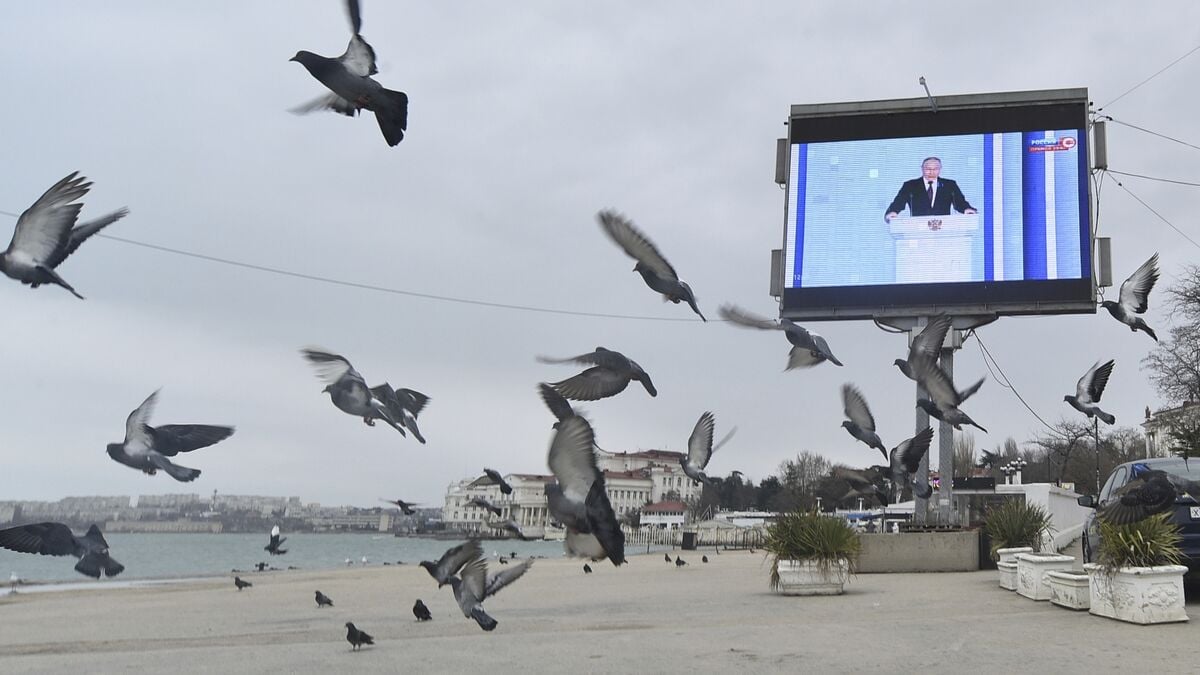
Russian President Vladimir Putin has finally decided to comment on the situation. The Kremlin has posted a video clip in which he is asked about Crimea by a propaganda reporter. He describes the counterattacks as “terrorist attacks,” but admits that they are causing problems.
"We see some shortcomings at the moment, but I can tell you here and now that they are not critical. Here are some challenges that we have to deal with," Putin said.
He looks past the reporter, straight into the camera, and says that the enemy only wants to sow doubt among Russians. It does not affect the situation at the front, Putin insists.
And prominent military analysts largely agree that a major Ukrainian offensive in Crimea is unlikely to be imminent. Some, however, see it as a kind of offensive that has already begun - one whose goal is to slowly but surely make it impossible for Russia to rule Crimea.
Facts: Crimean Peninsula
Crimea is a peninsula in the northern Black Sea. It became part of Ukraine upon the country's independence in 1991, but has been occupied by Russia since 2014.
It is connected to mainland Ukraine by a narrow isthmus in the north and to Russia by a bridge across the Kerch Strait in the east. In terms of surface area, Crimea is slightly smaller than Småland.
Its strategic location has made it desirable for many conquerors: from the Greeks, Romans and Ottomans to the Russian Tsarist Empire and its successors.
The largest cities are Simferopol, Sevastopol and Yevpatoriya. Sevastopol is the base of the Russian Black Sea Fleet.
When Russia first invaded Ukraine in 2014, Russian forces in unmarked uniforms entered Crimea and took over the government. The occupying power held an internationally condemned sham referendum in support of Crimea becoming part of Russia.
The population is predominantly Russian-speaking, with ethnic Russians in the majority, followed by Ukrainians and Crimean Tatars. Polls before the occupation showed that the majority did not want to become part of Russia.