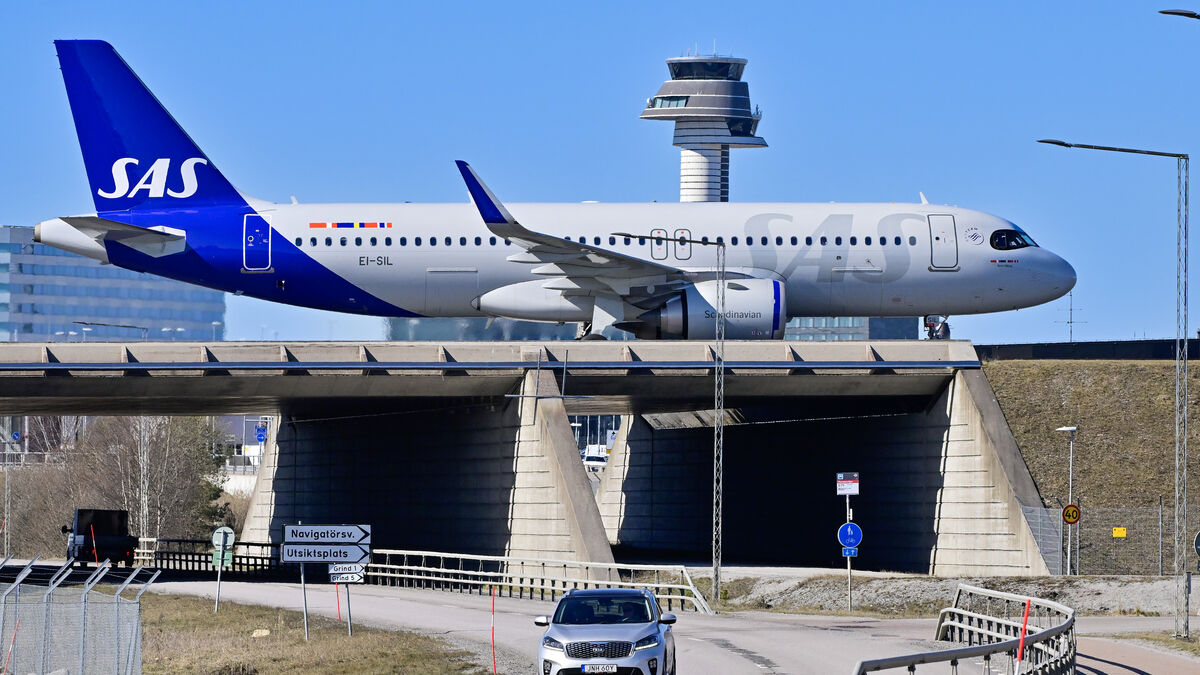
Thousands of flights have been canceled, while airlines on several routes have chosen to make adjustments toward smaller, more fuel-efficient aircraft. This follows a sharp rise in jet fuel prices after the outbreak of the war in Iran.
This means the number of available airline seats in May has been reduced by two million, the Financial Times reports, citing data from consultancy Cirium. However, this should be seen in context: there are 132 million available airline seats during the period.
Three airlines
Among the roughly 12,000 departures that have now been canceled, three carriers account for most: German Lufthansa, Air China and Turkish Airlines, according to Cirium.
Although Lufthansa has the most canceled flights, Turkish Airlines, which mainly operates long-haul routes, accounts for the largest reduction in available seats.
Scandinavian airline SAS is not included in the published statistics, but has announced that, as in April, it will be forced to cancel flights in May. Swedavia's aviation marketing manager, Elizabeth Axtelius, also says the effects on the Swedish side are still small.
"There are very few; there are a few isolated cases," she says of Lufthansa. "The same applies to SAS; there are very few departures that have been canceled with us."
No shortage
According to Elizabeth Axtelius, this mainly affects routes with several daily departures.
For state-owned Swedavia, which operates several of Sweden's airports, there is currently no shortage of jet fuel. Rather, she points out, it is the soaring price that is making the situation more difficult for airlines.
For Swedish travelers planning their summer holidays, she repeats the government's message last week about a possible risk of canceled or delayed departures.
"I think you should follow developments a little more closely. If you plan to be somewhere at a certain time on a given day and it's time-critical - then maybe you should allow a little extra time," she says.






What do you think?