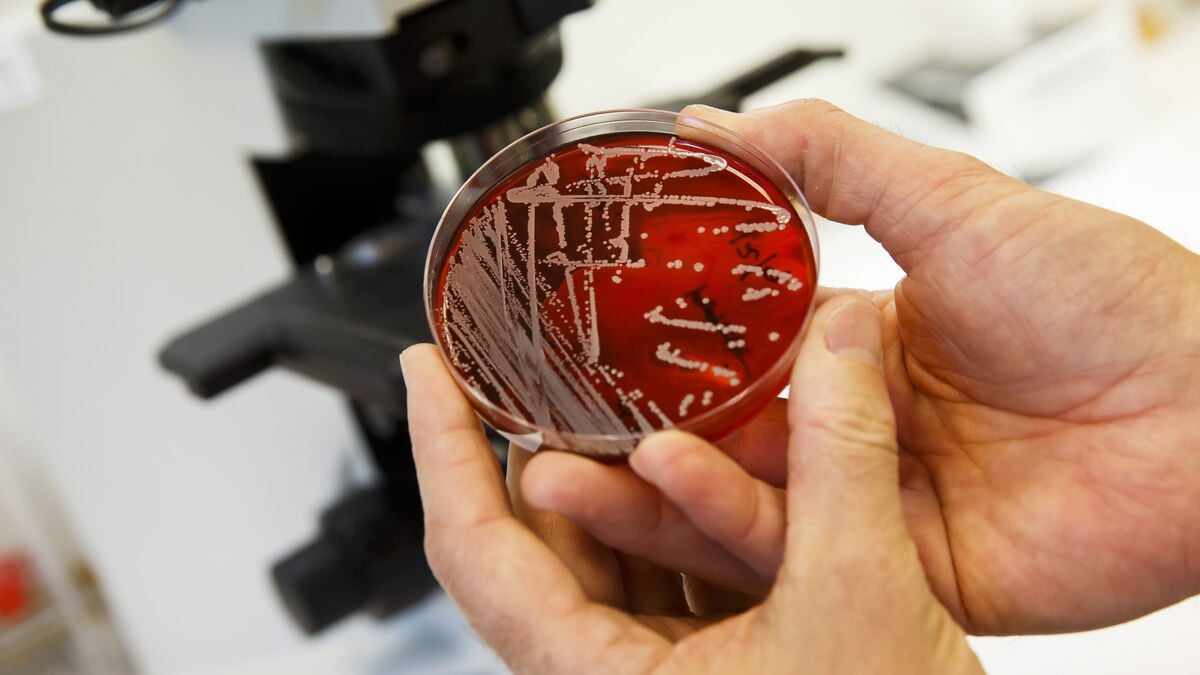
In a new risk assessment, the European Centre for Disease Prevention and Control (ECDC) points to Sweden as a country where the increase in antibiotic-resistant gonorrhoea is particularly worrying.
Historically, we have only had isolated cases here, and then people have usually been infected in other countries. Now we are seeing significantly more resistant bacteria, says microbiologist Thomas Åkerlund at the Swedish Public Health Agency.
Swedish chain of infection
Last year, nine cases of antibiotic-resistant gonorrhoea were discovered in Sweden. So far this year, four cases have been discovered. Previously, the number of cases has been at most three per year.
A lot of people also seem to be infected in Sweden now, which has been unusual before, says Thomas Åkerlund.
This indicates that local chains of infection have been established within the country.
The resistant form of gonorrhoea has developed resistance primarily to ceftriaxone, the antibiotic that is currently the first choice for treatment. However, it also appears to have some resistance to the antibiotic azithromycin.
New drug is coming
This means that the number of unsuccessful treatments where the disease is not cured may increase, says Thomas Åkerlund.
However, if resistance has developed, treatment can be done with another, older type of antibiotic. There is also a new type of antibiotic, zoliflodacin, which has been shown to be effective.
But it is not yet approved in the EU.
Thomas Åkerlund says that the Public Health Agency has a special surveillance programme for treatment-resistant gonorrhoea bacteria.
Otherwise, we will not take any special measures at this time, he says.
Gonorrhoea is a sexually transmitted bacterium, Neisseria gonorrhoeae.
It is the second most common sexually transmitted infection in Sweden.
In 2025, 4,268 cases of gonorrhoea were reported in Sweden.
The disease has increased by an average of 8 percent per 100,000 inhabitants/year between 2016 and 2025. This year, the spread has slowed somewhat in Sweden.
Gonorrhoea is treated with antibiotics. Testing and treatment are free.
The European Centre for Disease Prevention and Control (ECDC) recently urged EU countries to strengthen surveillance of resistance in the gonorrhoea bacteria.
Sources: Public Health Agency of Sweden, RFSU