When Prime Minister Ulf Kristersson (M) and the EU's other heads of state and government gather in Brussels on Thursday, the idea is that they will be able to agree on how Ukraine will be supported financially in 2026 and 2027.
Last week, a major step forward was taken when the countries decided that Russian state assets in the EU can be frozen for much longer than just six months at a time. This avoids the risk of suddenly and unexpectedly having to return the money when and if the sanctions expire.
But almost at the same time, the handbrake was also pulled hard as more countries than before openly spoke out against a loan on the frozen assets.
More people say no
The situation now is complicated.
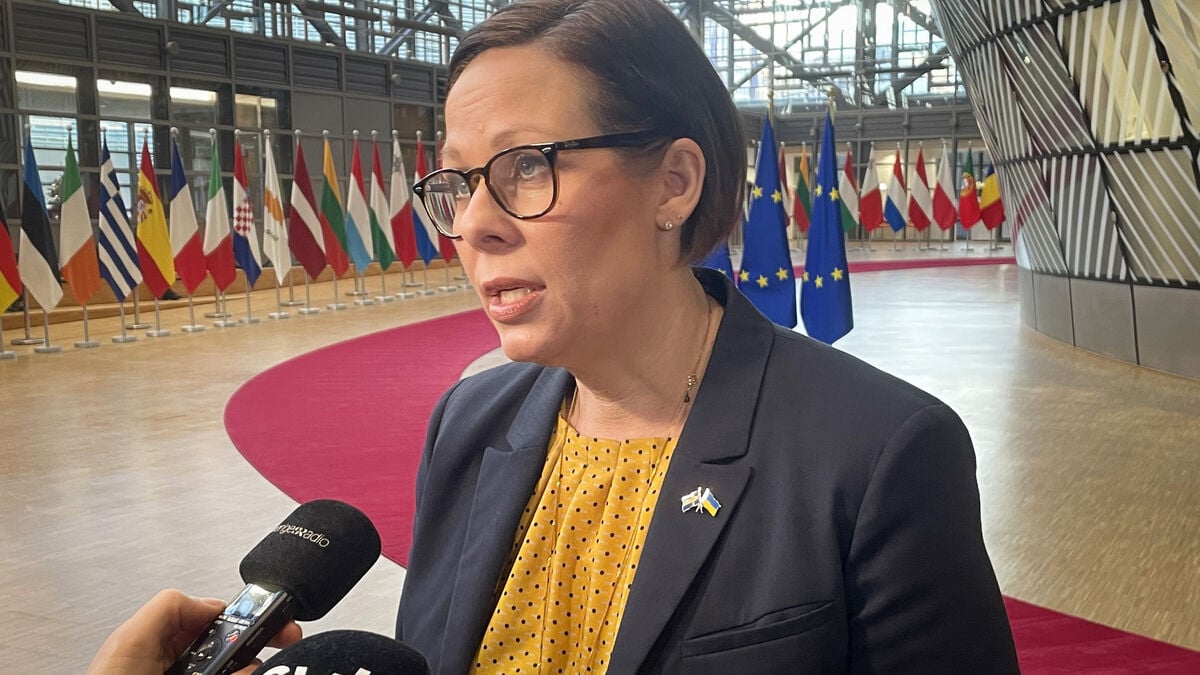
This is a fateful week for Europe. It is time for the EU to show strength. I am irritated that so many countries continue to argue, says Foreign Minister Maria Malmer Stenergard (M) on her way to a meeting with her colleagues in Brussels on Monday.
She is not happy that Italy, Bulgaria and Malta have supported Belgium's skepticism about using the frozen assets. Their call to seek other options does not give her much credit – especially if in that case decisions need to be made with the support of all EU countries, rather than just a majority.
I think everyone understands that we will not get there, says Malmer Stenergard.
There are already clear no's from Hungary, Slovakia and the Czech Republic.
“See how difficult it is”
If no agreement can be reached for a loan on the Russian assets, Ukraine will have to make do for the time being with what individual countries can continue to offer.
However, both Malmer Stenergard and EU Foreign Affairs Director Kaja Kallas promise hard work to achieve the plan.
"I really hope that we achieve results on Thursday. I am optimistic by nature, but I also see how difficult it is," Kallas said at his press conference after the foreign ministers' meeting in Brussels.
Facts: Frozen Russian state assets in the EU
According to the European Commission's calculations, there are a total of 210 billion euros in frozen Russian state assets in the EU.
The majority – 185 billion – is held by the securities institution Euroclear in Belgium. The other 25 billion is held by other institutions in the country, but also in France, among others. There is also a smaller amount in Sweden – but only around 120,000 kronor.
Of the assets, the European Commission now wants to earmark €45 billion for repayment of previous loans that Ukraine received through a G7 deal last year. €90 billion is proposed to be lent to Ukraine in 2026 and 2027, leaving €75 billion available for possible future needs for the country.
Source: European Commission, Minister for Foreign Affairs Maria Malmer Stenergard.