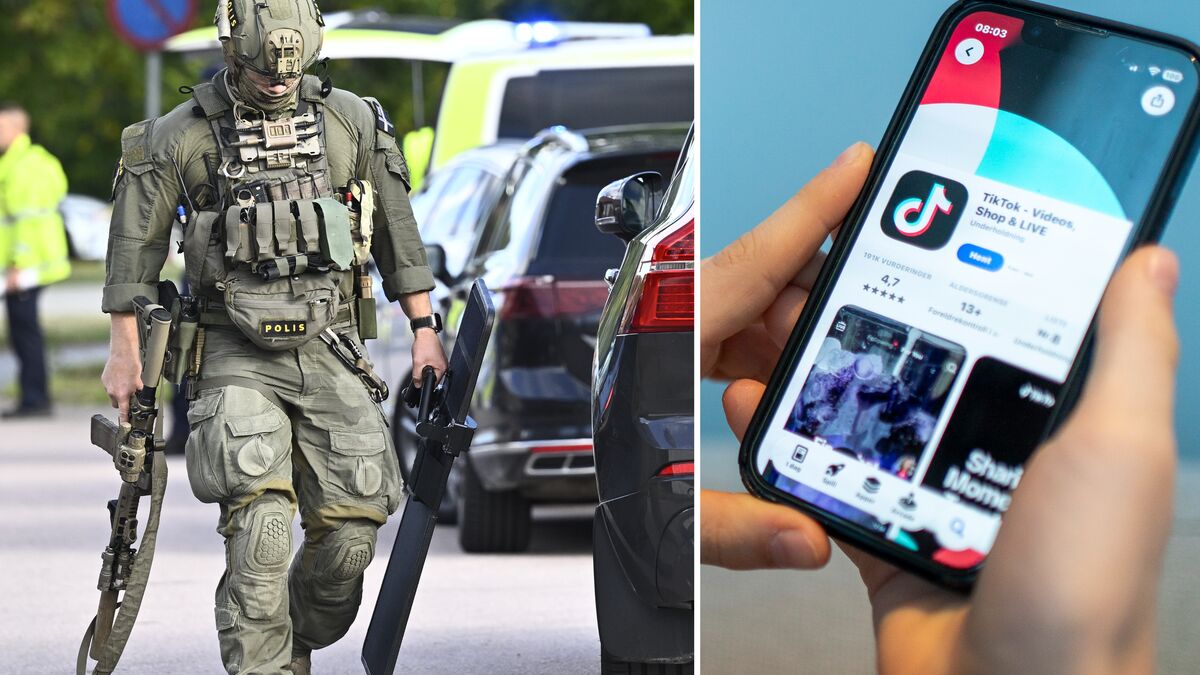
The notable image from a school toilet was shared shortly before the attack on Friday.
Police have not confirmed that the TikTok account is linked to the 18-year-old man suspected of the attack, but they are aware of the account and "will check the information."
The account has been active in the True Crime Community (TCC) online movement, which attracts people interested in - and celebrating - violent acts. It has also emerged that the user has posted his own clips on TikTok, so-called “edits”, in which videos of perpetrators from school attacks and mass murders are featured with music and effects.
“Normalized”
Åsa Erlandsson, a journalist at Dagens Nyheter and author of the book about the school attack in Trollhättan, describes TCC as a movement that glorifies school shooters and mass murderers. Unlike before, the material is being spread on easily accessible platforms such as TikTok, rather than on obscure online forums.
"These environments have always tried to use jokes and irony to express bestial messages, such as murdering other people. Today, there are completely different tools to convey the messages, which I believe contributes greatly to attracting more people," she says.
As an example, she mentions clips of the school killer in Trollhättan that have been edited so that he "dances" to added music, something she believes could help normalize the act.
I think many people watching this don't really reflect on what environment they're actually in, that they're in the blackest hole of the internet.
"Extreme fascination with violence"
According to Robin Andersson Malmros, a researcher at the Segerstedt Institute in Gothenburg and the Academy of Police Work at the University of Borås, TCC is part of what is called violence-promoting misanthropy.
The individuals who are part of these groups share an extreme fascination with violence, combined with a general hatred of humans and society, without any forward-looking ideology, which is different from other extreme political movements, he says.
Ad
The social factor in online environments can become a driving force to continue sharing material with people who have the same worldview, and together with other risk factors it can contribute to radicalization, he says.
It can be likened to a kind of emotional pressure cooker, where you build a collective identity together. The more radical content you share, the more likes and appreciation you get, which in turn gives you social status. And that combined with individual vulnerabilities can lead to individuals resorting to violence.

Discussion
opens with reader accounts