Rosersberg Prison is one of eight prisons that are preparing to accept minors.
The background is that the government and the SD have proposed that children and young people who commit crimes should serve their sentences in youth prisons instead of the current closed youth care. In the younger age group, 13–14 years, this concerns children who commit serious crimes, such as murder and serious explosive offences.
Rosersberg is planning four departments for the new group. They will be small units with six places each, and a significantly higher staff-to-inmate ratio than for adults.
"We expect five or six correctional officers to be on duty during the open hours. So approximately one correctional officer per inmate," says prison director Gabriel Wessman, who shows around.
The activities will be divided so that 13–14-year-olds and 15–17-year-olds are placed in different departments.
Approves stuffed animals
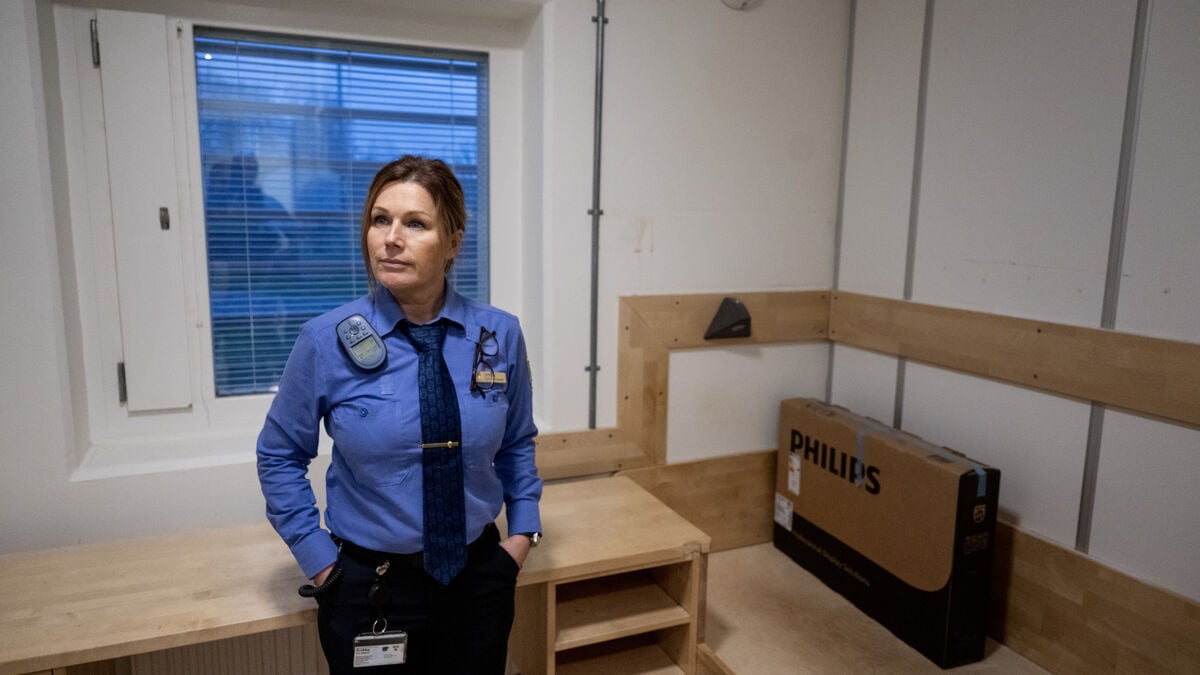
The cells, which are due to be ready on 1 July, were still bare and unfurnished when TT visited at the end of December. Eight square metres of space accommodates a bed, a desk, a bookshelf and a TV behind plexiglass. In a separate space behind a wall there is a toilet and sink.
Personal items that may be taken in include photos, drawings, books and CDs.
"Stuffed animals have actually been discussed, and we have come to the conclusion that we will approve them," says Pia Wihlborg, correctional inspector and sub-project manager for the youth departments at Rosersberg.
The young people will be locked in the cells between approximately 8 pm and 7 am. If you need any help at night, there is an alarm button and night staff will respond.
"Then you have a gap in the door that you open first. If that's not enough, you have to open the door, but then there are two of you," says Pia Wihlborg.
The young people will not share cells and the bunk beds that were previously in the rooms have been dismantled.
They will also be kept completely separate from adult prisoners, and will, for example, have their own sports hall, their own exercise yards and their own medical department.
They will attend small school classes with the others in their department.
There will be quite a few teachers - seven or eight - in these four departments. It can't be exactly the same in a detention environment as outside, but it's close enough, says Gabriel Wessman.
"I think it's both good and bad. Here they have an advantage in that they can get more help than they might get in larger classes," says Pia Wihlborg.
No mobiles
They are allowed to spend one hour outside per day, usually split between a walk in the playground at lunchtime and one after dinner. The playgrounds will also be redesigned; architects will review walkways and create spaces for activities such as outdoor table tennis and outdoor gyms (without free weights).
In your free time, you can engage in exercise, music, painting or just relax in your room. Video games will be available in the common areas, but only during set times and violent games will be banned. Mobile phones and tablets are not allowed.
"One of the biggest challenges for them will probably be not being allowed to have social media," says Gabriel Wessman.
But it also means that gang members on the outside will have a much harder time reaching the children, he points out.
One of the goals of the prison stay is to awaken a desire for change in the young people. The institution has established contacts with social services as well as voluntary organisations and dropout programmes.
Pia Wihlborg emphasizes that many people may be exhausted after living in a gang environment.
"It's a feeling of constantly having to look over your shoulder. Here they get an opportunity to get away from the criminal world," she says.
"It is a protection not only for society that these young people are locked up, but also for the individual who was recruited into it," says Gabriel Wessman.
Great interest
According to the director of the institution, there is great interest among the staff to start working in the new children's and youth departments.
"Finding the right staff with the right motivation, and also ensuring that they are trained for children's needs, is the most important thing for this to be successful."
Previous studies have shown that nine out of ten gang criminals sentenced to closed youth care at SiS-hem relapse into crime.
Do you have a better chance of getting young people to leave crime?
"An important difference is that they will be placed under supervision when they are released. I think the work of the correctional service in the community will have quite a big impact," says Wessman.