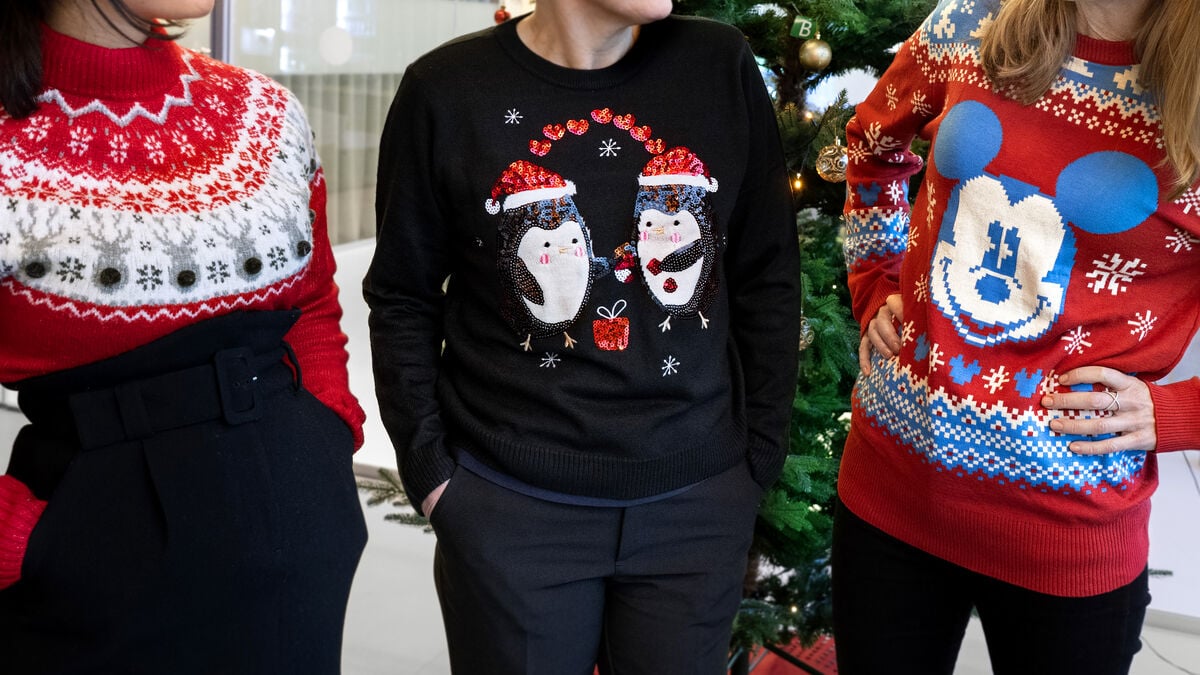
The Swedish Society for Nature Conservation has calculated, based on the goals of the Paris Agreement, how many new garments we can buy per year. The answer is five – and they should last an average of 15 years or 270 uses.
Then it's a pretty bad idea to buy a garment that you'll only wear a few days a year, says Rindevall.
Getting bumpy
Even if you intend to use your sweater several times, it is not certain that it will last, points out Yvonne Augustsson, who is an expert in textiles at the Swedish Environmental Protection Agency:
They are often mass-produced and made of cheaper materials such as acrylic or mixed materials that can quickly become lumpy so that you don't want to use them for as long.
Acrylic is made from fossil raw materials that are processed into fiber. The production is energy-intensive and requires large amounts of chemicals, making the environmental impact greater than for many other materials.
You should be aware that water consumption, chemical consumption and greenhouse gas emissions during production are the same regardless of how many times you use a garment, says Yvonne Augustsson.
Synthetic and mixed materials are also difficult to recycle. The fact that Christmas sweaters are often decorated with bells or flashing lights doesn't make it any easier.
Use laundry bag
If you still buy a Christmas sweater, she thinks you should take good care of it so that it lasts longer.
Use a laundry bag when washing to avoid pilling. This will also catch the microplastics it releases.
Other options are to borrow or buy second hand. Or why not make a sweater yourself?
You can embroider or add sequins or beads. There are many ways to make your own outfit. I think if this year's Christmas gift is an adult toy, then making your own Christmas sweater is a great adult toy.
According to the Swedish Society for Nature Conservation's report "The Monster in the Wardrobe", a climate-smart, resource-efficient and fair wardrobe should contain 74 garments, and five new ones can be added each year.
It can be compared to a “guide to clothing for an adult woman” from the 1950s that contained 42 garments that were enough to cover an entire year's needs by combining them in different ways.
In Sweden, we consume an average of 13–14 kilos of newly produced clothing and home textiles each year. 7–9 kilos are thrown away
Almost four out of ten of all garments are thrown away due to poor quality, such as shrinking or tearing.
Source: Swedish Society for Nature Conservation, Swedish Environmental Protection Agency