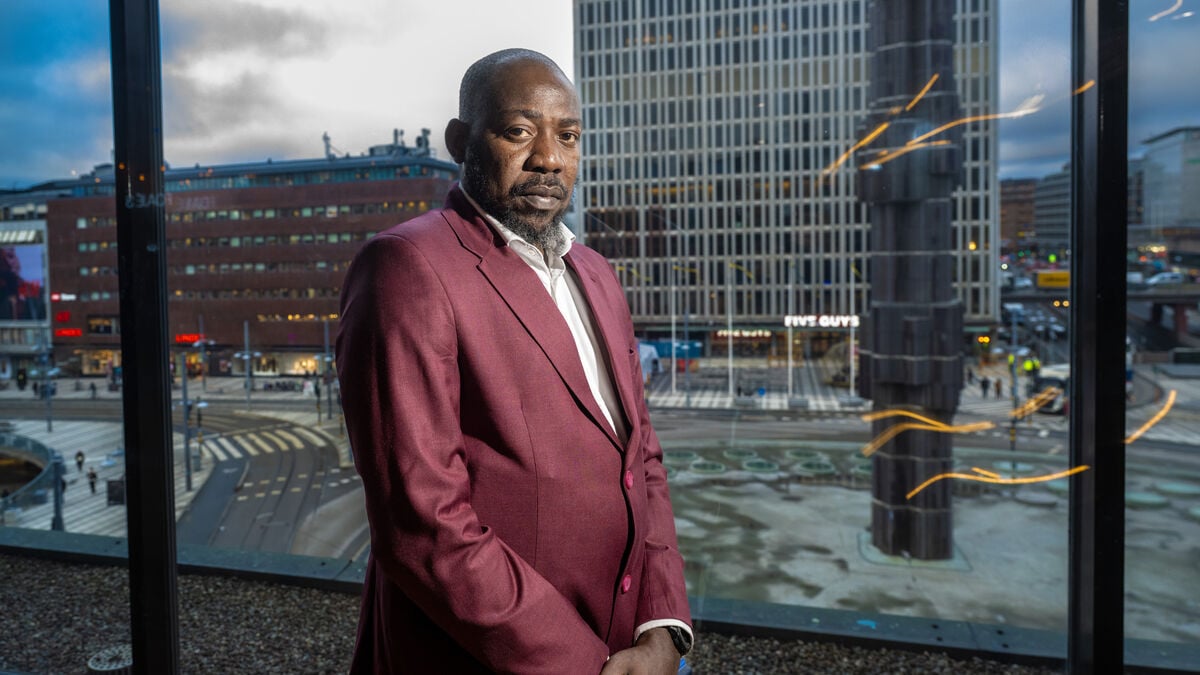
Alsanosi Adam is in Stockholm because ERR's unique aid methods have earned the organization the Right Livelihood Award.
"It's big for us," he says ahead of Tuesday's awards ceremony.
It's the "alternative Nobel"!
But when he talks about the situation back home in Sudan, Adam looks down. The war that began in the rivalry between the RSF military force and the regular army in the capital Khartoum in 2022 has now spread to large parts of the country. A kind of climax of violence was reached when the strategically important oasis city of al-Fashir was captured by the RSF in October, after a long siege.
Continuing east
All communication lines were severed, and the situation in the city and for tens of thousands of its residents remains unclear.
There are a lot of people who have not managed to escape, who have lost contact with, says Adam.
Now the fighting, violence and abuses continue eastward, he fears. When the rainy season is over, armed groups could spread their attacks from al-Fashir in Darfur to the Kordofan states to the east.
North and South Kordofan will be the new battlegrounds.
ERR, the English abbreviation for Emergency Response Rooms, was born from the Sudanese tradition al-Nafir. It can be loosely translated as “a call to help” and means that everyone helps with what they can, where they can. ERR has a decentralized structure with local volunteer units, which makes the organization unusually resilient. Despite the war, which is tearing apart the social structure of Africa’s third largest country by area, ERR is able to work in all of Sudan’s 18 states.
It could be doctors who turn their homes into temporary clinics, or teachers who teach children where they are, says Adam.
“More people choose sides”
But it relies on volunteers, on people coming forward. The division caused by the war could become a greater danger over time.
When the war started, you had combatants on two sides, and everyone else was in the middle, Adam explains, measuring a dominant middle ground with his hands.
The longer the war goes on, the more the space in the middle shrinks. More people choose sides.
But he still describes himself as hopeful that diplomacy and international pressure will lead to negotiations.
There are no sides. War is the enemy, and our challenge now is to achieve peace.
Facts: Right Livelihood Award
The prize was established in 1980 by the Swedish-German former EU parliamentarian Jakob von Uexküll, and is awarded to people and organizations that the jury believes are courageous, have visions and set a good example in solving the causes of the world's problems.
Four prizes are awarded each year without any specific categories. The selected winners are awarded one million kronor each.
Previous laureates include Astrid Lindgren and Greta Thunberg.
In addition to ERR from Sudan, this year's laureates are the climate group Pacific Islands Students Fighting Climate Change from the Pacific Islands, together with activist Julian Aguon from Guam, the investigative activist group Justice for Myanmar, and Taiwanese democracy activist Audrey Tang.