Many fear that the economy is stagnating - while the geopolitical situation is weakening Europe's ability to assert its interests.
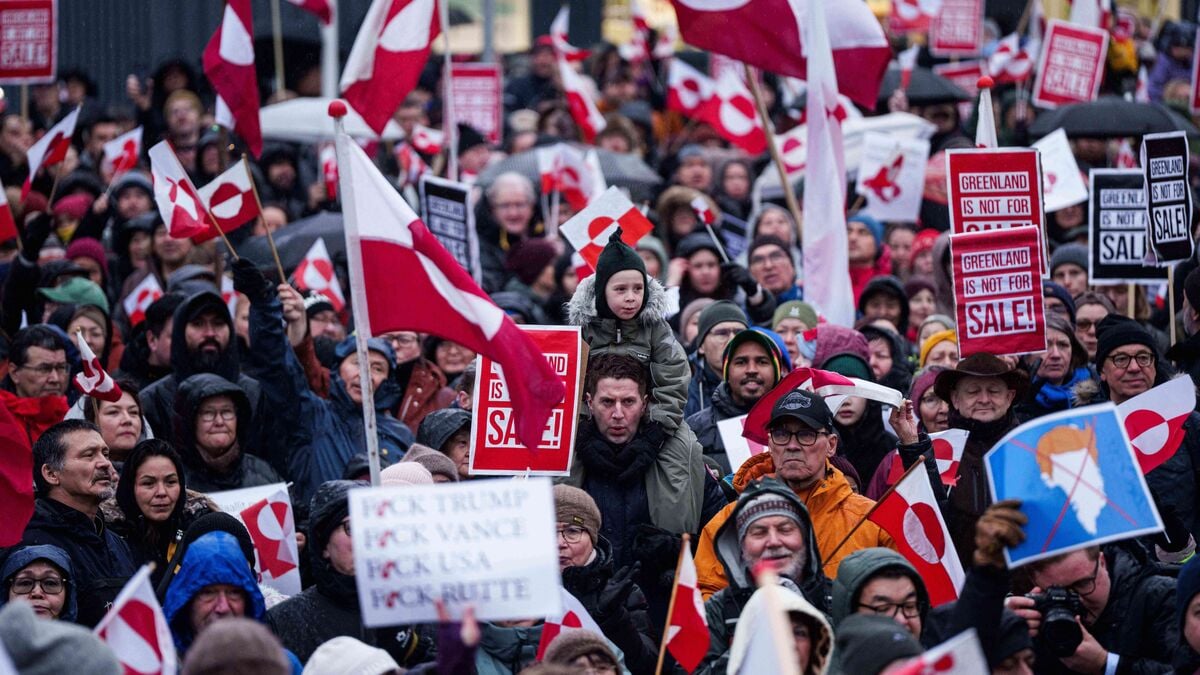
Competitiveness, free trade and a strengthened internal market - the words have echoed in EU capitals for years. But recently, they have taken on a new meaning. With the return of a kind of great power politics – where an aggressive China is sitting on critical mineral resources, where European countries are still buying gas from belligerent Russia and where the Trump administration in the US has thrown the rules-based world order out of whack – they are seen as crucial to Europe’s ability to secure its future.
In Europe, we have long believed that interdependence is good, that it reduces tensions. But now there is a tendency for our dependence on, for example, raw materials, defense and certain technological platforms to be used as weapons or means of power, says von Sydow, who is director of the Swedish Institute for European Policy Studies (Sieps).
Acute insight
Europe has historically been a respected and rule-setting global player. But as major powers increasingly ignore the rules of the game, new strategies are needed: Europe should secure free trade and exchanges with like-minded countries while deepening its own internal market and accelerating growth and innovation, according to experts. Industries such as defense and AI technology are particularly highlighted – while the importance of simpler EU rules and access to capital is underlined.
This realization has been gradually emerging, but is now urgent. It has led French President Emmanuel Macron to declare a "state of geopolitical and geoeconomic catastrophe." And Council President António Costa has invited former European Central Bank President Mario Draghi to a leaders’ "reflection meeting" at the 16th-century Alden Biesen castle.
How to agree?
Draghi issued a scathing report on European competitiveness in 2024, highlighting, among other things, the need for major investment and the importance of a common capital markets union. But that is easier said than done in a union of 27 members with widely divergent agendas.
Many agree with the diagnosis, but there are different views on how it should be handled. The goal of the castle meeting is to get a common picture of reality, says von Sydow.
Facts: The rules-based world order
The rules-based world order is sometimes called the Western, liberal world order. It is based on certain values, norms, institutions and rules that have been created to govern the actions of states globally.
These include the UN Charter's formulation of the equality of states and the prohibition of violence and threats of violence between states. The principles of international law on human rights, international humanitarian law (which includes the four so-called Geneva Conventions on the laws of war), international criminal law and treaty law are important.
The rules-based international order was developed after the end of World War II. Former US Secretary of State Antony Blinken has described it as "a system of laws, agreements, principles and institutions that the world collectively built after two world wars to govern relations between countries, prevent conflict and uphold the rights of all people".
Sources: Royal Swedish Academy of Military Sciences, Government Offices and the British Parliament