
In mid-October, many places in Central Sweden experienced their first frost. In some places, it is up to a month later than it usually does. This is part of a clear trend. In the last ten years, the first autumn frost has come a week later than in the second half of the 20th century, according to weather data from SMHI.
Since trees are felled after perhaps a hundred years, in some places people have started to plant varieties that are traditionally planted in a certain part of the country further north, as an adaptation to a warmer climate, says Johan Sonesson, associate professor of silviculture at the Swedish Forestry Research Institute Skogforsk.
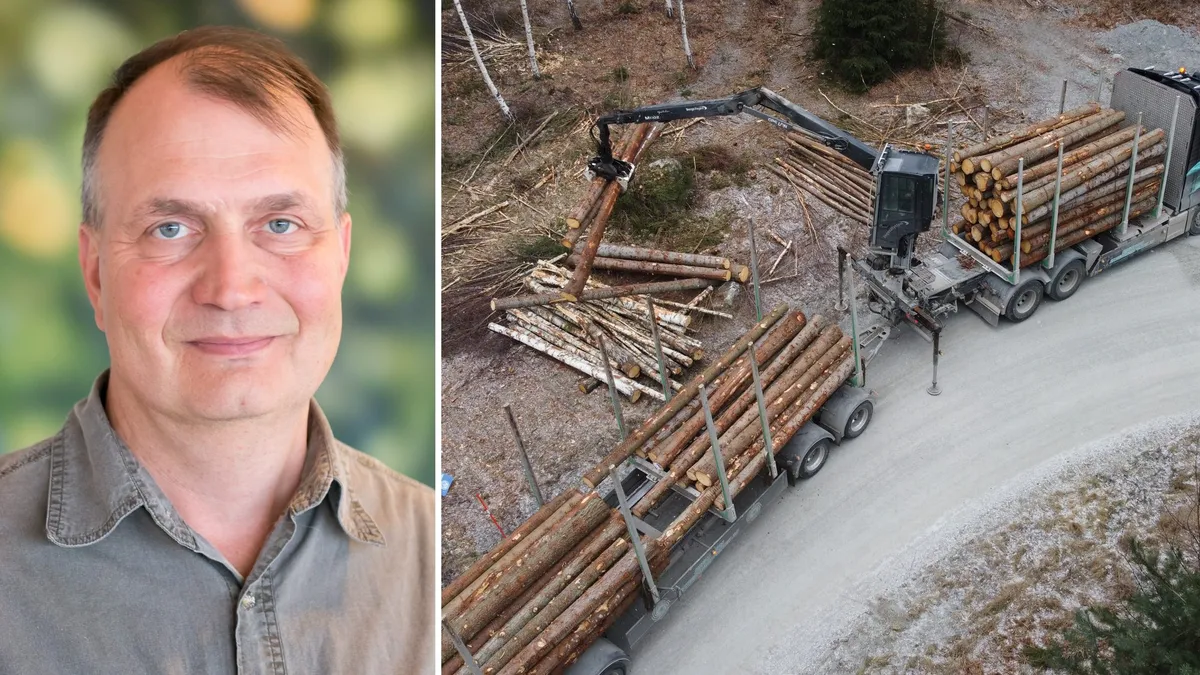
Johan Sonesson is a researcher at Skogforsk, which is funded jointly by the state and the forestry industry.
The varieties differ greatly in when they shoot shoots in the spring and when they enter winter dormancy.
There is a huge difference in trees that are adapted to grow in Götaland compared to northern Norrland, it is like night and day.
A longer season without frost potentially increases the growing season. But the trees close down due to the darkness in autumn, so it is harder for them to make use of it, according to Sonesson.
At the same time, the milder autumns pose problems when harvesting.
30 years ago we almost always had reliable frost. It was possible to drive machines on the tracks and on the forest roads with fully loaded timber trucks. It is increasingly rare to be able to do that today, he says.
Either harvesting has to be postponed or the damage caused by the machines is accepted.
Previous: Pure chance
Agriculture is also affected. But milder autumns can be an advantage there. Farmer Fredrik Andersson outside Arboga sees clear signs that the climate is changing.
It was a pure chance to sow winter wheat here in Västmanland in October when I started. It is no longer like that, and there is usually a harvest from that too, he says.
Some crops are destroyed by frost. Corn is an example. Later frosts can therefore mean better cultivation opportunities.
Corn cultivation is a relatively new phenomenon in Sweden. More and more farms are discovering that it can be grown further north.
Can come early
The fact that frost generally comes later is due to climate change, according to Sverker Hellström, climatologist at SMHI. Autumn frosts can occur when cold air from the north moves in, while it is still and cloudless. Then the ground cools quickly. But it can happen in individual years even in a warmer climate, he points out.
In a given individual year, anything can happen, he says.








What do you think?