In the summer of 2007 they suddenly appeared. Large numbers were reported along the coast of Bohuslän. Magallana gigas, the Pacific oyster or Japanese giant oyster. An invasive oyster that spread rapidly. How could it be stopped?
Åsa Strand, at the Västra Götaland County Administrative Board, became interested in the new oysters early on. As a new researcher, she was to study their effects on the ecosystem.
"But the more I learned, the harder it became to answer what was so bad," she says.
Invasive species are known to crowd out others, but the idea that they would displace native oysters does not seem to be true.
"They have different habitats, which means they live at different depths. It also doesn't seem like they eat the same thing and compete for food, but we need to do more research on that," says Svenja Hess, project manager in aquaculture and invasive species at IVL Swedish Environmental Research Institute.
Changing environments
It is clear that oysters change marine environments. When they form reefs on soft bottoms, they destroy species that want to burrow in the sand. They also threaten the sensitive feet of swimmers who may cut themselves. At the same time, they benefit species that need hard bottoms, such as mussels, and are good at purifying the water, which reduces the effects of eutrophication.
Pros and cons.
Today, the Pacific oyster is found along large parts of the west coast, all the way down to Malmö. No one any longer believes it is possible to get rid of them, at least not north of Gothenburg.
"We also see that they adapt well to climate change because they can withstand higher temperatures," says Svenja Hess.
Instead of trying to eradicate the invasive oysters in areas where they are fully established, initiatives are being started to utilize them. Oysters are climate-smart and healthy food, rich in protein, vitamin B12, iodine, selenium and zinc, among other things. Only a fraction of all oysters are used.
"Around 6 tonnes a year are harvested today of the approximately 30,000 tonnes that exist, while we import large quantities from abroad," says Åsa Strand.
Made into kroppkakor
For many, oysters are associated with luxury, to be enjoyed fresh. But the Pacific variety has not been a success in fine dining restaurants, probably because they are difficult to handle.
They grow in clumps with sharp shells and are difficult to separate from each other, and it is difficult to remove the sand that is in them. But there are also many people who dislike oysters.
"Some people have a hard time with oysters, mainly because of the consistency. We try to find ways to prepare them that work for many people," says Anna Henning Moberg, operations manager at Torsåker Farm in Upplands Väsby, north of Stockholm.
This is where Axfoundation's development center for food and materials is located, where they work together with IVL to find new uses for Pacific oysters.
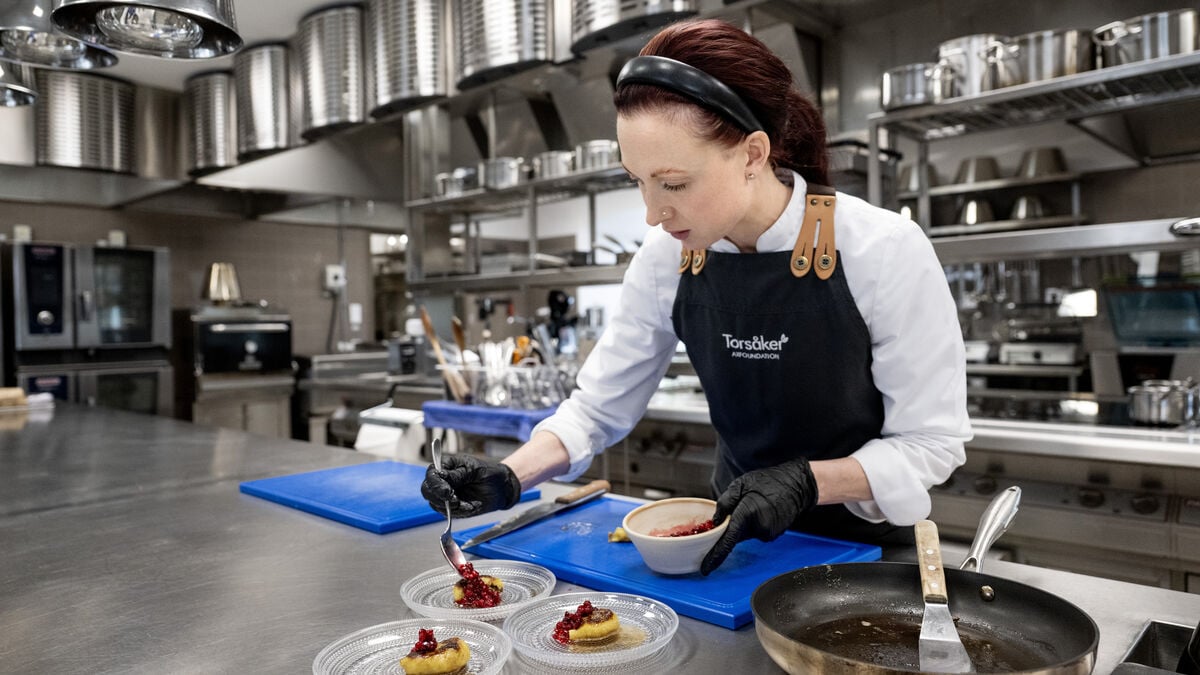
The oysters that are now being cooked in the test kitchen were harvested in a pilot project with a backhoe on a December day in Bohuslän. They are fried in butter, made as a filling in kroppkakor (small dumplings) or used as a powder in flavor enhancers.
"In the project, we are trying to find ways to use large volumes of oysters without ruining the taste and experience. It involves everything from harvesting the oysters, methods for separating the shells from the meat, and cleaning them while maintaining quality," says Anna Henning Moberg.
But challenges with using the superfoods that are in abundance extend beyond the frying pans.
Few people are allowed to fish
One is the permit to fish them. The right to pick oysters belongs to the landowner, so anyone who wants to fish must have the landowner's permit. If more people were able to fish, it would limit the number.
"If an exception had been made to landownership rights when the Pacific oyster became established in Sweden, it would have been easier. Now there are conflicts between different interests. Those who already have commercial operations do not want to lose them," says Åsa Strand.
The more they spread, the more reason to take advantage of them, says Åsa Strand, who is co-author of a cookbook on how to use oysters. She likens oysters to the falukorv of the sea.
"Oysters are an incredible source of protein that are still there. Considering how important food preparedness is, it would be a waste not to use them," says Åsa Strand.
A short distance from the test kitchen at Torsåker Gård is the materials workshop. Here, they are exploring how oyster shells could also be used. In France, for example, they are already used as paving stones and have been shown to have good drainage properties. Making porcelain from them is another idea.
"The shells make up a large part of the oyster, so we want to find ways to use them too," says Patrik Isacsson, materials developer at Axfoundation.
The Pacific oyster's arrival here is due to humans. When European oysters were decimated by parasites in the 1960s, oyster farmers chose to plant Pacific oysters, which are more resistant. There is much evidence that the first specimens of the invasive species blew over as larvae from Danish farms in the Kattegat and Skagerrak in the autumn of 2006.
The oyster has proven to be resistant to extreme environmental conditions and has a high adaptability. They have been shown to be able to adapt to lower salinity levels and researchers believe they have the potential to spread further into the Baltic Sea.
Pacific oysters are mainly found between Varberg and Strömstad, but they have been found as far as Malmö.
In Sweden, both European flat oysters and Pacific oysters are consumed, but around 95 percent of our annual consumption of 30 tonnes is imported from abroad.
Source: University of Gothenburg, IVL