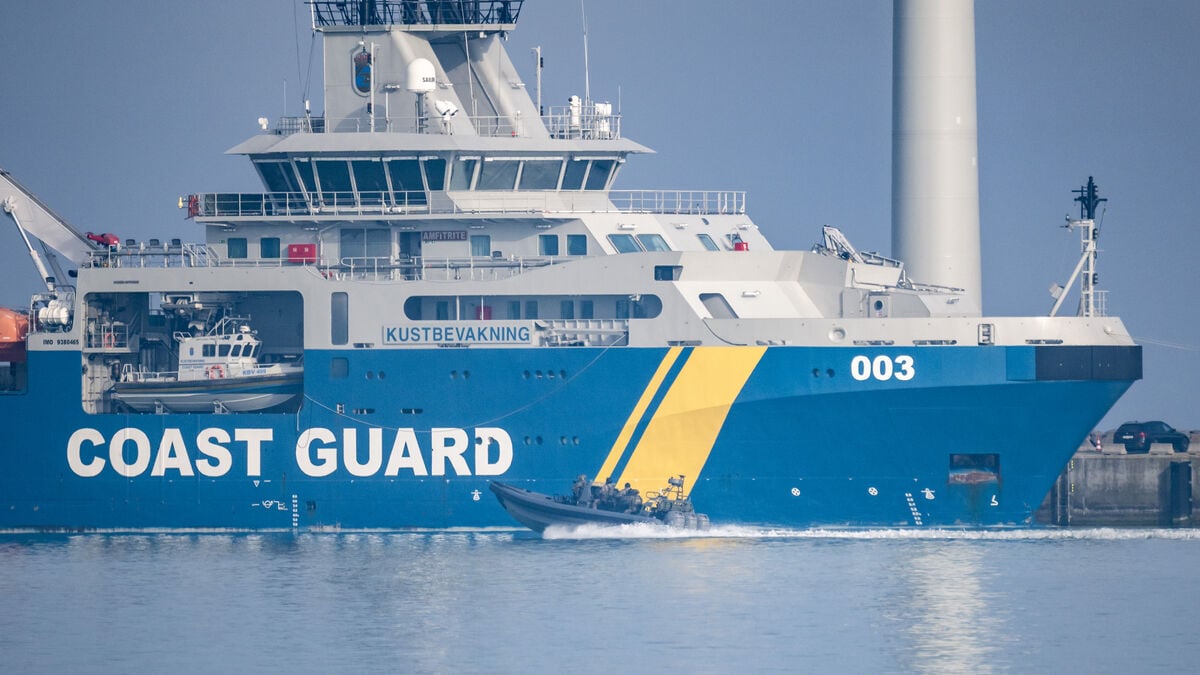
Currently, the only weapons available on board are the crew's handguns.
In the immediate future, next year, machine guns will be installed, among other things, on some of the ships. They are also purchasing reinforcement weapons that can be carried by personnel on board, Bohlin says.
This is partly due to the current security situation and the increased collaboration between the Coast Guard and the Armed Forces, but also with future scenarios in mind.
"In today's security situation, there is, unfortunately, an assessment that it could get worse. The security situation is not static and has not been in recent years, but has gradually deteriorated," Bohlin says.
Further ahead, more advanced equipment is also being looked at, both in terms of weapons systems and drone defense.
In recent months, the Coast Guard has carried out several operations against ships suspected of being part of the so-called Russian shadow fleet, most recently last Sunday, when the sanctions-listed tanker Jin Hui was boarded.
The authority is also the hub for monitoring submarine cables in the Baltic Sea, which have been subject to several high-profile crimes in recent years.
The Coast Guard is undeniably important in an international situation where security in the Baltic Sea is at risk, Bohlin says.
Last year, the government tasked the authority with strengthening self-protection on its offshore platforms, and this has now been reported.