The first reports of explosions in the Iranian capital Tehran came shortly after 7 a.m. Saturday, Swedish time. Israel says it has launched a "preemptive strike," which is reported to be nationwide. Iran and Israel are closing their respective airspaces and in Iran, mobile networks are reportedly down.
US President Donald Trump confirms that the US is engaged in a "major combat operation" aimed at militarily crushing Iran. He calls on the Iranian people to overthrow the regime.
On Saturday morning, there were reports of explosions after Iranian counterattacks against northern Israel. Iran announced that it had fired "the first wave" of drones and rockets at Israel. Bahrain, Saudi Arabia, the United Arab Emirates, Qatar, Jordan and Kuwait - all of which host US bases - reported that they had been attacked and had shot down Iranian missiles in their airspace.
Spread to Lebanon
Late Saturday night, Donald Trump announced that Iran's supreme leader, Ayatollah Ali Khamenei, had been killed. Mohammad Pakpour, leader of Iran's Revolutionary Guard, Defense Minister Aziz Nasirzadeh, and Army Chief of Staff Abdolrahim Mousavi were also killed in the attacks.
On Sunday, Israel and the US carried out more attacks on Iran, and Iran continued to attack Israel. At the same time, explosions were reported from several cities in countries around the Persian Gulf.
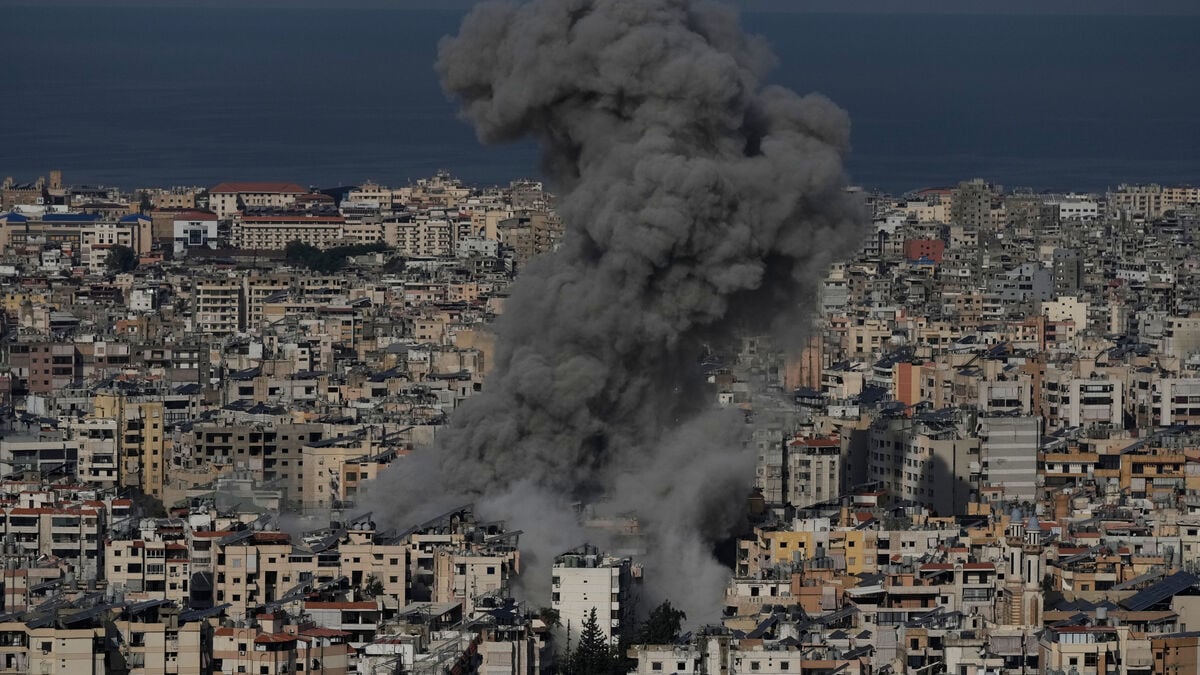
On Monday night, the Iran-allied Islamist movement Hezbollah in Lebanon launched rocket and drone attacks on northern Israel. Israel responded with a large number of airstrikes against Hezbollah targets in Lebanon.
Meanwhile, Israel continued to attack Iran and the capital, Tehran, overnight. According to UN estimates, around 100,000 residents fled the city during the first two days of attacks.
Calls for evacuation
On Tuesday, Israel continued to carry out airstrikes against targets in Lebanon and Iran. At the same time, Iran continued to target several countries in the Middle East with drone attacks. Among other things, the US embassy in the Saudi capital, Riyadh, was hit and a small fire broke out.
The Israeli military announced that soldiers had been sent across the border to several locations in southern Lebanon as a "defensive measure."
In addition, Israel on Wednesday urged residents of southern Lebanon to leave their homes in anticipation of extensive airstrikes.
Sunken warship
The death toll in Iran is rising. According to regime sources and independent organizations, over 1,100 people have been killed.
The US military command Centcom stated on Wednesday morning that the US has hit nearly 2,000 targets in Iran since Saturday. According to the US, Iran has fired over 500 ballistic missiles and more than 2,000 drones.
US official Pete Hegseth said the same day that an American submarine had sunk an Iranian warship off Sri Lanka in a torpedo attack. Remains of 87 Iranian crew members have been found, according to Sri Lankan authorities.
The war is also having a major impact on shipping traffic through the important Strait of Hormuz, which has decreased by around 90 percent since the war broke out.
On Thursday night, Iran launched several missile attacks on Israel, and the following morning, explosions were reported in Tehran.
Iran responded by shelling several targets in the region, including Qatar's capital, Doha, and Bahrain, where an oil facility was reported to have been hit.
Azerbaijan says it shot down at least two Iranian drones on Thursday and accuses Tehran of the attack, which Tehran denies.
Second phase
Israeli army chief Eyal Zamir announced on Thursday evening that a second phase of the war with Iran was beginning, and that Israel had "surprises" in the new stage.
The army chief also said that 80 percent of Iran's air defense systems had been destroyed and that Israel was close to "complete air dominance." In addition, he said 60 percent of Iran's ballistic missile launch sites had been destroyed.
Iranian Foreign Minister Abbas Araghchi, in turn, said that Iran was ready for a ground war, and that it would be "a great disaster for them," referring to Israel and the United States.
Israel is stepping up operations on the other front, against Lebanon, and is urging residents to flee southern Lebanon and eastern parts of the country ahead of an operation that will "penetrate deeper into Lebanon," according to the army chief.
According to the Lebanese Ministry of Health, more than 100 people have been killed in the recent fighting.
Donald Trump said in an interview with Axios that he wants to have influence over who becomes Iran's next leader. The slain Ayatollah's son, Mojtaba Khamenei, is "unacceptable."