The Swedish biathlon star has long opposed allowing Russians and Belarusians back into top-level sport.
He does not have to compete against the Russians and Belarusians who are designated as individual neutral athletes at the Olympics, but remains critical in the days before the Olympic flame is lit at San Siro in Milan.
What kind of signal does that send? It looks bad that we have a country that is waging an offensive war in our vicinity, not far from Italy, and that is then supposed to be there to compete. I think it feels really strange. I think it is bad that the other sports have let them in; it is good that biathlon is standing strong, he tells TT.
Threatened to boycott
The International Olympic Committee (IOC) allowed athletes from Russia and Belarus to compete in the Paris Summer Olympics two years ago. The IOC does not allow them to compete as a team, but has otherwise left the question of whether or not they should be allowed to participate to the individual federations.
The International Ski and Snowboard Federation (FIS) decided last fall to extend the suspension of Russia and Belarus, but the countries appealed and won at the Court of Arbitration for Sport (CAS).
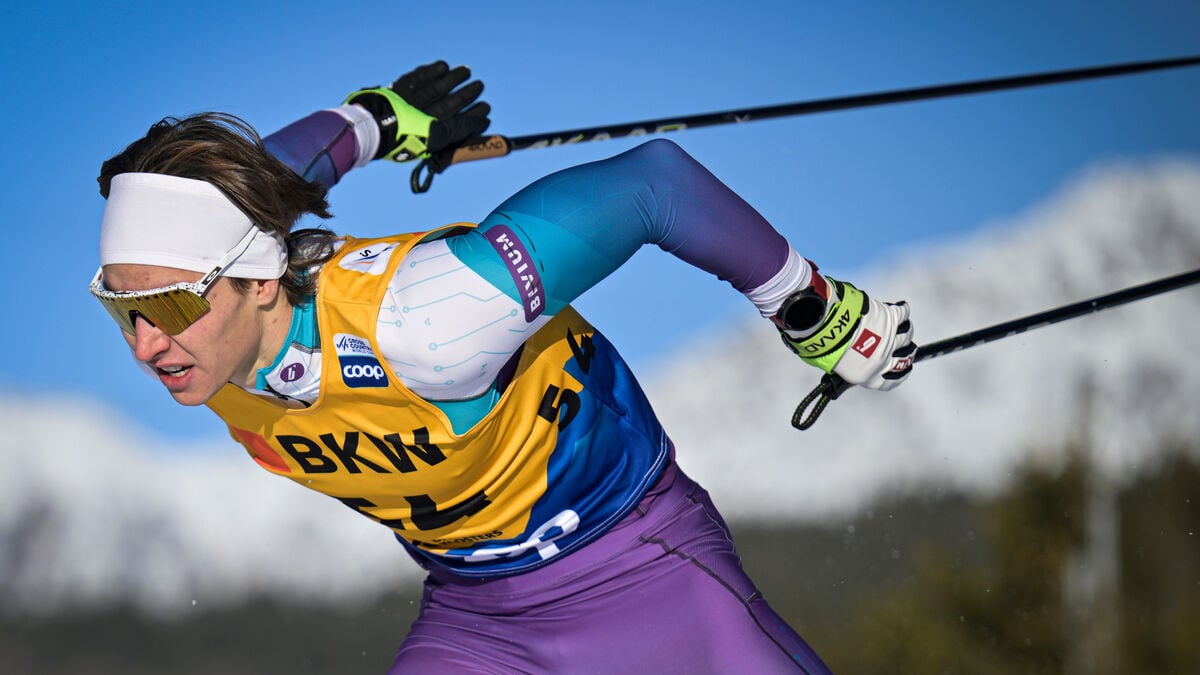
Sprint star Linn Svahn had threatened to boycott the Olympics if the Russians were allowed to participate - but changed her mind when FIS was overruled.
“Not very neutral”
During the Tour de Ski, Russians Savelij Korosteljov and Natalja Neprjaeva raced in neutral team uniforms, but were cheered on by fans with Russian flags.
"When there are Russian flags here, it's not very neutral," exclaimed Edvin Anger.
The IOC said shortly afterwards that this is not how it should be at the Olympics, according to Radiosporten.
Ice hockey has banned Russia and Belarus and has already extended the ban through next season. So even if the IOC had allowed teams from those nations, they wouldn't have been allowed to participate.
Tre Kronor's national team captain Sam Hallam says he is happy that ice hockey has taken an active position, even if it means that Hallam, who is in his final season, will never get to face one of hockey's great nations during his four years as captain.
"I may personally miss facing a strong hockey nation. But it is important to acknowledge, in the reality we live in, that is how it is and the suspension is a consequence of that," he says.
A total of 17 individual neutral athletes have so far received the go-ahead for Olympic participation - in Paris there were 32 of them and they won five medals, 1 gold, 3 silver and 1 bronze.
Facts: They have received the all-clear for the Olympics
Alpine: Julia Pleshkova, Russia, Semyon Yefimov, Russia, Maria Shkanova, Belarus.
Cross-country skiing: Savelij Korosteljov, Russia, Daria Neprjaeva, Russia, Hanna Karaljova, Belarus.
Figure skating: Pyotr Gumennik, Russia, Adelia Petrosian, Russia, Viktoria Safonova, Belarus.
Freestyle: Anastasia Andrijanava, Anna Derugo, Hanna Huskova, all Belarus.
Luge: Daria Olesik and Pavel Repilov, Russia.
Short track: Ivan Posashkov and Aljona Krylova, Russia.
Ski mountaineering: Nikita Filippov, Russia.
Skating: Ksenia Korzyva, Russia, Anastasia Semjonova, Russia, Maryna Zuyeva, Belarus.
Source: IOC.
Last year, the International Olympic Committee (IOC) announced that Russian and Belarusian athletes would be allowed to participate in the Winter Olympics in Milan and Cortina in February.
However, the IOC's policy is to let the respective specialized federations decide the issue.
As during the Summer Olympics in Paris last year, participation is conditional on athletes from those countries meeting the requirements to compete in Italy.
No Russian or Belarusian teams are allowed to participate, and individual athletes must compete under a neutral flag and must meet requirements for neutrality.
The athletes must not have actively supported the war in Ukraine or have connections to the Russian military. They must also meet certain requirements regarding doping tests.