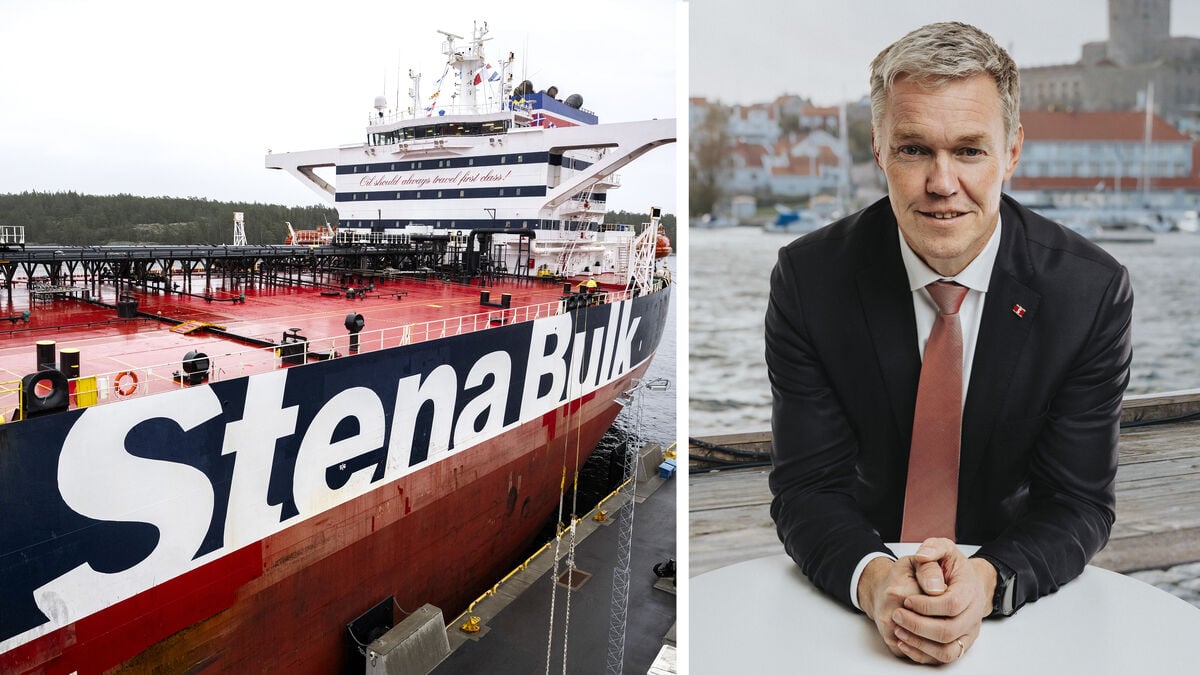
It is important to get this done as quickly as possible, or in some other way maintain security in the Persian Gulf so that civilian ships are not attacked - from the air, by underwater drones or similar, Erik Hånell tells TT.
China: Will take action
The ideal would be for the "world community" to jointly arrange military protection, according to Hånell, who reminds us that the Strait of Hormuz lies in international waters where the UN Convention on the Law of the Sea prohibits coastal states from interfering with the passage of civilian traffic.
The need is at least as great for China and India and all of Europe. And many countries have a military presence in the area. It would have been desirable if it were a joint effort, he says.
But otherwise, it's probably the US and NATO countries that could realistically be seen putting something like that together, he adds.
China gets 25-30 percent of its oil and natural gas from tankers passing through the Strait of Hormuz and has demanded that the strait be kept open to civilian shipping.
China will take necessary measures to ensure its energy security, a spokesperson for China's Foreign Ministry said on Tuesday.
The US-flagged Stena Imperative, one of around 60 tankers in the Swedish Stena Bulk fleet, was damaged on Monday night by Iranian shelling in Bahrain.
Another handful of the company's ships, with around 20 crew members per ship, are stuck in the Persian Gulf. This comes after traffic through the Strait of Hormuz was essentially stopped by Iran through a series of threats following Saturday's US and Israeli attack on the country.
"We will not allow a single drop of oil to leave the region," said Ebrahim Jabbari, an adviser to Iran's Revolutionary Guards, on Monday.
“This is bigger than expected”
Stena Bulk normally generates up to 25 percent of its revenue from energy freight from the Persian Gulf.
Hånell expects higher global freight prices in the future. The scenario is that insurance premiums, especially for traffic in the Middle East, skyrocket and fuel prices follow the upward trend in oil prices.
"It was on the map, that was good. But there was definitely hope for something else, that it would work out in the end," says Hånell about the US and Israel's attack on Iran and Iran's counterattacks since Saturday.
"That it has become as extensive as it has probably wasn't on my map. This is bigger than expected."