Iron deficiency is a major problem, especially among women and girls. More than one in four teenage girls has low iron stores and is at risk of iron deficiency - with symptoms such as fatigue, difficulty concentrating and dizziness. The proportion is even higher among those who do not eat much meat.
Iron is found in common grains such as wheat, barley and rye. The problem is that the body has difficulty absorbing it. The culprit is primarily a substance called phytic acid, which is naturally found in grains.
It is an antinutrient that binds to minerals such as iron and zinc and prevents the human body from absorbing them, says Inger-Cecilia Mayer Labba, a food and nutrition researcher at Chalmers.
But with a simple technique developed at the university - basically heat and water - the phytic acid can be broken down.
Food that is treated in this way - if done correctly - will allow the body to absorb minerals much more easily, says Mayer Labba.
Coming soon to stores
The simple method has a complicated name - hydrothermally processed food - and can be used on all types of whole grains. It allows the body to absorb several times as much iron from the grain. This way, red meat can be replaced with, for example, bread, bulgur or pasta.
"The potential is huge, because we eat so much grain today. It is the largest source of protein globally," says Mayer Labba.
The company Good Grains specializes in the technology. Its CEO is David Fredlund.
"My mother started this when I was born, almost 50 years ago. Her challenge then was how to make baby food that contained enough nutrients, especially iron, so she started looking at how it was done in the past," he says.
Humans have a long tradition of refining products in various ways so that the body can absorb more nutrients. Techniques such as fermentation, sprouting and roasting are some examples.
The knowledge existed as folk tradition, but it must be proven through science for people to believe in it today, he says.
Doctor Kerstin Fredlund - David's mother - was able to point out the benefits of hydrothermally treated food in her thesis at Chalmers in 2002. But it is only in recent years that interest has taken off. In 2024, a well-known porridge was served at the Nobel dinner itself, where the grains were hydrothermally treated.
This year, Axfood is rolling out its first hydrothermally treated products in all its Hemköp, Willys and City Gross stores, in the form of a snack aimed at young people. The plan is to release more products based on the technology during the year.
Available as baby food
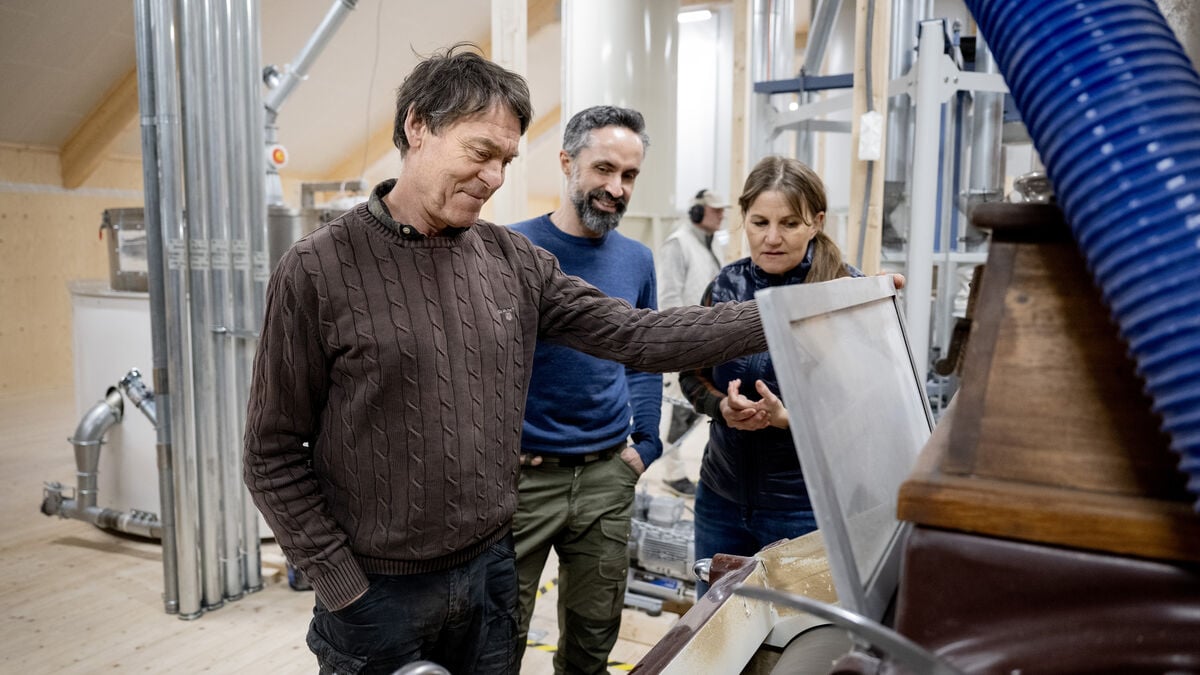
The Warbro mill outside Katrineholm can produce 400 tons of hydrothermal whole grains per year. The processing itself means that the end product costs around ten kronor per kilo.
But on the other hand, it has a very high nutritional content and special properties, says David Fredlund.
At the same time, the products are often cheaper than animal products. In Ikea's chicken tacos and the travel company Tui's burgers, hydrothermal grains have been added, thereby lowering the price, according to Fredlund.
There is great hope for the public sector, where the technology could become a way to replace expensive meat with whole grain products with nutrients that the body can absorb. It has already been tested in projects in Södertälje municipality.
For example, if you are going to make pancakes, it will be a little more expensive to use this kind of flour, but you will get significantly more nutrition for the money, says Anna Henning-Moberg at Axfoundation, who has worked on developing the technology and hydrothermally treated products.
Facts: How the technology works
1. Grains contain nutrients such as iron, calcium and zinc. The nutrients are intended to be used by the grain when the plant germinates, but until then they are held in place by phytic acid.
2. The raw material is placed in containers where humidity, pH and heat are controlled. The grain is brought to life, and the enzyme phytase is activated, breaking down the phytic acid so that the nutrients are released.
3. The grain is then dried. Now the nutrients are released and can be absorbed by the human body.
4. The grain is used as usual - for example, ground into flour, which is used to make pasta, porridge and bread.
Iron is found in organ meats and blood products, as well as red meat, eggs and shellfish. It is also found in whole grains, nuts and potatoes. Iron is used to form hemoglobin in red blood cells, which transports oxygen. Deficiency is common, and can lead to dizziness, fatigue and difficulty concentrating.
Zinc is found in meat, dairy and whole grain products and is needed for a variety of enzymes, as well as for the immune system. Deficiency is uncommon, but can, among other things, disrupt development in children.
Calcium is a mineral found in dairy products, leafy greens and nuts and is stored in bones and teeth. A deficiency can lead to osteoporosis and stunted growth in children.
Source: 1177 and the Swedish National Food Agency