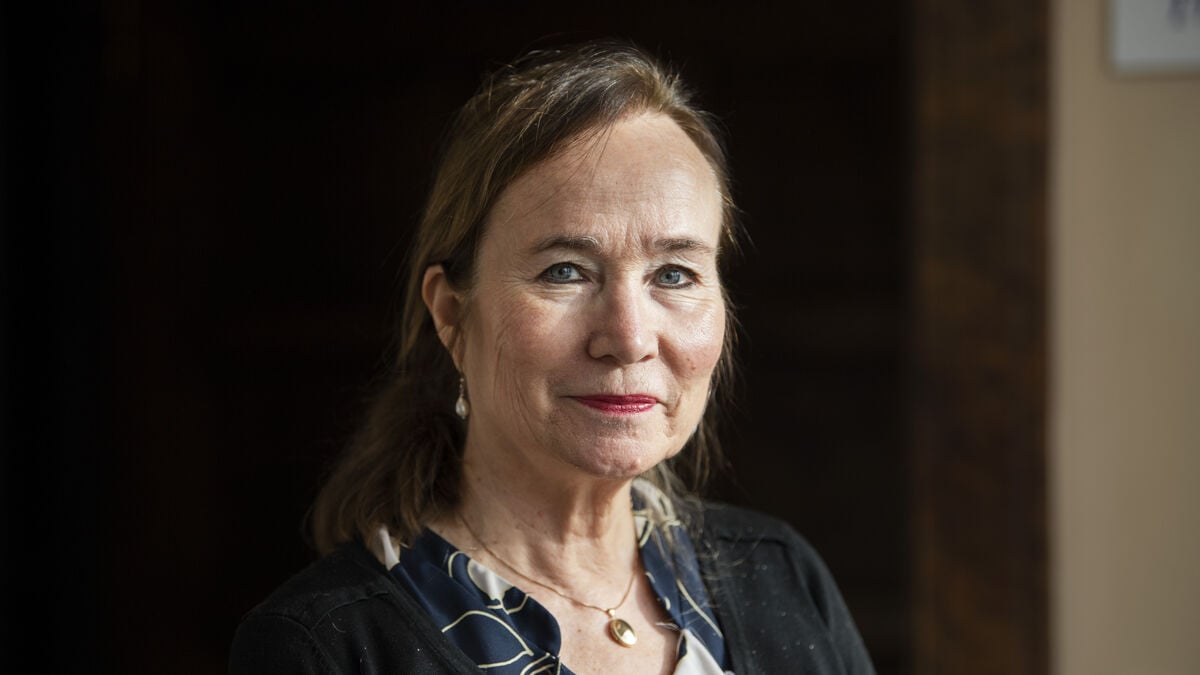
The working group is addressing what Karin Sidén, superintendent at Waldemarsudde, calls “one of the major problems in Sweden’s cultural sector today.”
We believe it is important to raise awareness. There is a great deal of commitment to this issue, but it is also important to come up with suggestions for what can be done instead.
I think most people realize and agree that the state’s rent-setting system for state-owned cultural properties is a problem.
She describes the Mediterranean Museum’s collection of antiquities as “one of the most significant.” The East Asian Museum, in turn, has one of the largest and most prominent collections of Chinese objects outside China.
It is not reasonable for either the research community or the public to put this in mothballs. Even abroad, it is seen as a scandal.
While Finland charges cost-based rent for its state-owned cultural properties, Sweden has charged market rent for these properties since the early 1990s.
“Not reasonable”
Karin Sidén compares the rent Handelsbanken pays for its office in central Stockholm with the rent the Mediterranean Museum or the National Museum must pay to the National Property Board, SFV.
Of course, that is not reasonable, as it would mean money from the Ministry of Culture being diverted and then taken back by the Ministry of Finance. The state would be giving with one hand and taking back with the other. One consequence is that the Ministry of Culture has to provide more funding for the subsidized properties - but it does not receive nearly enough.
At the same time, SFV has taken out “excess profits” relative to the required rate of return, Karin Sidén and the Academy of Letters claim.
“Get to the bottom of it”
Karin Sidén emphasizes that a complete overhaul of the rental system, as well as decisions by the government and parliament, are needed.
I think we should get to the bottom of the issue and address the fundamental problem.
Who in the private sector would think it was reasonable to have a rent increase of 57 percent from one year to the next? If there is an opportunity for more people to stand up for culture and cultural heritage and do their utmost to change this, that would be a good thing.
Facts: This has happened
The Swedish Academy of Letters, History and Antiquities - which supports research in the humanities and social sciences and the conservation of cultural environments - has formed a working group, convened by Karin Sidén, to change the rental system for both the state’s cultural properties and the state-owned property company Akademiska Hus, which owns and manages university and college premises.
The group has submitted a letter and a memo by Lars Engwall, professor emeritus of business administration, to the Ministry of Finance.
The Academy wants a review of how rents are set for cultural properties.
The working group has studied the systems of other Nordic countries, among other things. In Finland, the central museums now pay cost-based rent and are foundations rather than government agencies.
Waldemarsudde was also converted into a foundation in 2017 and owns its premises, which brought significant financial relief and made renovations easier, according to Karin Sidén.
“Before, we paid market rent set by SFV, with constant threats of rent increases. More than two-thirds of the grant we received from the state went straight back in rent, leaving almost no money for core operations.”