Västerås was the first to introduce a so-called residency test last autumn. Karlstad, Kristianstad and Gothenburg are in the process of introducing residency tests.
In Grums, an overnight stay in a shelter is planned for the end of September.
We are the first in Sweden to do this, like ever, which is scary and exciting, says project manager Therese Rosenblad.
40 people - including teenagers and seniors, a wheelchair-bound man and a five-month-old baby - will spend twelve hours in a shelter.
Shuts down
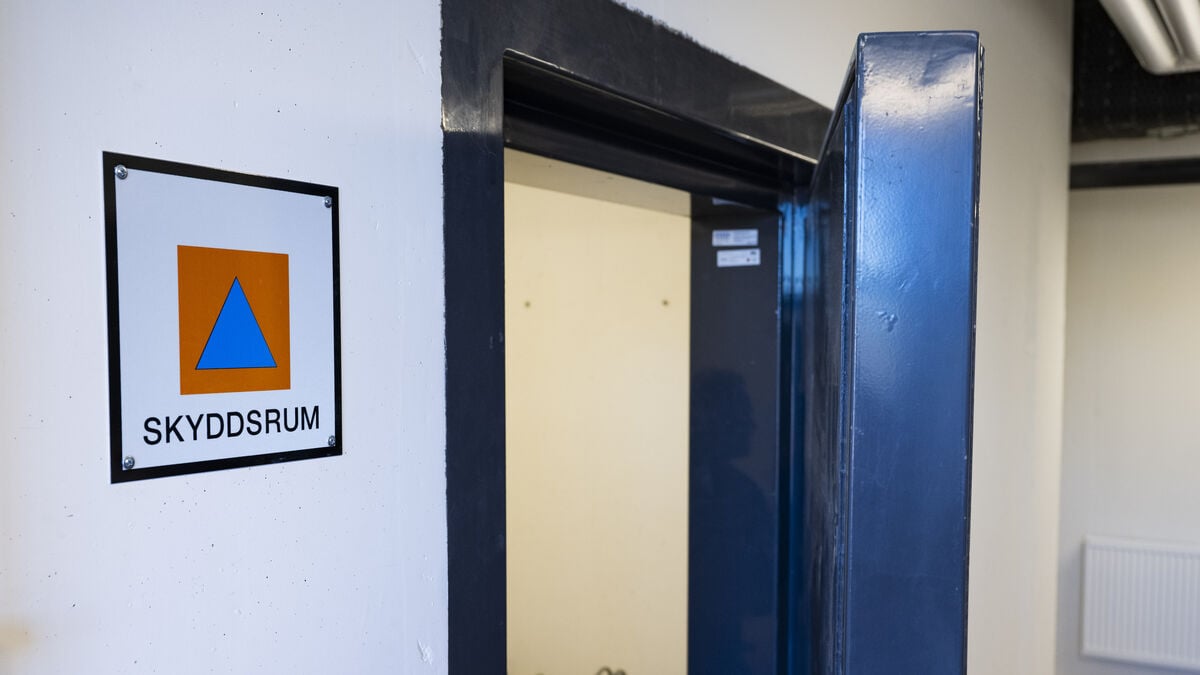
It won't be exactly like a real emergency. The shelter is designed for 150 people and the participants have been given a list of things to bring with them.
But we're going to turn off the lights, so there won't be any electricity. The man in the wheelchair won't be able to take the elevator down. And throughout the night, we're going to divide the participants into small teams or groups to take care of the ventilation.
The Civil Defence Agency will be on site with observers. The agency does not have to be involved when a municipality or property owner tests shelters, but is welcome to be and can also assist with tips and advice.
The residency tests are important so that we gain experience and can adjust how we work based on that experience. We are the leading authority within civil defense in Sweden, so we view the tests positively and are happy to participate, says Katja Berglund, head of the shelter unit.
More advanced
When the residency test was conducted in Västerås, it was the first time such a test had been conducted since the 1990s. 30 participants had to live together in 22 square meters for an entire day. Just from the residency test alone, they learned a lot, says Katja Berglund.
We as an authority learned that preparation is more advanced than we might have known. What is in the shelters are often technical drawings and not everyone understands them, so we need a different type of information.
Another important experience is that you need to look at more than just whether the shelters meet the technical requirements, something Katja Berglund herself experienced on site in Ukraine.
It's a concrete box that's completely bare and gray, and for people to want to go down there repeatedly every day for several years, we need to focus more on comfort, on the human, psychological aspects of shelters.
There are currently approximately 64,000 shelters in Sweden with space for approximately seven million people.
A shelter must be able to withstand blast waves and shrapnel, fire, ionizing radiation and debris from demolished buildings.
From June 1, there is a law on so-called protected areas. A protected area must be designed and equipped to provide reasonable protection against the effects of munitions that can be assumed to be used in war.
Source: Ministry of Defense