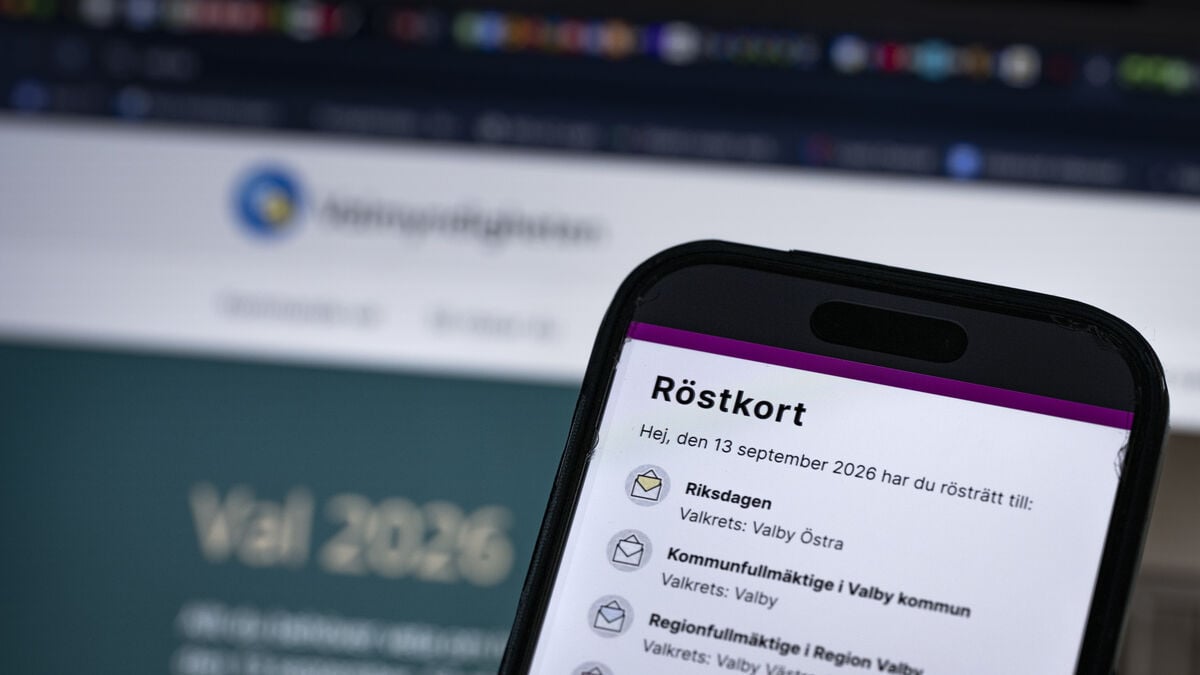
The proposal to introduce digital voting cards was hammered out by the Riksdag last year.
The aim is for the voting cards to be more accessible and arrive in a more secure manner, says Anna Nyqvist, head of the Swedish Election Authority, to TT.
The voting card contains personal information, including which elections the voter is entitled to vote in, the person's number on the electoral register, and the voter's name and address. The voter also receives suggestions for locations for early voting.
Patience
The election authority estimates that just over six million voters will receive their voting cards digitally. Those who do not have a digital mailbox - such as Kivra, Billo or Min myndighetspost - will continue to receive their voting cards in paper form.
At the same time, new technology is being introduced during early voting to record that voters have voted. Since the technology is new to the ballot recipients, the patience of early voters may be tested.
Especially on the first day, I think it may go a little slower or questions may arise, but I am convinced that it will go well, says Anna Nyqvist.
Backup solutions
Also new is that pre-printed codes on the ballot envelopes will ensure that the correct early vote is sent to the correct polling station for counting. According to Anna Nyqvist, backup solutions are in place if the technology fails.
Since it's the first time, we will also be writing things manually to have braces and a waist belt.
But anyone who goes to vote this fall does not need to bring their voting card with them at all, either digitally or as a piece of paper. Identification is sufficient.
The actual voting will take place with paper ballots just as before.