The outcome of the EU negotiations is that herring fishing in the Bothnian Sea and the Gulf of Bothnia will be allowed to increase by almost 12 percent, instead of just 3 percent as proposed by the European Commission.
For herring in the central Baltic Sea, the increase will be 71 percent compared with this year, instead of the proposed 49 percent.
This goes against Sweden’s position of keeping "heels in the ground" to avoid excessively high quotas.
“A trade-off”
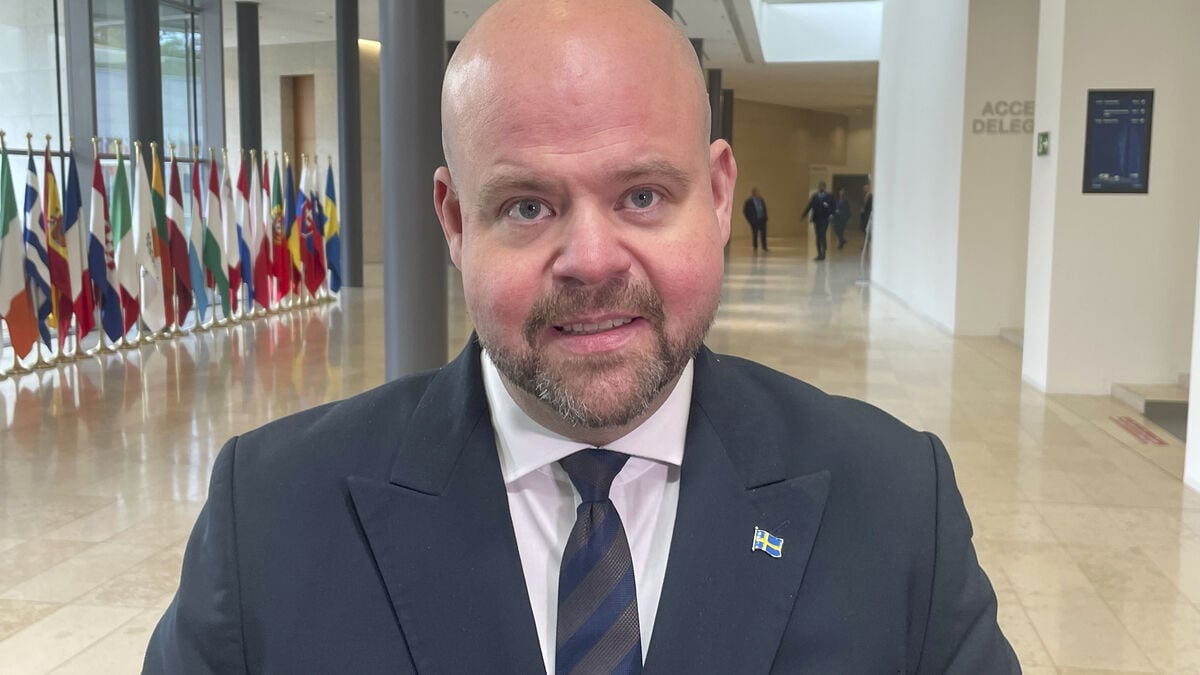
Peter Kullgren (KD) is still not completely dissatisfied, given that the quotas are lower than the maximum levels set by the International Council for the Exploration of the Sea (ICES).
"Sweden’s starting point was significantly lower from the beginning, but at the same time, this is a trade-off that must be made in every negotiation like this. Furthermore, this decision is within the mandate I received from a unanimous EU committee," says Kullgren after the agreement.
I could have accepted the Commission’s original proposal, but I am satisfied that no one else was in that position, says the minister.
Stupid, says C.
The government is also pleased that, together with other countries, it has ensured that small-scale coastal herring fishing using gillnets and other nets can continue in the western Baltic Sea.
EU countries also approved the continued recreational fishing of salmon, although only farmed salmon may be caught.
However, the agreement is facing sharp criticism from the opposition.
Straight out of the blue. At the first sign of a change in the trend, when it actually looks like the herring has recovered, the ministers want, against all reason and common sense, to once again let large-scale fishing and giant trawlers step on the gas and empty the Baltic Sea, EU MP Emma Ytterell (C) tells TT.
Pressure on Finland
Swedish anglers sent an open letter to Finland ahead of the negotiations, urging the country to join Sweden’s more restrictive position.
Kullgren thinks that is good.
There are a lot of people involved in fishing issues. I usually say: "It’s not me you should scold; we have the same view." It’s about influencing others in a system where many of us are the ones who decide, says the Minister for Rural Affairs.
Emma Ytterell - formerly Wiesner - also agrees.
It is actually quite remarkable that the same approach has not emerged in the other Baltic Sea countries, says the C member.
Here are the catch quotas for fishing in the Baltic Sea next year, as agreed by EU countries (compared with 2026 in brackets):
Herring in the western Baltic Sea: 788 tonnes, only as by-catch (unchanged)
Herring in the central Baltic Sea: 165,228 tonnes (+71 percent)
Herring in the Bothnian Sea and the Gulf of Bothnia: 62,500 tonnes (+12 percent)
Herring in the Gulf of Riga: 28,183 tonnes (+11 percent)
Cod in the eastern Baltic Sea: 430 tonnes, only as by-catch (unchanged)
Cod in the western Baltic Sea: 266 tonnes, only as by-catch (unchanged percentage)
Plaice: 11,237 tonnes (+3 percent)
Herring: 291,590 tonnes (+44 percent)
Salmon in the Baltic Sea proper: 25,537 (unchanged)
Salmon in the Gulf of Finland: 10,232 fish (unchanged)
Source: European Council.