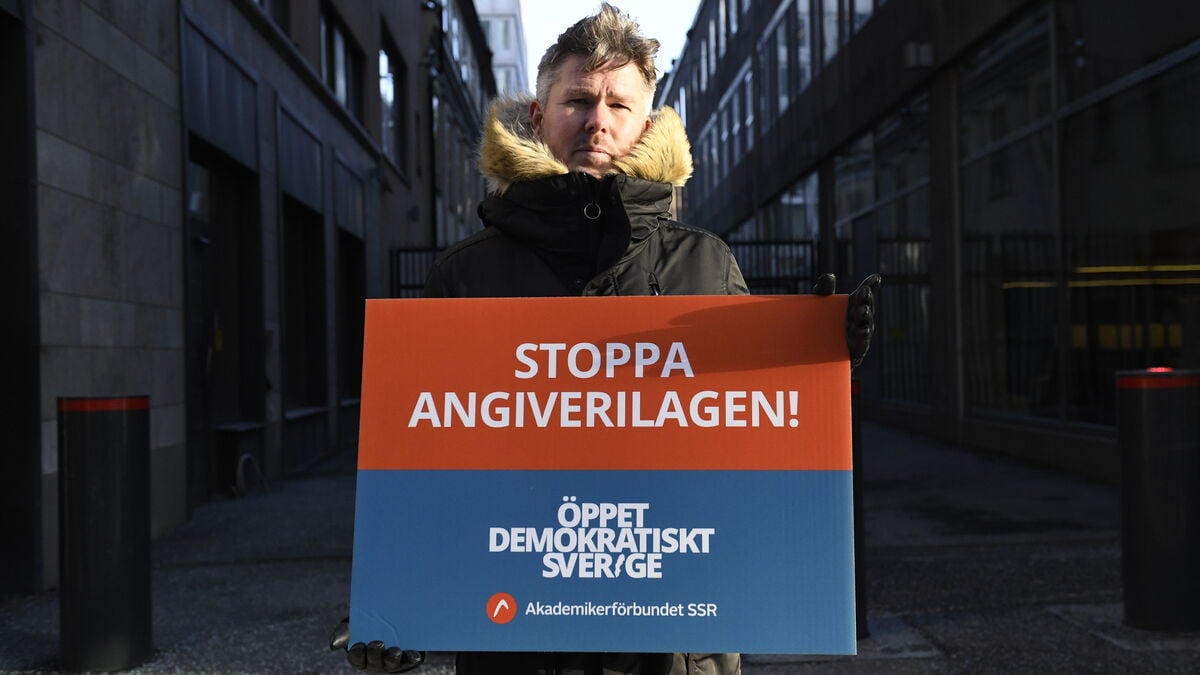
The worst thing about the law is what is called secondary information, says Ursula Berge, head of social policy at the Swedish Association of Academics SSR, a union for social scientists and others.
The six authorities are - in addition to the Swedish Tax Agency and the Swedish Social Insurance Agency - the Swedish Public Employment Service, the Swedish Prison and Probation Service, the Swedish Enforcement Authority and the Swedish Pensions Agency. They are required to provide a large amount of information from their registers to the police if they have reason to believe that a person does not have permission to be in Sweden.
Become guilty
But government officials are also required to provide so-called secondary information about foreigners to the police. This can be information they come across while working on another case, information they themselves do not have. This could apply, for example, to employment agency staff who are supposed to find jobs for job seekers with the Salvation Army or the Red Cross, or officials from the Swedish Prison and Probation Service who are looking for places for community service for prisoners serving sentences. If they see people who are presumed to be undocumented, they must report it - this could be people who go to soup kitchens, according to the SSR. The result may be that they do not seek help.
Many who work in civil society testified even before the law came into force that undocumented immigrants do not dare to seek healthcare or send their children to school - rights they have, says Ursula Berge.
The government states in its proposal, which the Riksdag passed as law in June, that social services, schools and healthcare are exempt from the information obligation.
But when a child is born, the midwife has previously had to report the birth to the Swedish Tax Agency. The agency is now obliged to provide information about children and parents to the police if it can be assumed that someone lacks the right to be in Sweden or whose residence permit has expired. One risk is that expectant mothers avoid healthcare, according to the Swedish Healthcare Association.
Ethical dilemma
"The ethical dilemmas for midwives are a clear example, but we also see risks that the bill undermines trust in healthcare in general," says Sophia Godau, chairwoman of the Swedish Healthcare Association, in a written comment.
The Left Party and the Green Party voted against the proposal, as did the Social Democrats and the Center Party, who wanted to raise the bar for when authorities are required to provide information.