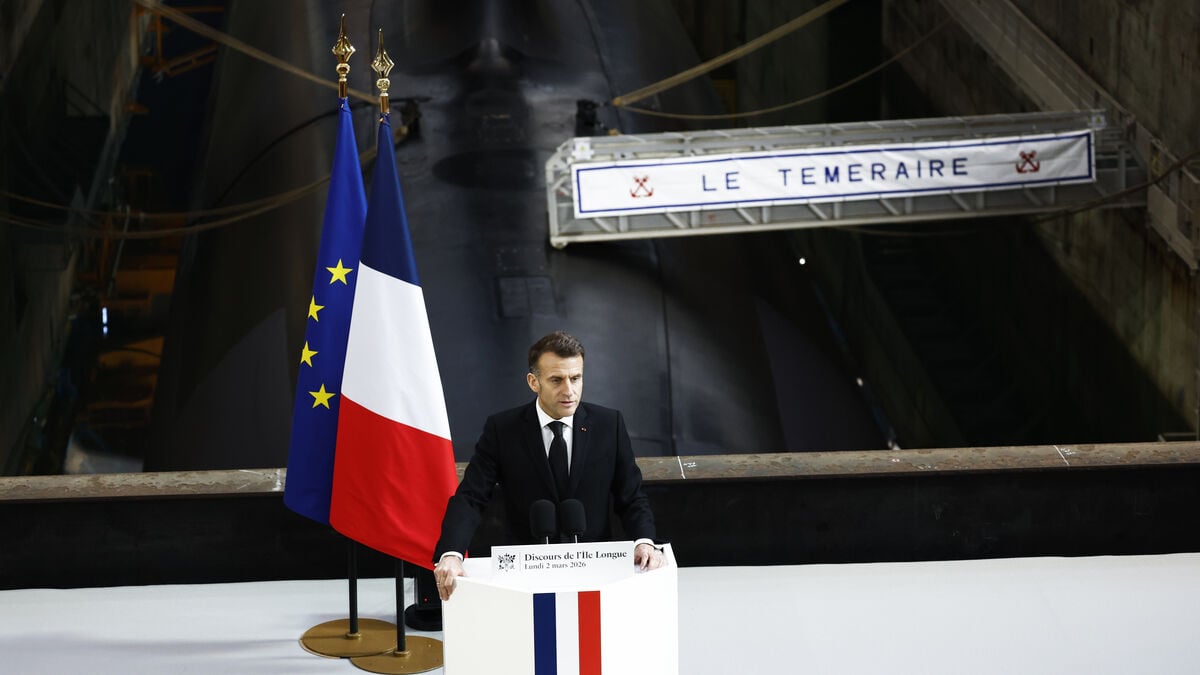
On Monday, French President Emmanuel Macron announced that an in-depth dialogue on nuclear deterrence is being launched with a handful of European countries, including Sweden, Denmark, Poland, Belgium and the Netherlands.
Karl Sörenson, research leader at the Swedish National Defense Research Institute, FOI's nuclear weapons analysis program, says that the announcement represents a major difference from how the French nuclear weapons doctrine looked before.
"It is, in a sense, a historic step: you are not extending it, you are not dividing it, but you want to collaborate on it," he says.
Not part of NATO group
Unlike the nuclear powers Britain and the United States, France is not part of NATO's Nuclear Planning Group (NPG). It has its own mandate for its nearly 300 warheads.
Britain and the United States place their arsenals at the alliance's disposal while, of course, retaining their independent decision-making, Sörenson says.
When France deepens the dialogue with Sweden, among others, it means the countries want to understand each other better and be able to have open discussions.
"We need to understand how France thinks about its nuclear deterrence and they need to understand how we think. It could be about what situations they think could arise that need to be handled in terms of security policy, to anticipate them with conventional means, so that you don't have to go to the nuclear level in deterrence," says Sörenson.
"This does not automatically mean that France will want to station nuclear weapons here."
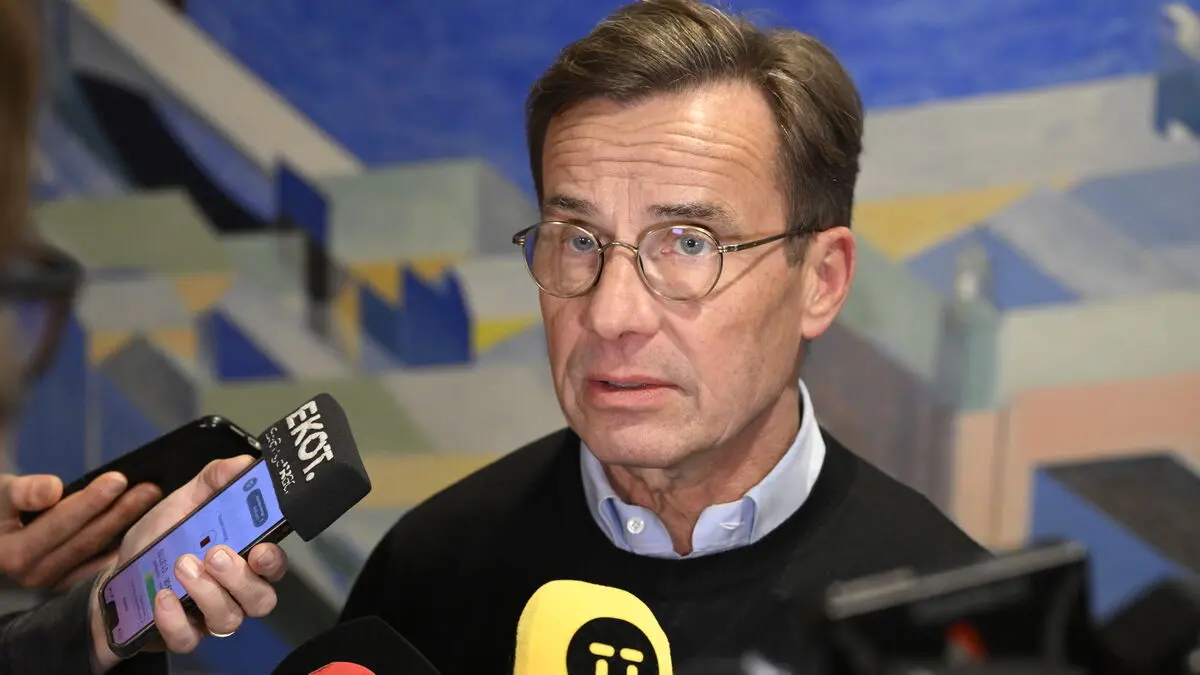
Kristersson has accepted.
Sweden has agreed to the in-depth dialogue, according to Prime Minister Ulf Kristersson, who at the same time points out that the Swedish doctrine of not having nuclear weapons on Swedish soil in peacetime remains firm.
The dialogue could also be about what happens in a more complicated situation for Europe, if Russia were to attack and seek to counter French or British nuclear weapons, according to Sörenson. In that case, such weapons would need to be deployed to increase deterrence against Russia.
"Then one measure could be to temporarily deploy aircraft, for example, that are armed. Sweden could potentially be included in that, but I'm not sure that's the idea in purely operational terms either," says Sörenson.
In 1960, France became the fourth country to acquire nuclear weapons after the United States, the Soviet Union, and Great Britain.
The country is estimated to have just under 300 warheads, mostly deployed on submarines and, to a lesser extent, on aircraft.
France currently has four nuclear-powered submarines with illustrious names such as Le Triomphant (The Triumphant), Le Téméraire (The Bold), Le Vigilant (The Vigilant) and Le Terrible (The Terrible). A fifth new vessel, to be named L'Invincible (The Invincible), is due to be completed in 2036.
In the 1990s, French nuclear tests in the South Pacific led to widespread protests and boycotts. However, no tests have been conducted since 1996.