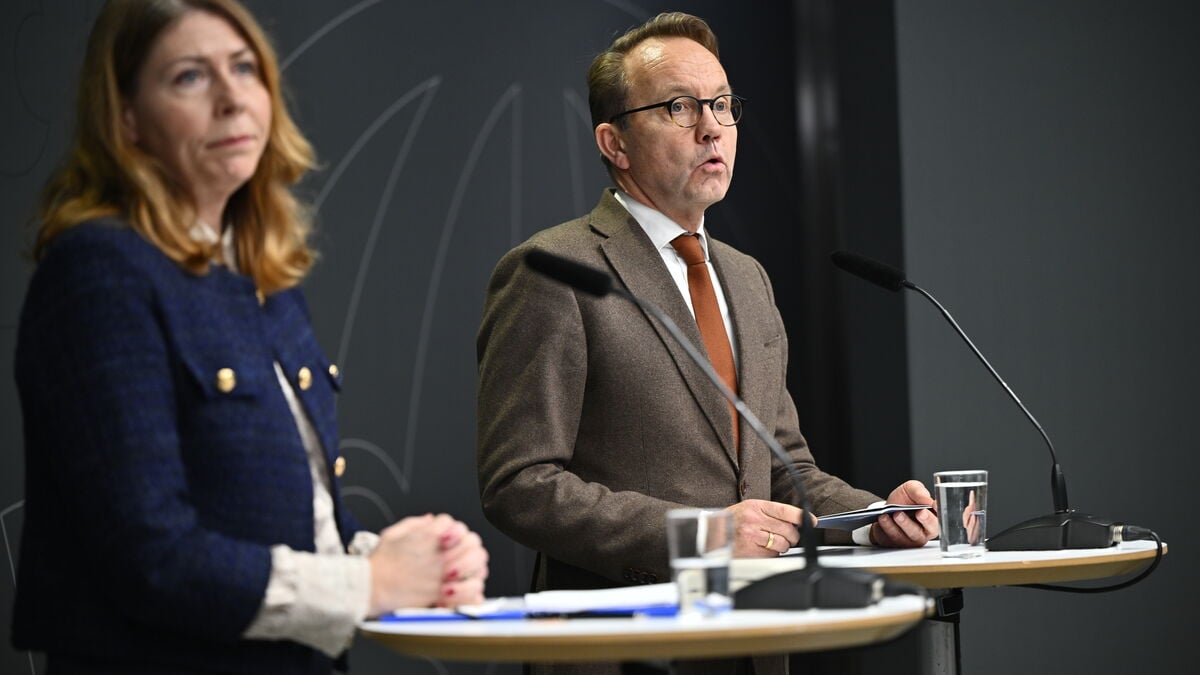
"A problem we have been dragged into for too long in Swedish healthcare is that far too many people have to wait far too long for care," says Björn Eriksson, Director General of the National Board of Health and Welfare, at a press conference.
Healthcare queues have decreased slightly since the beginning of the year and Minister of Health Elisabet Lann (KD) points to a break in the trend.
Thousands in line
But the average waiting time for a knee replacement surgery is currently 157 days, while the health care guarantee states that treatment must be completed within 90 days. Even for inguinal hernias and intestinal examinations, known as colonoscopies, thousands are waiting an illegally long time to receive care.
The proposal means that for each additional such operation, compared to last year, that the regions carry out within the healthcare guarantee, they will be allocated additional funds. They will also be able to use private healthcare providers.
The government has previously allocated extra funds to the regions in 2025 to shorten queues for cataract, prolapse and hip joint surgeries. This has, to varying degrees, led to shorter queues. However, only around half of the money has been spent.
"I am dissatisfied that not all funds have been used, because the signals we are getting are that there is capacity. But I am still satisfied that we are seeing results, that the regions have done their homework," says Elisabet Lann.
“Not just money”
The reason why the National Board of Health and Welfare singles out knee surgeries, inguinal hernias and intestinal examinations is because they do not risk displacing other surgeries.
According to the National Board of Health and Welfare, more resources are needed to shorten healthcare queues in the long term.
It can have a big effect over time, says Björn Eriksson.
The opposition has long criticized the government for allocating too little money to healthcare.
It's not just a question of money, it's also about utilizing the capacity that exists and working in a better way to make care available to more people, says Elisabet Lann.