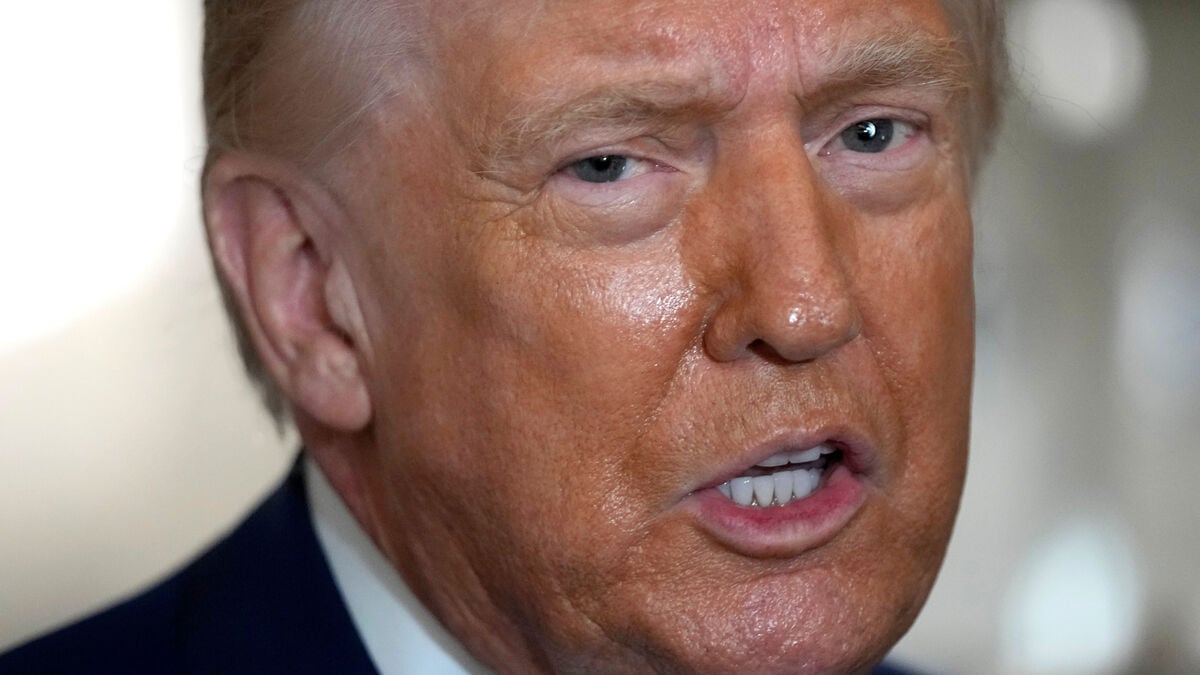
"They are a disgrace to our country," Trump said at a press conference on Friday evening, addressing the Supreme Court judges who ruled against him.
The court's decision was made by a vote of 6-3. More than 1,000 US companies pursued the case in court and sought compensation for the global tariffs that President Donald Trump announced in April last year, in connection with what Trump called "Liberation Day".
At the press conference, the president claimed the Supreme Court justices had been influenced by "foreign interests".
"They are fools and lapdogs for radical left-wing Democrats and RINOs," Trump said.
He also announced that he will impose new global tariffs of 10 percent, which, according to Trump, will be added on top of existing tariffs.
Trump has repeatedly said that he sees the issue of tariffs as one of the most important in US history and that a ruling that does not go his way would mean an economic blow to the country.
However, the tariff policy has faced legal opposition, including from libertarian and pro-business organizations that typically side with Republicans. According to opinion polls, the tariffs also lack broad support among voters.
Declared a state of economic emergency
Tariffs are actually supposed to be decided by the US Congress, but Trump has argued that he had the power to decide on tariffs based on what he considered to be an economic emergency.
Conservative Supreme Court Justice Brett Kavanaugh, appointed by Trump in 2018, was one of three who opposed an annulment.
"The tariffs that exist can be considered both reasonable or unreasonable from a purely political perspective. But in terms of legal text, history and precedent, they are clearly compatible with the legislation," he wrote in a comment included with the decision.
Kavanaugh said the court effectively decided that Trump figuratively filled out the wrong form to enforce his tariff policy.
Other options
The White House has previously stated that it will use other tools if the Supreme Court rules against the administration. However, these tools are usually more cumbersome or limited in nature compared to the president's emergency powers, according to Bloomberg.
There have been demands from American companies involved in imports for a refund of the customs duties they have been forced to pay, but the Supreme Court has not taken a position on this issue. If this were to become a reality, it could amount to as much as 1.5 trillion kronor in repayments.