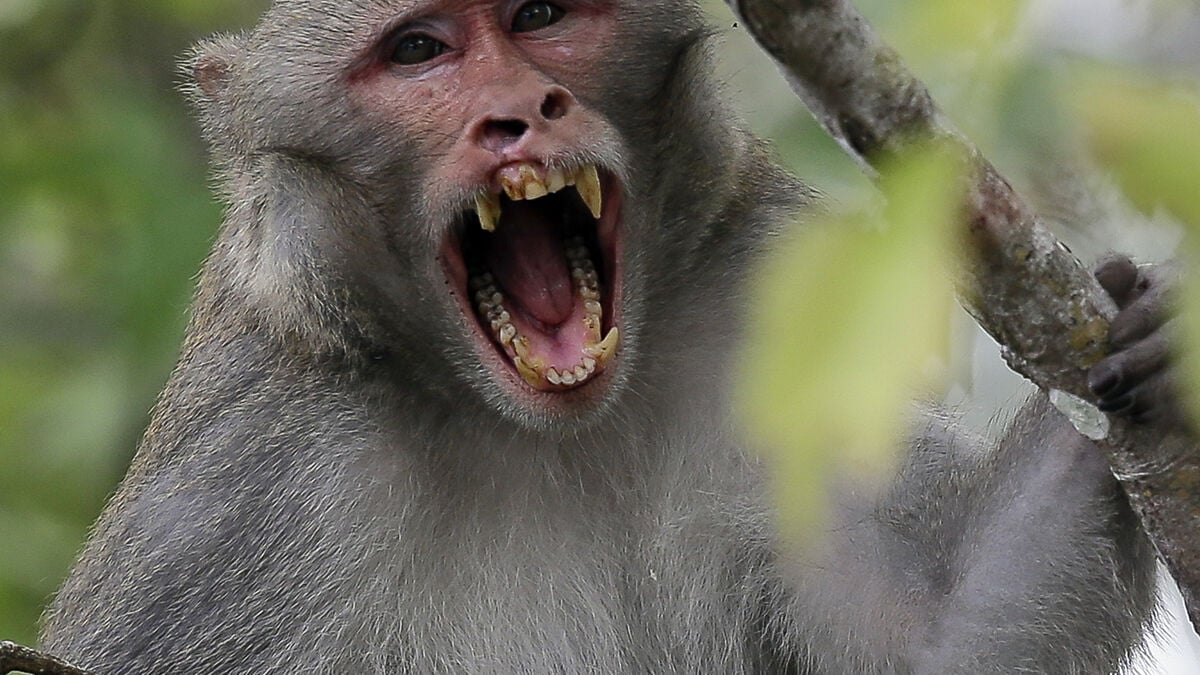
A team of researchers from the University of Warwick in the UK analysed recordings of four orangutans, two gorillas, four chimpanzees and three bonobos being tickled. They then compared them with four children who were also tickled. They found that all of them laughed in the same pattern, at the same rhythmic intervals.
The similarity shows that humans and apes inherited an ancient language structure from a common ancestor.
Same brain structure
Many animal species laugh, but monkey laughter is the most similar to human laughter. This suggests that the same brain structures are behind laughter, says Peter Gärdenfors, professor emeritus of cognitive science at Lund University.
The fact that evolution has selected for laughter also indicates that it is essential for us primates, perhaps above all socially, says Peter Gärdenfors.
But there are differences. The monkeys seem to laugh more spontaneously in play situations. The point of the laughter is to say: “This is fun, let's continue.”
Humans, on the other hand, can laugh calculatedly, mockingly, and deliberately manipulatively.
Laughing at the same humor
Humans are actually the only species studied that has developed control over laughter - which is also a fundamental building block of speech, according to the researchers.
Humans can control their vocal cords better than monkeys, which is necessary for developing language, says Gärdenfors.
Despite the difference, primates seem to laugh at the same things sometimes.
"We have seen chimpanzees laugh at those who fall, for example if someone slips on a banana peel. They seem to like slapstick, just like us," says Peter Gärdenfors.
The study is published in Communications Biology.