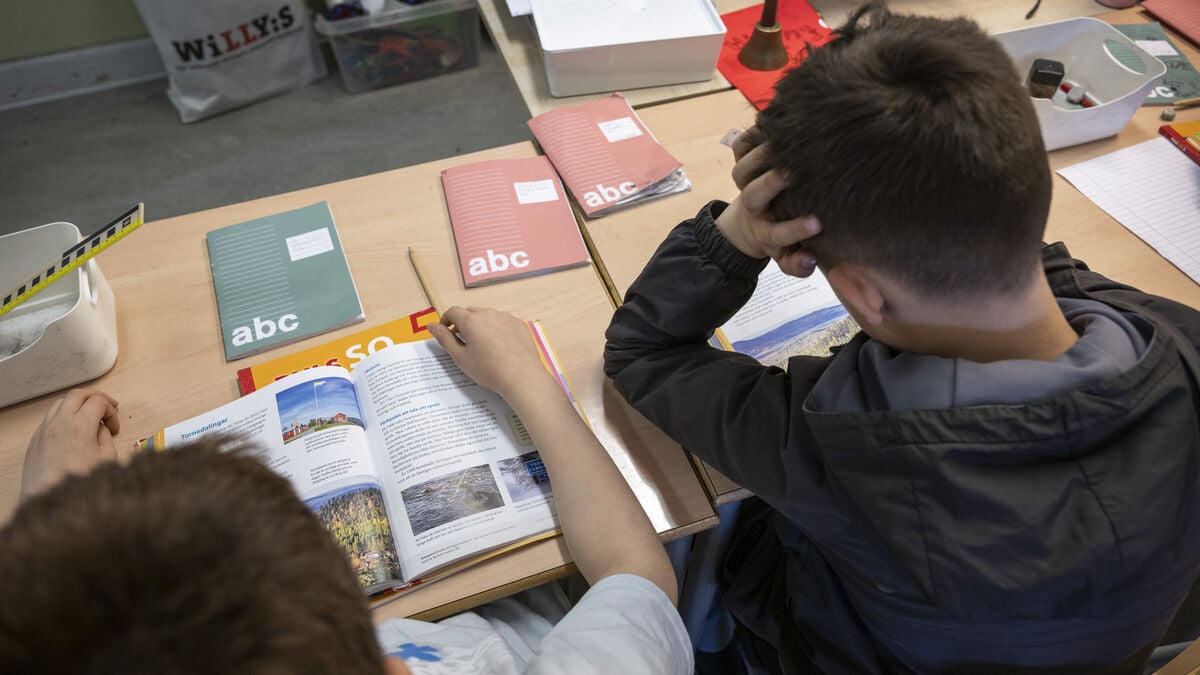
The Swedish National Agency for Education has investigated how students' reading and reading comprehension skills developed over a 20-year period from 2001 to 2021. The agency followed up on the international PIRLS survey, which measures the reading ability of fourth-grade students.
Greater difference between students
Even though reading has declined, Swedish students perform relatively well in international comparisons. What stands out is that the difference between the highest- and lowest-performing students in reading has increased, meaning that Sweden has the largest gap in the Nordic region.
However, schools with a high proportion of students with poorer economic, cultural and social resources have more students who do not reach basic reading comprehension levels. These schools have also seen the greatest decline in reading comprehension scores over time.
Sepideh Westerberg at the Swedish National Agency for Education cites staffed school libraries and teachers with strong expertise as measures to increase reading.
It is also important that there are other reading-promoting environments at school in addition to the school library. That there is good access to different types of texts and different books available even during breaks, and that the potential of the after-school center is used. We also highlight the role of preschool and how important reading aloud is.
Since the measurement period, several reforms have been introduced that may affect future results, according to the Swedish National Agency for Education.
Fewer books at home
In addition to reading that takes place in school, reading outside school has also declined. In a survey in the study, guardians stated they have fewer books at home and visit the library less often with their children. Guardians themselves are also reading less. The decline in leisure-time reading applies regardless of socio-economic factors.
The loss is greater among students with stronger socio-economic conditions. It shows that reading is declining on a broad front. It is worrying. It is primarily the school's responsibility to work with reading, but it is clear that when factors promoting reading outside the school deteriorate, it affects the whole, says Sepideh Westerberg.
In the study, the Swedish National Agency for Education monitors how the opportunity to develop reading skills among students has changed during the period 2001 to 2021.
Number of hours spent teaching reading and/or reading activities during a typical school week:
2001: 4.20 hours
2011: 4.20 hours
2016: 2.85 hours
2021: 3.12 hours
Source: Swedish National Agency for Education