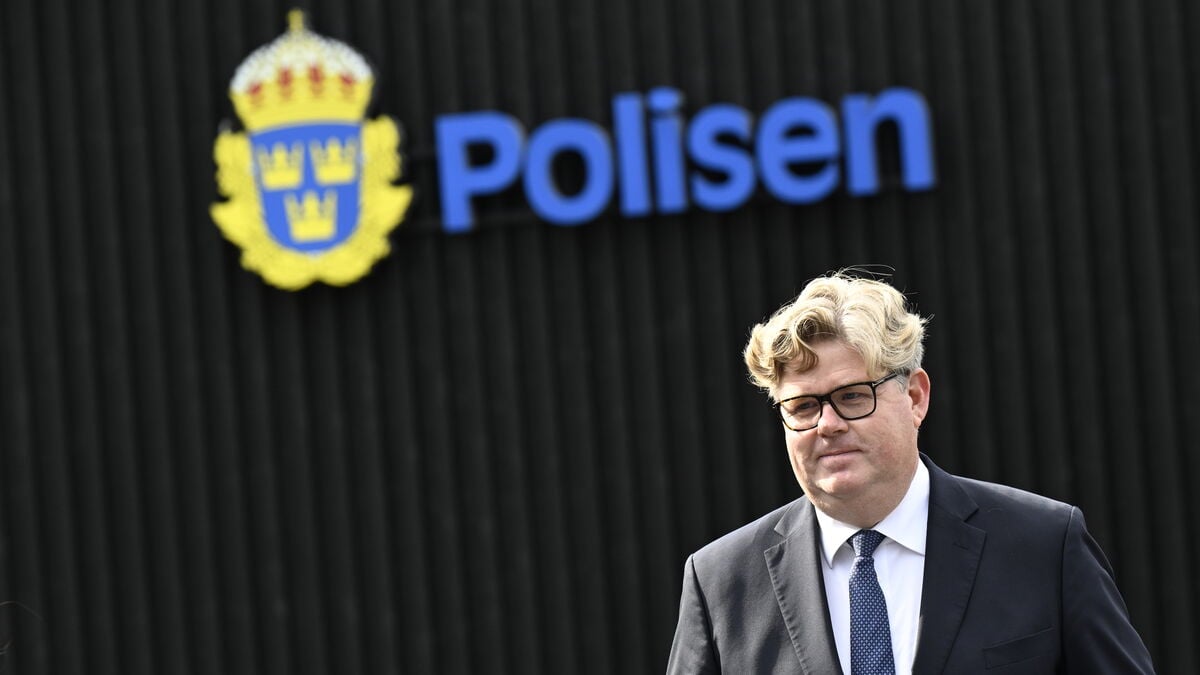
The government wants to see an increased focus on stopping gang recruitment of children in the 2026 appropriation bill for the police. Strömmer (M) describes it as “pulling children out of the darkness of gangs.”
We need to find ways to break the gangs' power over these children, he says.
It is important that the police, with their efforts, lead other actors in society in this mobilization.
Not satisfied
Strömmer has high hopes for the new laws enacted this year, which will provide increased opportunities to share information about children at risk. But he is not satisfied with the results so far.
We have not yet seen a meaningful change in how other actors in society share information - I'm thinking of schools and social services, he says.
Strömmer believes that there is a long-established attitude that children at risk are best protected by not sharing information.
Now the opposite is true, according to the Minister of Justice, who is calling for a “cultural shift.” Strömmer wants the police to take on the role of driving such a shift. The government is therefore ordering a report from the police in the 2026 appropriation bill on how information sharing works in practice and what effect it has.
Eavesdropping on children
Strömmer also believes that the new possibilities for the police to use secret coercive measures, such as wiretapping, for preventive purposes targeting children under the age of 15 could have a major effect next year. Here too, the government is ordering a report on how the police use the new tool and what results it produces.
The government also wants the police to develop their methods to counter online recruitment and for statistics to be produced on how many children were suspected of serious crime in 2022–2026.