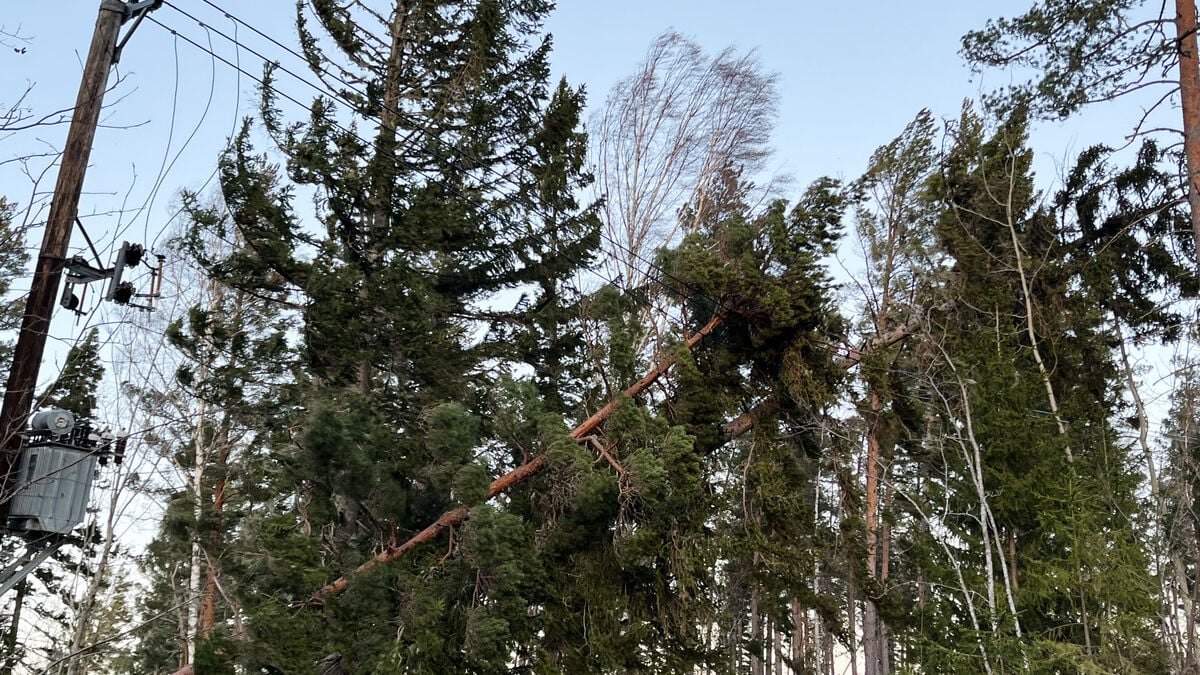
Even though things have started to calm down after the storms, there is still a lot to do.
"I was contacted just yesterday by an elderly man in the neighboring municipality who was stuck in the snow and needed help getting out. He had no food and couldn't shovel, so we helped him," says Eva Schönning.
The emergency preparedness group in Lingbo, located nearly twenty kilometers north of Ockelbo, is relatively new. Eva Schönning took the initiative to form it a year ago.
Like many other villages, we are quite isolated and there are many scenarios where we could be cut off. Then we have to be able to fend for ourselves - whether it's a power outage or a storm or a forest fire.
A gathering place
Over the past year, the group has worked to strengthen civil preparedness. Among other things, they have taken stock of the knowledge available among the residents and discussed different scenarios that could affect the village.
One thing we came to realize was the importance of having a safe place, a physical gathering place. In our village, it was Lingbogården.
Storm Johannes hit with full force in the intervening days. Ockelbo Municipality then turned to the emergency response group to ask if the farm could be opened since many were without power.
We kept it open so people could charge their phones, fill up on water, shower, have coffee and talk. Many people came there, says Eva Schönning.
Relatively good
Eva Schönning believes that overall, the tough storms have been handled relatively well.
The reason we have done relatively well in the village is partly that we have buried pipes, but also a great deal of luck.
She also points out that major maintenance work was done on the major pipelines last fall, where they cleared them with a helicopter.
To secure the power supply in rural areas, politicians need to prioritize maintenance work and buried lines, she believes.
You can't do anything about the storms, but there are things that can help you avoid the worst consequences.