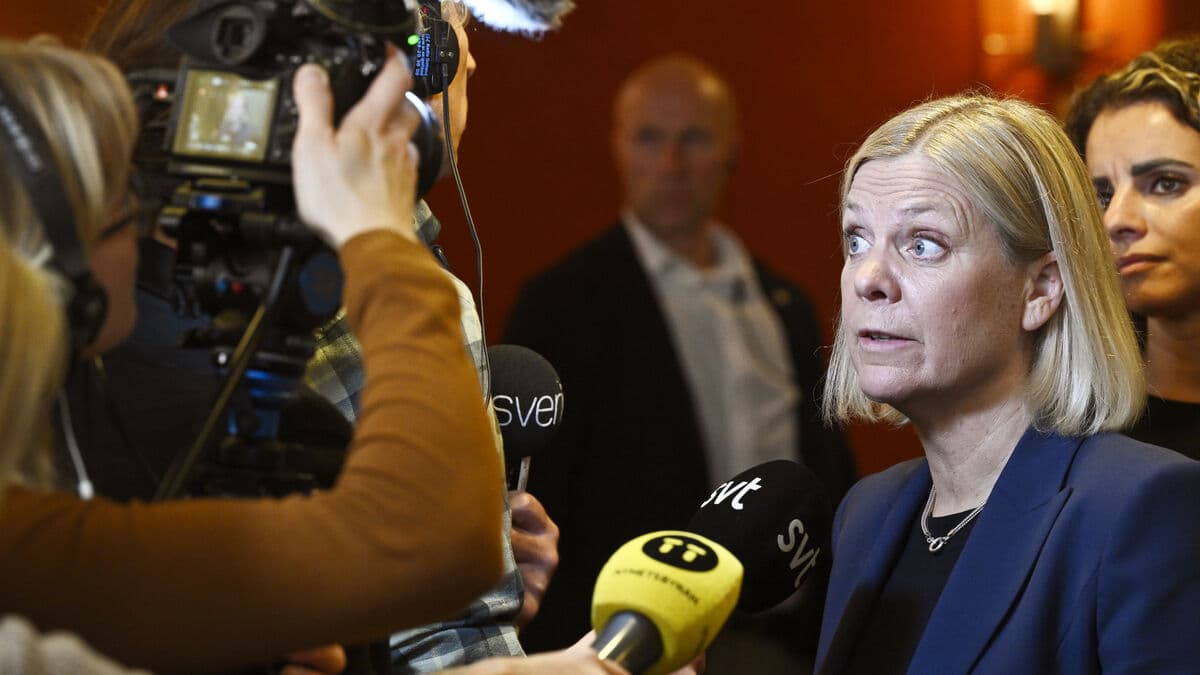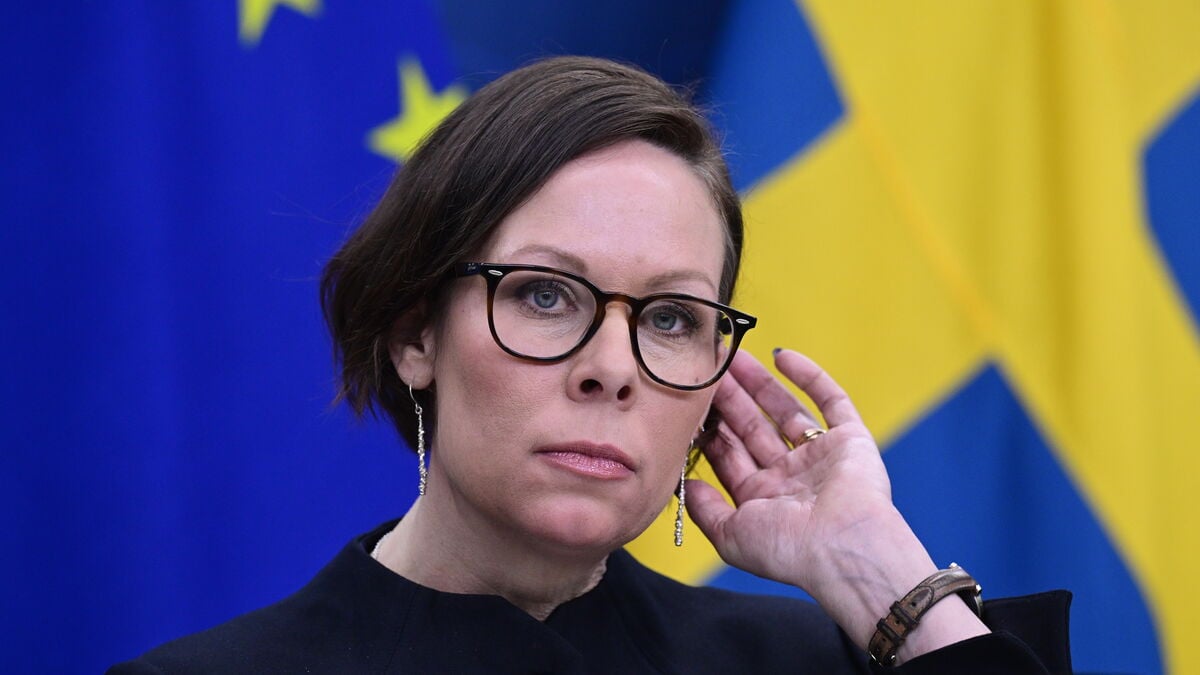
"There is great popular pressure and we support the people of Iran who want their rights and freedoms to be respected. But there is no clear plan for the day after the developments we are seeing now and that worries me," says Malmer Stenergard.
How much consensus is there in the EU on how to approach this issue?
Many of us have stated that Iran is an extremely destructive regime that is dangerous for the West and for its own citizens. It must not be allowed to develop nuclear weapons at any cost. There are different voices, and each is of course allowed to present its position, but the EU as a whole sees Iran as a regime that we must jointly put pressure on.
According to Malmer Stenergard, diplomacy is required both to achieve a peaceful transition to democratic rule in Iran in the long term and to eliminate the risk of Iran ever developing nuclear weapons.
We naturally urge everyone to come to their senses and to contribute to de-escalation so that we can return to the negotiating table as soon as possible.
Various motives
Malmer Stenergard called the question of whether US and Israeli attacks on Iran violate international law "a genuinely difficult question in a difficult situation".
On the one hand, we have a dangerous regime that is destabilizing not only the region but also poses a danger to the West and to its own citizens.
On the other hand, all use of force must be in accordance with international law. There must be support for it, and it is difficult to see that at the present time.
There are various motives for this intervention, but I note that in international law there is very limited scope to act in relation to other states to protect civilians.
Coordinated evacuations
The fact that a greatly weakened Iran would be a setback for Russia is positive, according to Maria Malmer Stenergard.
"Iran also has a very destructive role in supporting Russia and its warfare in Ukraine. It is good that the Iranian regime is being weakened in this aspect as well," she says.
During the extraordinary virtual meeting, the foreign ministers also discussed the safety of EU citizens in the region and activated a coordination mechanism for possible evacuations. Among other things, the countries will cooperate on outbound travel, for example by filling aircraft.