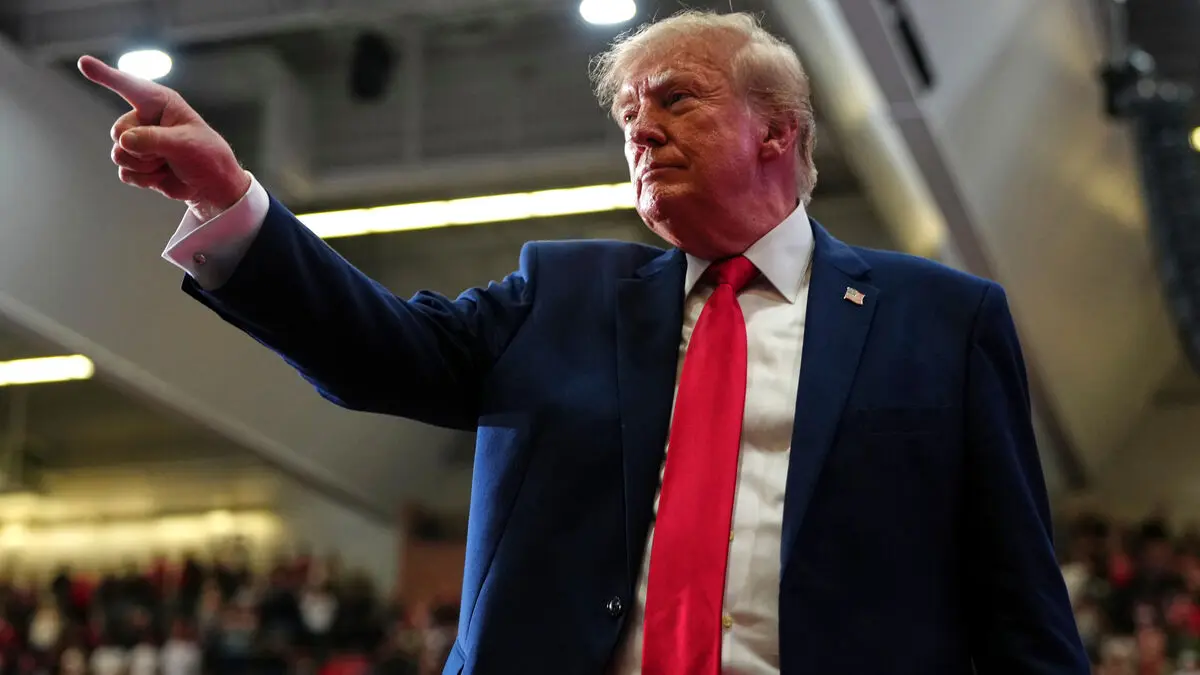
After threatening to bomb Iran to pieces, the US president announced an extended ceasefire earlier this week, citing Iran's difficulty in determining who is in charge.
When the Supreme Leader Ayatollah Ali Khamenei and several other powerful figures were killed, there was a series of shakeups in Iran's government, and the powerful Revolutionary Guard is considered to have become even more dominant.
More information and interpretations suggest that there is a kind of power struggle underway - at least over how much Iran should push back.
Separate bids
When the US first declared a ceasefire, Iran's foreign minister said the Strait of Hormuz was open to traffic again. Shortly afterwards, the opposite message followed, and the Revolutionary Guard closed the strait.
When new peace talks were announced in Pakistan on Monday, there were initially mixed messages from Iran. Finally, an Iranian condition for talks was put forward - that the US would first lift the naval blockade against Iran - a demand the Revolutionary Guard reportedly pushed through.
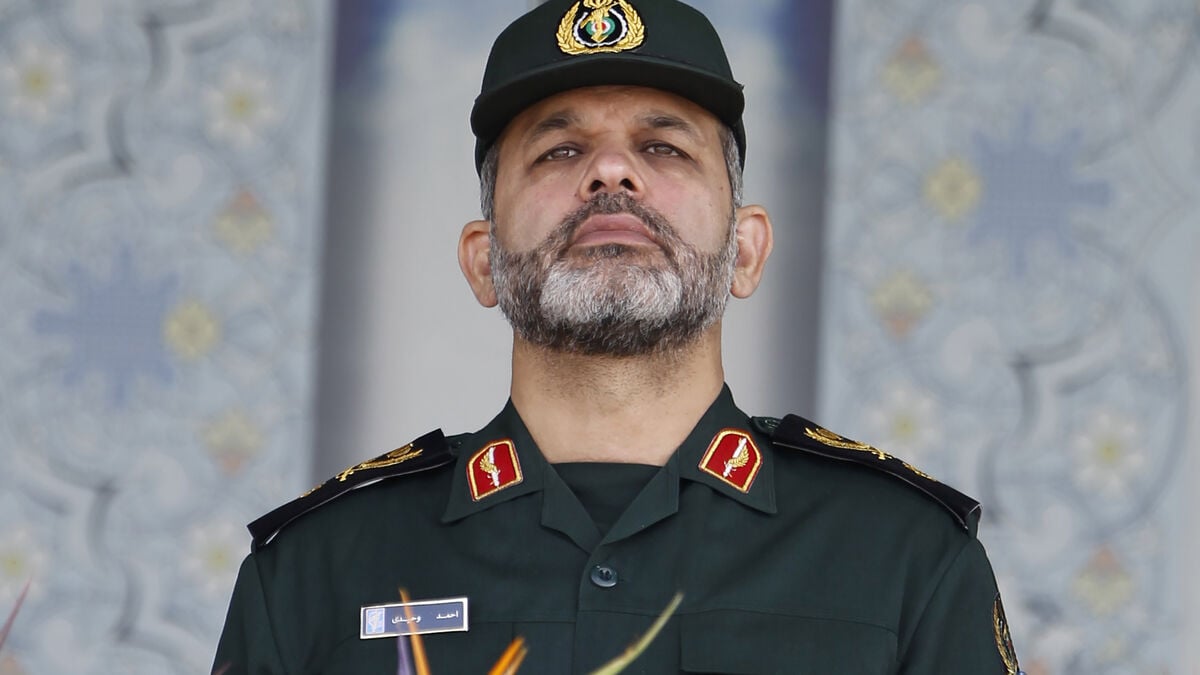
Iran's chief negotiator - the otherwise hardline Speaker Mohammad Bagher Ghalibaf - is said to want talks. The new supreme leader of the Revolutionary Guard, Ahmad Vahidi, is said to oppose negotiations and to lobby for Iran to keep the Strait of Hormuz closed, thereby stopping a large part of the global oil flow.
Vahidi seems prepared to risk a resumption of the war, analysts at the American think tank the Institute for the Study of War (ISW) write. And according to leaked sources, he is the one who has had the upper hand this week.
Notice of agreement
On Friday, Iran's new supreme leader - Ali Khamenei's son Mojtaba Khamenei, who has not been seen since the outbreak of the war - issued a written battle cry claiming complete unity. Speaker Ghalibaf, the head of the judiciary and President Masoud Pezeshkian made similar statements.
Although some of the Iranian leaders may be willing to negotiate, they have so far placed high demands on the US. Experts that AP and AFP have spoken to see no signs of a major conflict, but highlight the power-sharing as a kind of survival strategy.
Donald Trump has tried to call what is happening a regime change, but killed leaders have been quickly replaced. In the face of the American threat, the Iranian regime has instead closed in on its demands, Fredrik Meiton, Middle East expert at the Swedish Institute for Foreign Policy, told TT this week:
Iran has always used time as a strategic weapon. Even now, it is Iran that benefits from a protracted conflict.
In the first attacks of the war by the US and Israel, Iran's supreme leader, Ayatollah Ali Khamenei, was killed in Tehran along with several other key figures in the state leadership. In the subsequent raids, the Revolutionary Guard is considered to have strengthened its mandate.
Khamenei's son Mojtaba Khamenei was appointed as the new supreme leader. The 56-year-old is said to have close ties and many allies within the Revolutionary Guard.
The Guard's supreme leader Mohammad Pakpour, the Chief of General Staff Abdolrahim Mousavi, and the Minister of Defense Aziz Nasirzadeh were also killed at the outbreak of war.
General Ahmad Vahidi has taken over as leader of the Revolutionary Guard. Acting Defense Minister Majid Ibn-Reza has a background in the Guard.
The head of Iran's Security Council, Ali Larijani, was killed in mid-March and replaced by Mohammad Bagher Zolghadr, a former commander in the Revolutionary Guard.