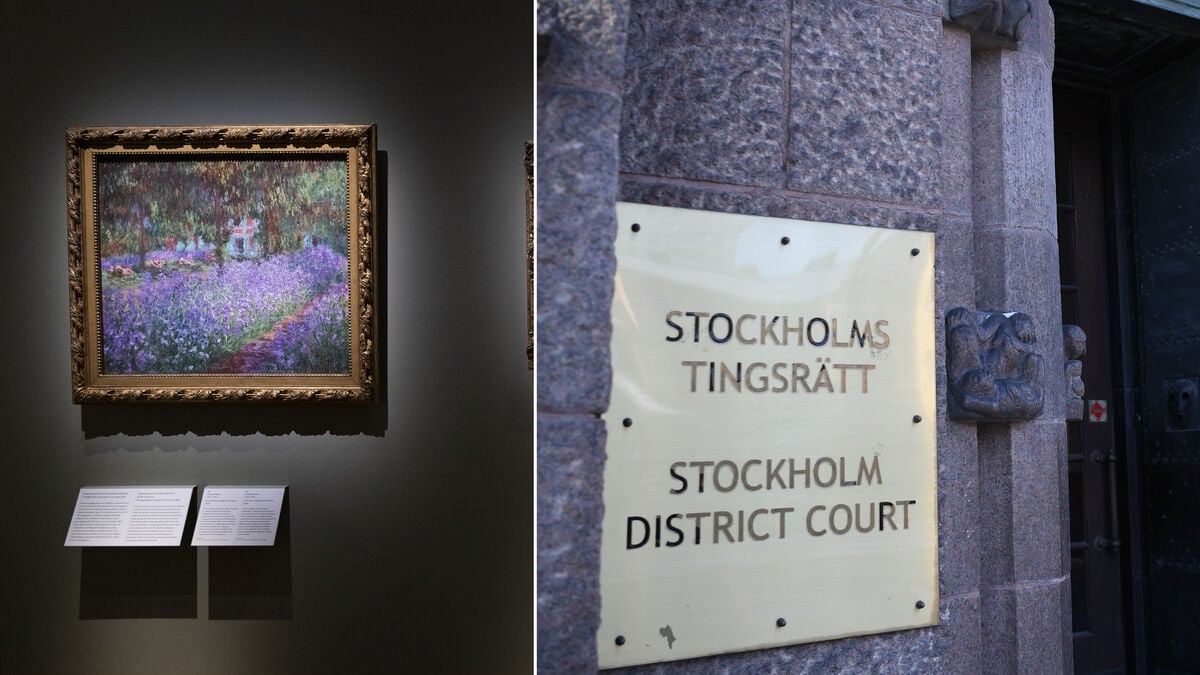
It was on June 14, 2023, that two women dipped their hands in paint and glued themselves to the glass protecting the Monet painting “The Artist's Garden at Giverny” at the National Museum in Stockholm. The painting was on loan from the Musée d'Orsay in Paris.
The women who carried out the action belonged to the group Restore Wetlands. They were charged, along with four other people, with vandalism.
Admitted the action
The six admitted to participating in the action but claimed that they acted because of the climate threat and that the action was covered by freedom of demonstration. Since the painting was behind protective glass and was not damaged, apart from a small stain on the frame, they denied vandalism.
The District Court concludes that the defendants did not intend to cause any greater damage than could be remedied by washing. The court also does not believe that the activists were indifferent to the risk that paint could end up on the picture frame.
Alparslan Tügel, defense attorney for one of the defendants, does not believe that the acquittal will lead to new climate actions against art.
"Very far-reaching measures have been taken to avoid damaging the art, I don't see that this will lead to any avalanche effect," he tells TT.
No damages
The defendants also do not have to pay damages. Nationalmuseum's Per Hedström does not comment on the verdict itself, but emphasizes that the action led to "an entire organization having to work for several days."
This is part of a broader threat to cultural institutions, which is driving up the costs of security arrangements, he says.
Facts: Statement after climate action
Following a series of international climate actions against works by artists such as Van Gogh, Picasso and Andy Warhol, gallery and museum directors issued a joint statement in 2022, according to The Guardian, stressing that the activists "seriously underestimate the fragility of priceless objects."