Tatarstan is best known in Swedish sports for having beaten Sweden in bandy in an infamous tournament in Kazan 25 years ago, when the ice cracked and national team star Pelle Fosshaug had to settle the match in a penalty shootout to calm the crowd.
But the Russian republic on the Volga has also appeared at the Olympics.
When Russian flags and national team uniforms were banned from competitions, the "neutral" cross-country skiers Saveliy Korostelyov and Darya Nepryaeva were instead supported by leaders and fans in the green-white-red colors of Tatarstan - the republic that both cross-country skiers compete for.
“How is that possible?”
The long-distance duo is happy.
"It's wonderful. We feel the support, including from many foreign spectators," says Nepryaeva, who otherwise clearly avoids talking about politics. She instead emphasizes how friendly everyone has been to her in Val di Fiemme.
Not everyone is happy. Reports that Russian flags have also been seen in the audience have attracted attention and protests.
"It's bad. How is that possible? I don't understand," says Ukrainian cross-country skier Sofia Shkatula, who had her home - just ten miles from the Russian border - bombed to pieces by Russia.
Criticism of disqualification
The International Olympic Committee (IOC) is trying to find some kind of middle ground with its acceptance of neutral athletes, as long as they do not officially compete for Russia.
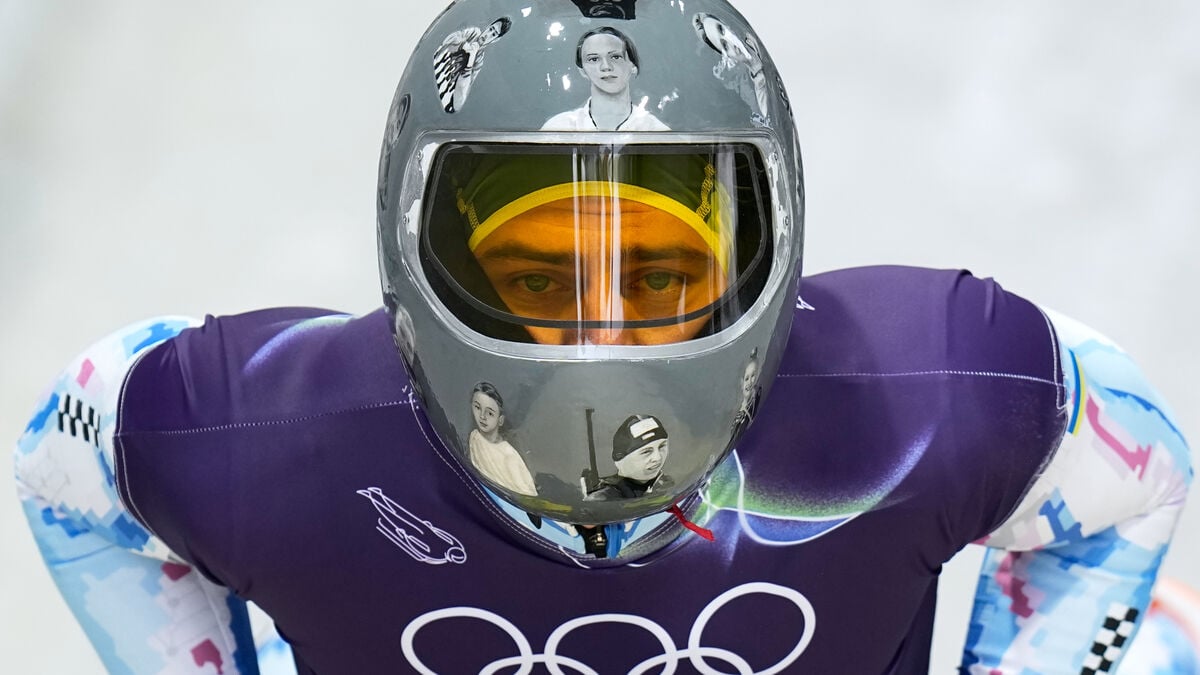
At the same time, criticism is fierce against the disqualification of Ukrainian skeleton racer Vladyslav Heraskevych because he wanted to wear a helmet that pays tribute to those who sacrificed their lives to save Ukraine from being wiped out.
"We are proud of Vladyslav and what he has done. Courage is worth more than medals," writes President Volodymyr Zelenskyj on X.
Flags should be removed
From the Swedish side, Åsa Edlund Jönsson, Secretary General of the Swedish Olympic Committee (SOK), nevertheless understands that the IOC must follow its own rules regarding political messages and equipment.
"It's nothing unique to the Olympic Games. But that doesn't mean that an active athlete is not allowed to express an opinion," she tells TT.
The SOK's line is that Russians and Belarusians should not be allowed to compete in the Olympics at all. And if any flags or anything else are seen, they should be removed.
Many activists feel squeezed by big politics.
"I have family in Russia, I have family in Ukraine. I just want it all to end," says Moldovan cross-country skier Elizaveta Hlusovici.