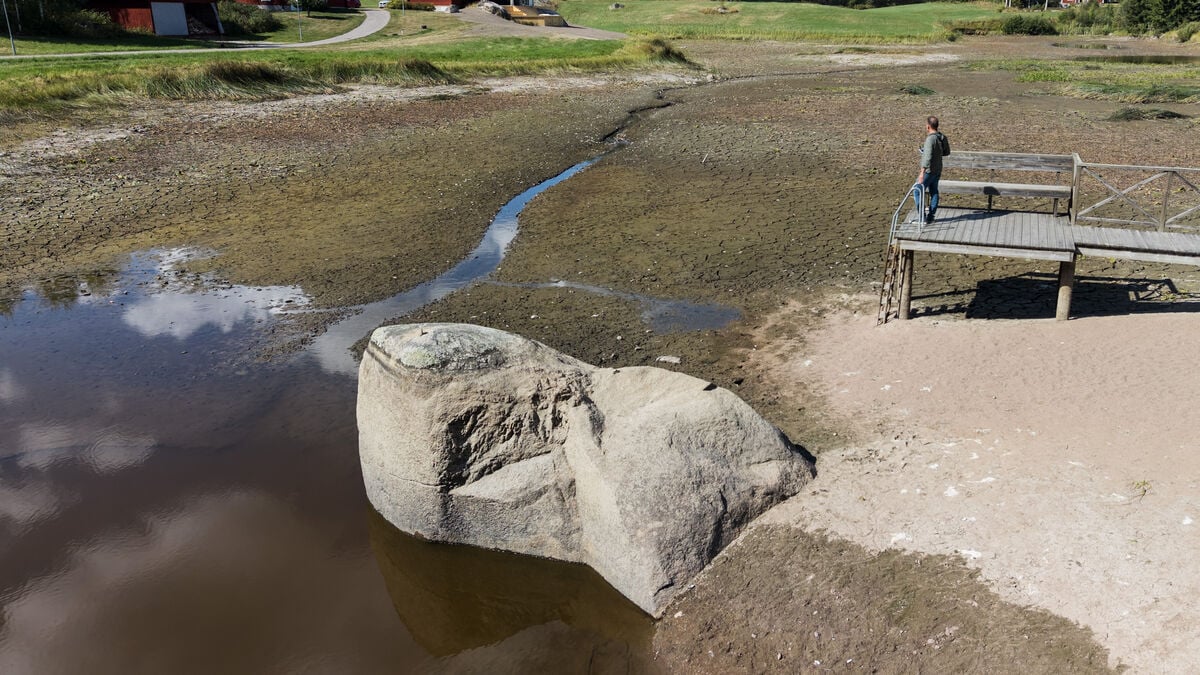
In 14 counties, groundwater levels are low, and in ten of them there is also a shortage in the watercourses. In Karbenningby in Västmanland, the Svartån River is almost dry. The ladder at the bathing pier leads down to a cracked lunar landscape.
In the last week of July, the Svartån River reached critical levels, says Isabella Segerström, a biologist at the County Administrative Board in Västmanland. The Svartån River is a sensitive watercourse that has previously had problems with low water levels.
When we have spoken to dam owners on site, there have been some varying answers. Some say they have never seen levels this low in Svartån while others say it is this low maybe every five years, she says.
Let's start over.
The low water levels affect agriculture and water supply, but also animals and nature.
The entire ecosystem has to start over when it dries out, says Andreas Holmberg, a limnologist at the County Administrative Board in Blekinge.
He has just been out and moved freshwater pearl mussels that have washed ashore in the Silletorpsån. The mussel is highly endangered, but the Silletorpsån is one of the few places where it lives and thrives.
There are extremely low flows, almost zero flows. There are a few measly liters of water and they need oxygen.
It looks really risky for our most viable stock.
The Silletorpsån is just one of Blekinge's waterways where the situation is serious.
In Nättrabyån it's like being down in Spain and walking in the riverbeds that are completely dry. It's really depressing actually.
Little precipitation
The reason for the low water levels is mainly a deficit in precipitation throughout the year, explains Gustav Strandberg, a researcher in regional climate at SMHI.
This is not something that is directly determined by how this summer has been. The large groundwater reservoirs take a long time to fill up and they take a long time to empty, so a few weeks of hot or dry weather make no difference, he says.
Then, warmer weather causes more water to evaporate before nature has time to use it.
More of the precipitation that falls evaporates when it's hot and that makes it unavailable - it dries faster. It's clear that if we hadn't had climate change, the effects might have been a little weaker.
Low groundwater levels prevail in Uppsala County, Stockholm County, Örebro County and Södermanland County.
In Västmanland County, Västra Götaland County, Östergötland County, Jönköping County, Kalmar County, Gotland County, Halland County, Kronoberg County, Skåne County and Blekinge County, there are low groundwater levels and low flows in several watercourses.