This means that almost twice as many Sudanese are estimated to be living in poverty compared with when the civil war broke out in April 2023, according to Luca Renda, UNDP representative in Sudan.
Three years into this conflict, we are not just facing a crisis - we are witnessing the systematic erosion of a country's future, Renda told AFP in connection with the release of a new report by the UNDP on the situation in Sudan.
“The world's worst humanitarian crisis”
In civil war-torn Sudan, paramilitary RSF (Rapid Support Forces) are fighting the country's army, but the civilian population is the hardest hit. How many have been killed is difficult to assess; AFP describes it as "tens of thousands" while analysts have estimated it could be over 100,000.
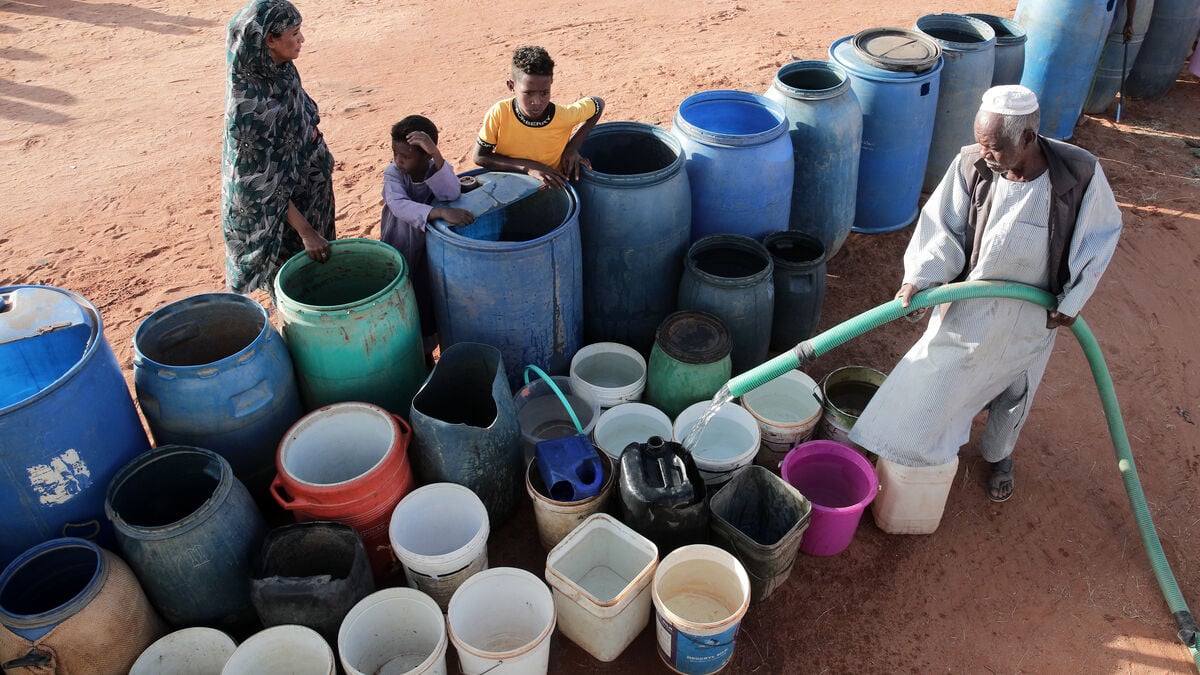
Large areas are affected by famine and, according to the Red Cross, around 13 million people have been displaced - of whom about 4.5 million have fled to neighboring countries such as South Sudan and Chad.
"The crisis in Sudan is currently the world's worst humanitarian crisis and it does not stop at the country's borders. People are fleeing in search of safety but are ending up in overcrowded reception centers without enough food or clean water, where medical supplies are dangerously low. Most of the people in the refugee camps are women and children, and they are at great risk of being exposed to violence," says Anders Pedersen, international director of the Swedish Red Cross, in a press release.
“Need action now”
Previous efforts by the US, Saudi Arabia, the United Arab Emirates and Egypt have failed to achieve a ceasefire. An international conference is being held in Berlin on Wednesday to try to revive peace talks and gather aid.
We need action now, says UN humanitarian chief Tom Fletcher, according to AFP.
The war in Sudan is between two rival militaries and has been raging since April 2023.
On one side is the regular army, led by General Abd al-Fattah al-Burhan and with a power base in an establishment around the capital Khartoum and the Nile in the east.
On the other side are the so-called RSF forces, led by Mohammed Hamdan Dagalo (nicknamed Hemedti). They have their origins in the so-called Janjawid militias that former dictator Omar al-Bashir hired to brutally crush an uprising in the devastating and ethnically-charged Darfur conflict in the early 2000s.
Al-Bashir was overthrown in a wave of popular protests in 2019. But just over two years later, the two armies he had left behind - the regular military and the RSF - seized power in a joint military coup. Rivalry grew within their joint junta rule, and eventually full-scale war broke out between them.
The military is believed to be receiving support from Egypt, Saudi Arabia and Qatar. The RSF is believed to be receiving support from the United Arab Emirates.