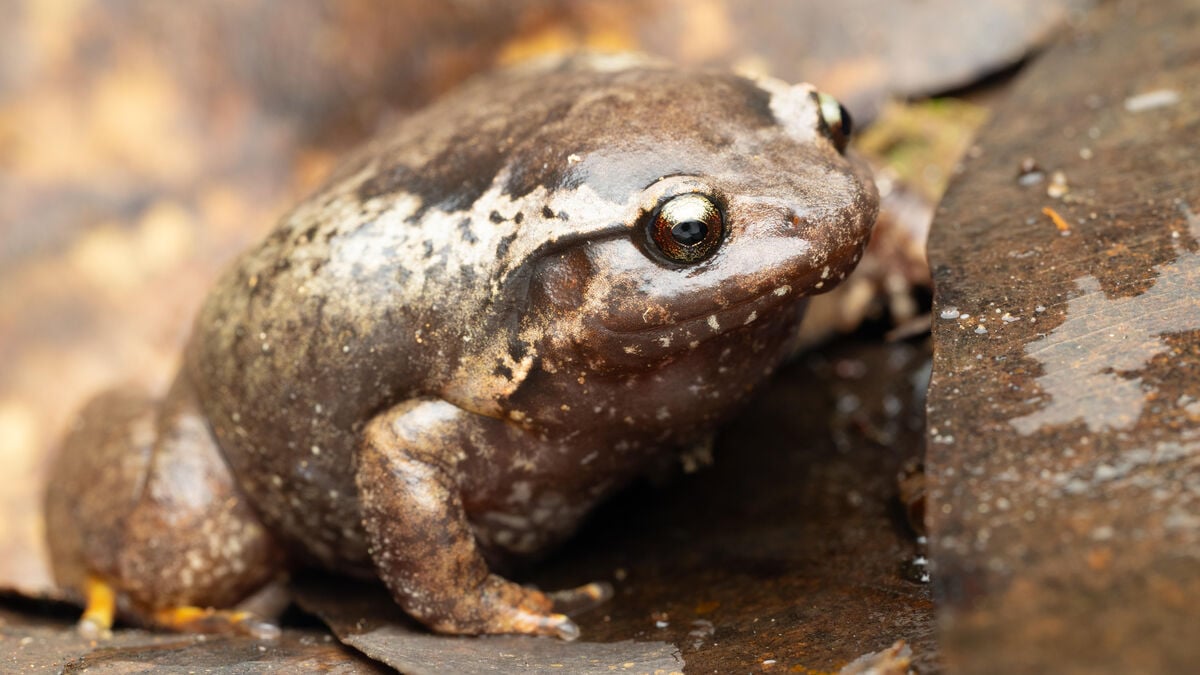
The genus to which the frogs belong has the Latin name Rhombophryne and is called the diamond frog because its body shape resembles a rhombus.
The name is a bit ironic. Frogs don't sparkle like diamonds, but you might have to dig a little to find them, says Mark D. Scherz, a herpetologist and the person who led the study.
Mapped the frogs
The Natural History Museum of Denmark, together with an international team of researchers, has mapped Madagascar's frogs. The study took twelve years and, among other things, required advanced DNA sequencing.
We have gone through old museum archives and compared them with new DNA to determine which species were undiscovered, says Mark D. Scherz.
Another reason it took time is that the frogs can be difficult to find.
You have to be in the right place at the right time and sometimes you don't see them when they're hiding under the leaves. You have to perk up your ears.
There may be hundreds more
Several of the species are believed to be endangered and the researchers hope that the discovery will lead to increased knowledge about the animals' habitat.
By finding these species, we have gained more understanding of how they live and how they should be protected, says Mark D. Scherz.
The research project is now complete, but he believes there may be reason to return to the forests of Madagascar.
There may be hundreds of species left to discover. I often joke with my colleagues that we should never retire.