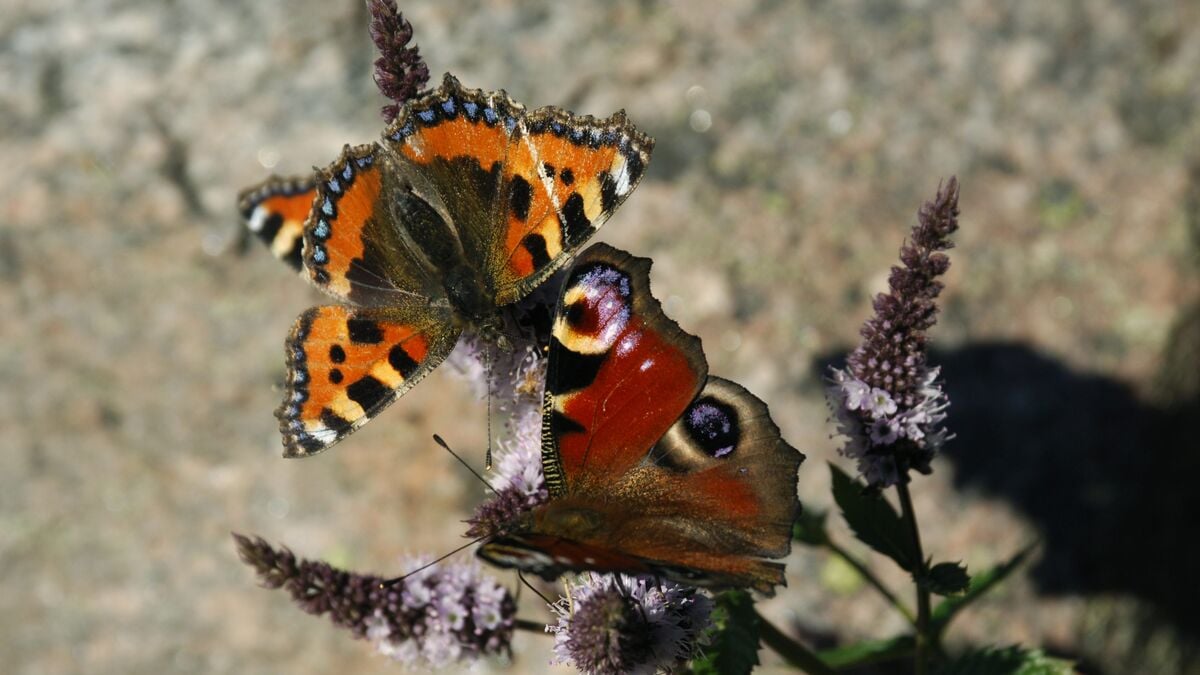
More and more people are choosing to literally let their garden bloom. This creates good conditions for biodiversity and attracts not only pollinating insects but also other animals.
If you set up a garden that invites hedgehogs, small birds and butterflies, it is truly proof that you have done something good, says Jessica Ångström.
"Junk tree"
She thinks it's a good idea to keep a few piles of leaves or brushwood, or save a strip of weeds. Stinging nettles, for example, are an important host plant for butterfly larvae. Now in the spring, it's a good idea to save dandelions, which are popular with insects. This also applies to willows, which bloom early in the spring.
The willow is seen as a bit of a junk tree that you might want to take down, but if you have one on your property, you should save it, says Jessica Ångström.
Deciduous trees serve as hosts for many moths. Small birds, such as blackbirds, enjoy eating fruits and berries. Insects can hide in the bark - making sure they thrive is generally a successful approach, as they also become food for other animals.
If you have flowering trees on the property, it is absolutely the best for a diversity of species, says Jessica Ångström.
Keep the rats away
Shrubs are useful for the nocturnal hedgehog, which can hide in them during the day. The hedgehog is considered vulnerable and has been proposed for protection. Statistics show that it has largely disappeared from its natural range, as the small-scale agricultural landscape has shrunk, according to Jessica Ångström.
The hedgehogs have truly found a haven in our gardens, she says.
But it's wise to avoid feeding hedgehogs and birds, at least if you don't want rats to visit.
For this reason, avoid feeding animals and instead try to ensure that the garden's food webs function, says Jessica Ångström.
If you really want to benefit animal and insect life in your garden, you can try creating a meadow. It requires a little work, but a good start is to let the grass and other plants grow, according to Jessica Ångström.
You have to have a little patience, but it will be very nice over time, she says.
Facts: This is how animals thrive in the garden
Hedgehogs: Hedgehogs are active at night. Therefore, they benefit from bushes to hide in during the day. They like to overwinter in a pile of leaves left undisturbed. Hedgehogs eat beetles, among other things; beetles can thrive in dead wood.
Butterflies: Butterflies like flower beds that bloom from early spring to late autumn, preferably with nectar-rich flowers such as lavender. Butterfly larvae usually live on a single plant, preferably stinging nettles.
Blackbirds (or other small birds): Save flowering deciduous trees, especially those that bear fruit and berries. They provide food for blackbirds and other small birds. Insects, which can hide in the bark, also provide plenty of food for the birds.
Bees: Bees, like butterflies, are drawn to nectar-rich, colorful flowers. Turning part of your lawn into a meadow benefits several different species, including bees.
Sources: Jessica Ångström/WWF, Swedish Society for Nature Conservation