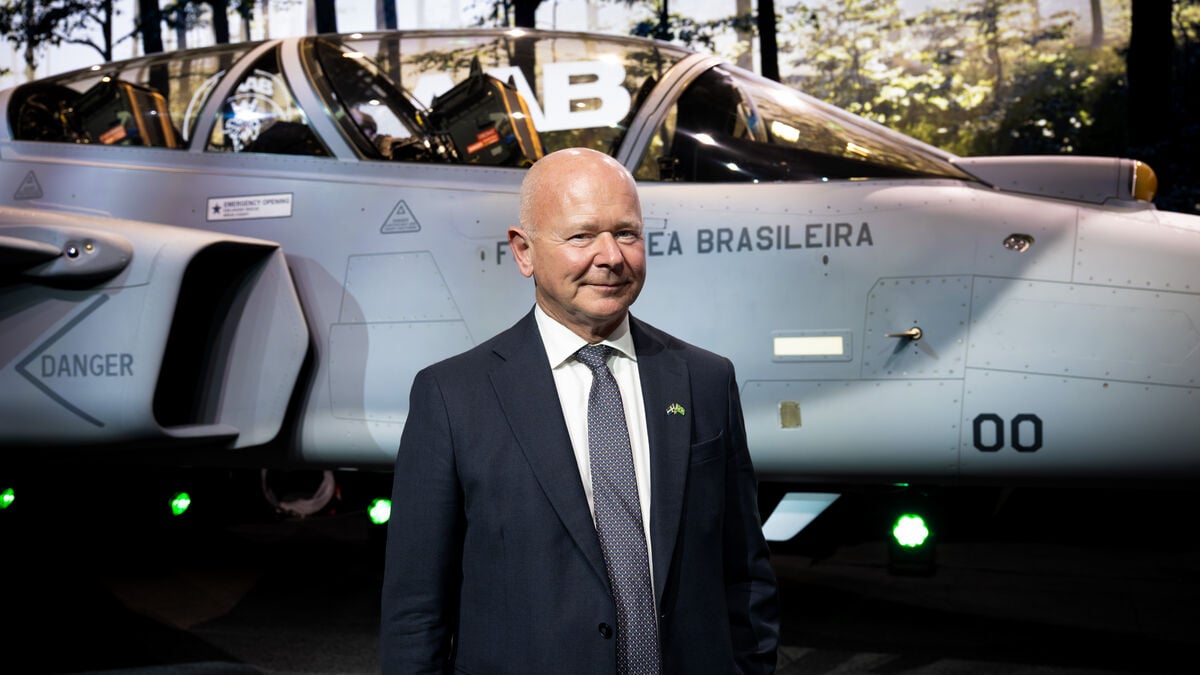
"It is of course a very important issue, but we are doing everything we can. We have invested in increasing capacity, new factories and are hiring many talented new employees. We are also working very hard with the supply chains and putting a little more stock on what may be critical components and raw materials," Micael Johansson tells TT.
So far this year, recruitment has reached 1,600 people and the annual rate is 3,000 net, says Johansson.
About 80 percent of the jobs are in Sweden and 20 percent in other countries.
The global defence industry, with Ukraine as a pioneer, is increasingly focused on drones. This also applies to Saab.
Unmanned autonomous systems that sometimes interact with manned ones are part of the future and we are investing a lot in research, development and money to develop such systems.
Saab already has a swarm system with smaller drones, but is working on developing ones with longer range, says Micael Johansson.
Right now we are complementing Gripen with an unmanned system, as a first step towards the future. We are investing on all fronts in these types of systems, but also in countermeasures against them.
The preparedness that the NATO alliance is building, where member countries agree to spend 3.5 percent on military defence, ensures the defence group's future growth, he believes.
I am convinced that growth will continue for many years, says Micael Johansson.
Correction: An earlier version of the text stated an incorrect time period for Saab's results.
The defence group Saab reports an operating profit of SEK 4.7 billion for the first half of the year. This compares with SEK 3.4 billion during the corresponding period last year.
Order intake surged by 82 percent to SEK 86.6 billion, and the order backlog thus swelled to SEK 317.7 billion, up 61 percent compared with a year earlier.
Both sales and profit were better than expected in the second quarter, according to Bloomberg.
Revenue increased 25 percent to SEK 44.6 billion.
Source: Saab