Even though the cause of the disaster was clear relatively quickly – a bow visor that came loose in heavy seas – the conspiracy theories live a life of their own.
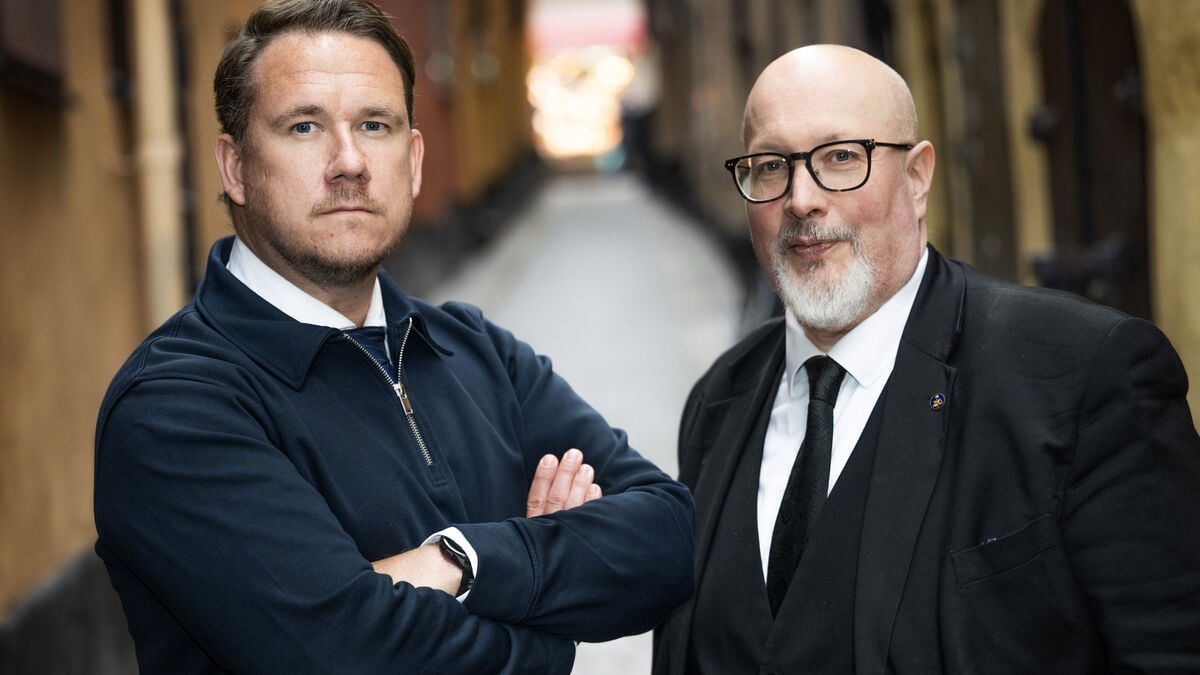
In “The Last Lie – Estonia and the Legacy of the Russian Spy,” Patrik Oksanen and Andreas Edevald, a former diplomat who worked at the Psychological Defense Agency, show that much of it can be traced to one person: Anton Surikov, a colonel in the GRU.
The Felix Report
The book paints a detailed picture of Surikov, the son of a powerful rocket engineer in Moscow who began his career studying mechanical engineering but eventually rose to the top of Russian intelligence.
The core of the book is the so-called Felix Report, written by Surikov in early 1995. Outwardly, it appears that a serious research group is behind it, but the authors show that it is a backdrop created by the intelligence service.
In short, the report says that Chechen criminals and high-ranking Estonians are using the Estonia to smuggle drugs and radioactive substances. Then they receive information that customs is planning a raid that night. Therefore, they have to open the bow visor and drive out the trucks with radioactive substances, which is why the ship sinks, says Edevald.
Blackout
The story from the GRU was packaged in a way that made it malleable, but the essence was that it was a cover-up, says Oksanen:
Then both the reason why it sinks and what is being smuggled change. Surikov is there and instigates the change as well.
According to the authors, the main target of the report was Estonia, as part of a larger advocacy campaign.
The report is reproduced in Russian and Estonian media and then becomes central to the reporting in the German Der Spiegel, which interviews Surikov. These features mean that the report eventually has an impact in Sweden, including in Expressen and "Efterlyst".
Distrust has continued to live on since then and has returned in various forms, not least in Discovery's documentary "The Find That Changes Everything" - which, according to the authors, has clear echoes from Surikov.
It is difficult to say how much of an impact the Felix Report and Surikov (who died in 2009) actually had, but shortly after the accident, few Swedes believed theories of a cover-up. Disbelief came later.
It has drawn energy and power from friction. The Felix Report and GRU have contributed to this to a very large extent, says Patrik Oksanen.
The ferry M/S Estonia sank on the night of September 28, 1994, en route from Tallinn to Stockholm. 852 people died, of whom 501 were Swedes. 137 people were rescued.
The International Accident Investigation Board (JAIC)'s main conclusion about the accident was that the fasteners and locks for the Estonia's bow visor were undersized. When the bow visor came loose, large amounts of water rushed onto the car deck and caused the ship to capsize.
JAIC's conclusions were essentially confirmed in a new investigation by the accident investigation boards in Sweden, Finland and Estonia, which presented their results in December 2025.