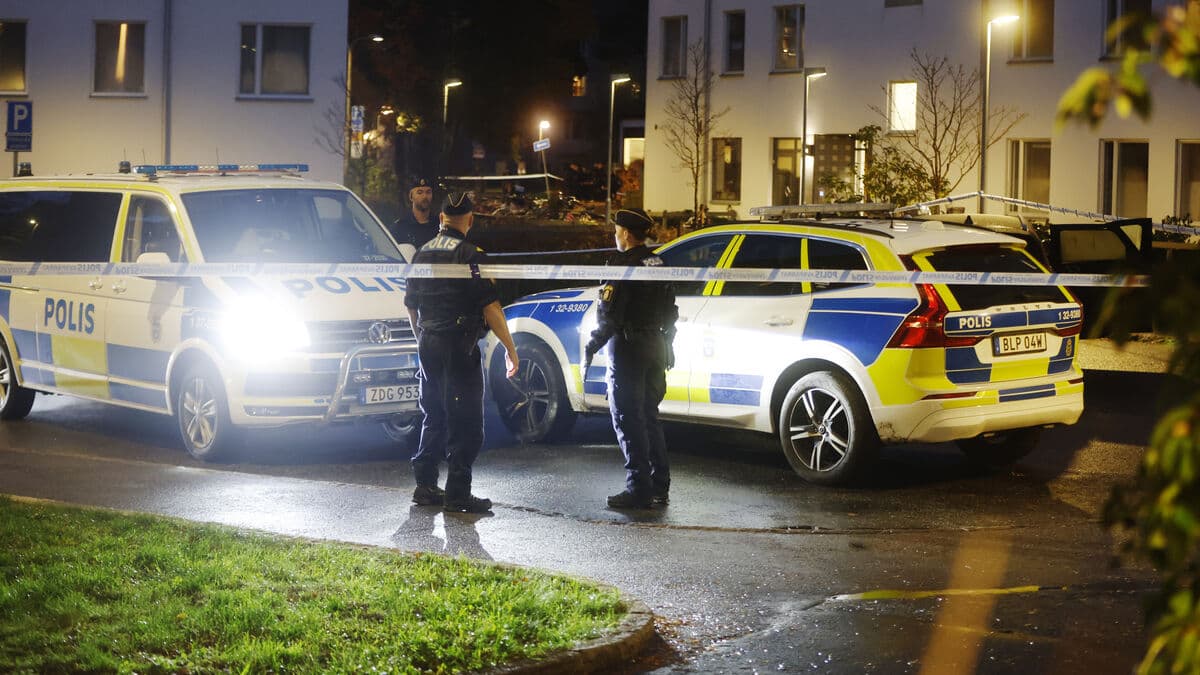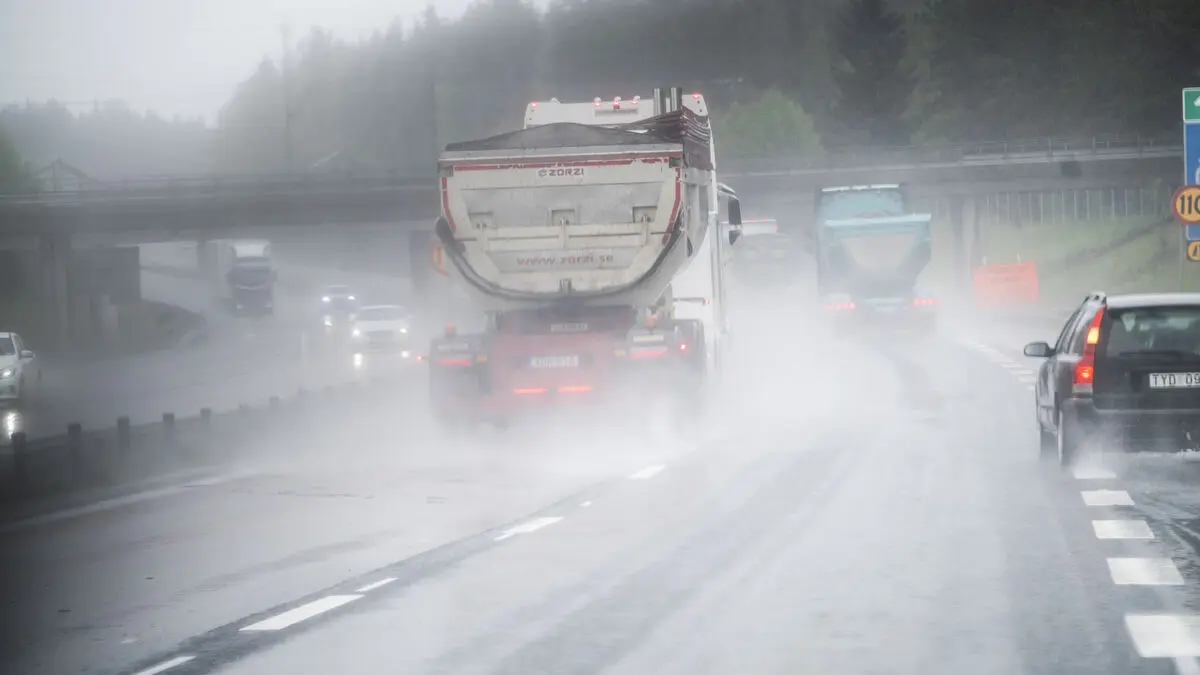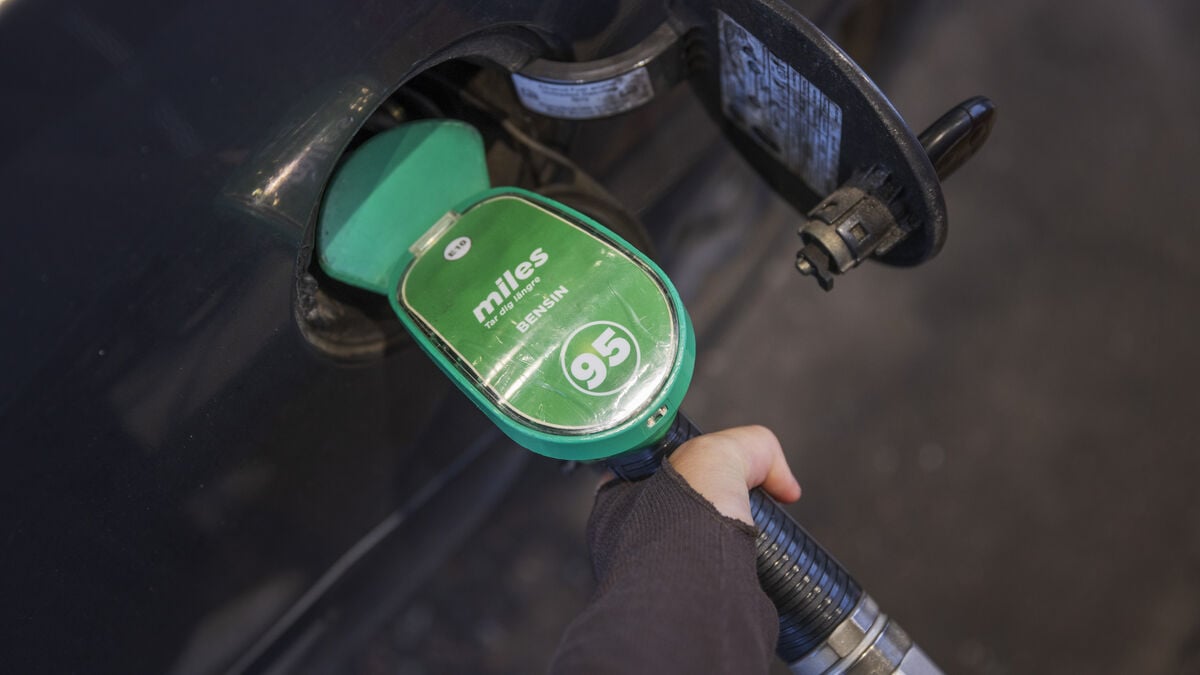
Sweden has experienced fuel shortages only twice so far, in 1956 and 1974. Now there is a risk that the war in Iran - and the uncertainty surrounding oil transport through the Strait of Hormuz - will trigger a new crisis.
The International Energy Agency (IEA) has warned that jet fuel in Europe is at risk of running out in six weeks.
At the same time, both Finance Minister Elisabeth Svantesson (M) and Prime Minister Ulf Kristersson (M) have spoken out about possible rationing of oil in Sweden.
"Every day the war drags on increases the risk of these kinds of economic consequences. We are following this extremely closely," Ulf Kristersson said last week.
Large volumes
Christian Kopfer, a commodities analyst at investment bank Arctic Securities, believes that Sweden's strategic fuel reserves can mitigate the energy crisis somewhat.
But in the end, the emergency stockpile won't be enough either.
"We're reaching a limit even when it comes to classic fuels," he says.
"Then it's always really hard to say exactly which day, which week. But during the summer months, you can't avoid it anymore, and then you're in a rationing situation."
How could rationing be implemented?
"It becomes a 'cheese grater' principle, where you try to take a little here and there. The problem is that the volumes involved are so large," Christian Kopfer says.
Unsafe location
According to Ella Kilim, head of the Swedish Energy Agency's energy preparedness department, it is currently the supply of aviation fuel that is being hit hardest by the war.
"Unlike gasoline and diesel, for example, aviation fuel is often kept in smaller stocks. This means that there is a high degree of dependence on continuous deliveries," she says.
"The supply of both diesel and gasoline is currently considered stable in Sweden, both in the short and long term. However, different scenarios need to be considered, as the situation is very uncertain."
Rationing is not an option until the very last resort, she continues.
"Rationing is a tool used as a last resort, when the assessment is that access to fuel is so limited that there is not enough for everyone," she says.
"This will prioritize socially important activities, such as air ambulances. But that is not currently the case."
If the Swedish Energy Agency assesses that Sweden is at risk of an acute fuel shortage, the government can decide on rationing.
Before that, the authority can use, for example, information campaigns and measures to encourage increased travel by public transport.
In peacetime, Sweden has experienced fuel shortages only twice - in 1956 during the Suez Crisis and in connection with the oil crisis in 1974.
Sweden has a contingency stock of fuel equivalent to 90 days of net imports, which is held by commercial operators.
During the spring, a so-called stock drawdown will take place, following a decision by the government at the initiative of the International Energy Agency (IEA). The drawdown means that parts of the emergency stockpile will be made available on the market to stabilize it.
Collective stockpiling has only been carried out six times since the IEA was formed in 1974.
In addition to this year's drawdown due to the war in Iran, previous drawdowns were for the Persian Gulf War in 1991, the hurricanes in the Gulf of Mexico in 2005, the conflict in Libya in 2011, and twice because of the war in Ukraine in 2022.
Source: Swedish Energy Agency.