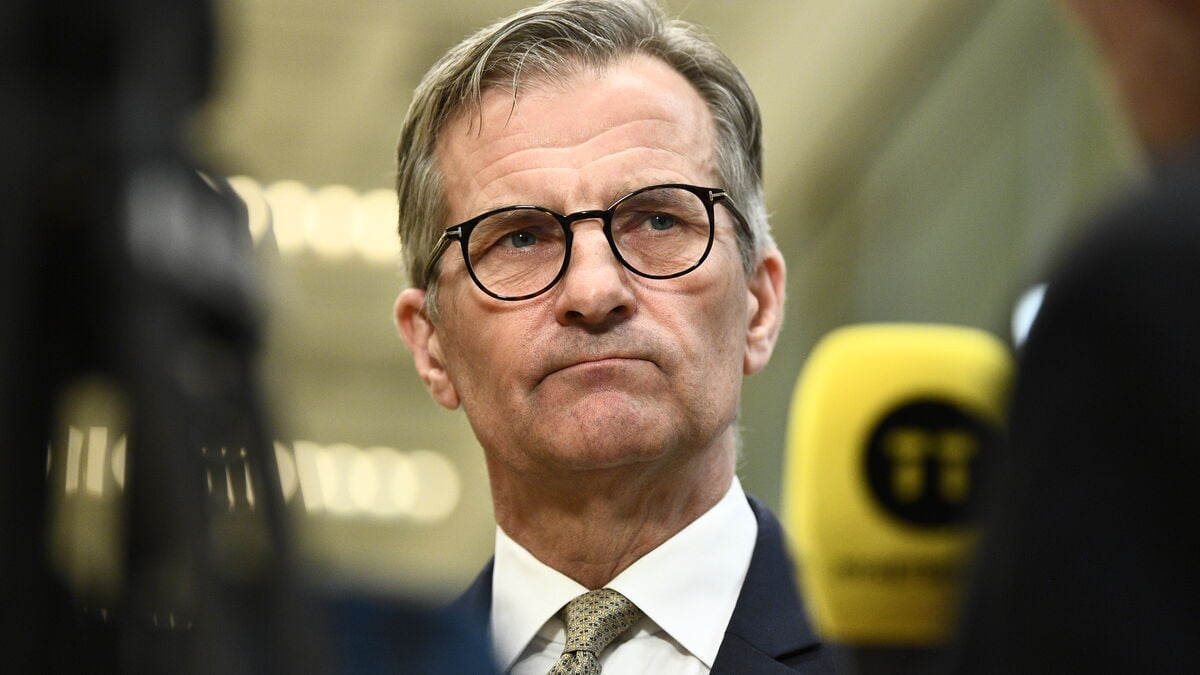
The Swedish Central Bank's Executive Board agreed to leave the key interest rate unchanged at 1.75 percent in its second interest rate decision of the year. But what will happen in the future is unusually difficult to predict, according to Thedéen.
The Swedish Central Bank is raising its inflation forecast and lowering its growth forecast. But the main scenario is that the key interest rate could remain at 1.75 percent for the rest of the year and possibly be raised sometime before the end of 2027.
“Important to be prepared”
But the Swedish Central Bank also has two alternative scenarios embedded in the interest rate decision. In one alternative scenario, there will be an interest rate increase. In the other, there will be a reduction.
How it ends will be determined, among other things, by how long the Iran war lasts - and whether there will be long-term effects on production and transportation in the global energy sector or serious spillover effects, according to Thedéen.
It is important to be prepared for a different development, he says.
He is clearly concerned about the consequences of the Iran war.
War always means - and first and foremost - great human suffering. But it also affects macroeconomics, in this case primarily through higher energy prices, says Thedéen.
This is a very serious situation for the world economy, he adds.
A new recession combined with sharply rising prices - a condition economists usually describe as stagflation - would be “a very difficult situation for both fiscal and monetary policy,” according to Thedéen.
Because inflation must then be combated by dampening demand at a time when demand is weak, he says.
Otherwise, there is a risk that monetary policy will lose its credibility, inflation expectations will skyrocket and push up wage demands and consumer prices in a vicious spiral.
“It’s difficult to navigate now”
The Swedish Central Bank Governor's tip for worried households is to make sure you have a buffer with good margins.
You shouldn't borrow so much that you can't handle rising interest rates, he says.
The Swedish Central Bank's decision to wait on interest rate changes in the uncertain situation is getting a thumbs up from analysts.
It's difficult to navigate now, says Nordea's chief analyst Torbjörn Isaksson.
"There is no reason to run too fast. We need to see where this is going and what the effects will be and what is weighing most heavily," says Mattias Persson, chief economist at Swedbank.