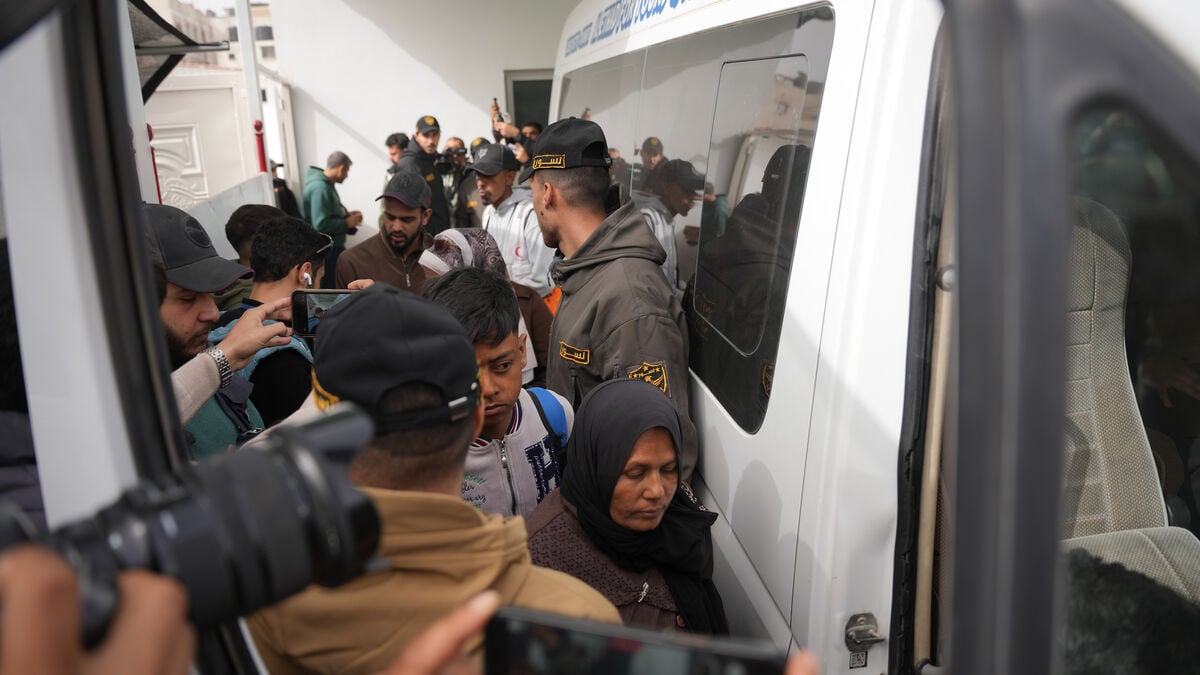
The reports about the ambulances come after many hours of waiting for the border crossing to open for the first time in about two years, as announced by Israel's coordination authority COGAT, among others.
Rafah is seen as the Gaza Strip's most important link to the outside world, as it is the only border crossing that does not face Israel. But that is now qualified, as Israel has stationed forces in the so-called Philadelphia Corridor, a narrow buffer zone between the Gaza Strip and Egypt, during the war.
Furthermore, during the first phase of the ceasefire, Israel has so far only withdrawn from about half of the Gaza Strip - so anyone who wants to travel between Egypt and Palestinian-controlled Gaza needs to cross several kilometres held by the Israeli military.
20,000 waiting
Sources tell Israeli media that Israel will continue to control everything and everyone who passes through. Egyptian sources also say that a maximum of 50 Palestinians in urgent need of medical care will be released per day. They will be allowed to bring two relatives each, which means a cap of 150 people released daily.
This can be compared to the estimated 20,000 Palestinians in the Gaza Strip, according to the BBC, waiting for medical evacuation. Just clearing that queue would take over a year at the current rate.
Closed for goods
Despite large amounts of aid long waiting in trucks on the Egyptian side, Rafah will remain completely closed to goods, Israel says.
The EU is also involved as well, through the border monitoring operation EUBAM. Personnel from there will handle Palestinian border work, as the previously ruling Islamist group Hamas will no longer be allowed to govern the Gaza Strip.
Some Palestinians are somewhat hopeful that this is just the first step at Rafah.
"We hope this stops Israel's excuses and opens the border crossing," Gazan Abd al-Rahman Radwan, whose mother needs cancer treatment abroad, told the AP.