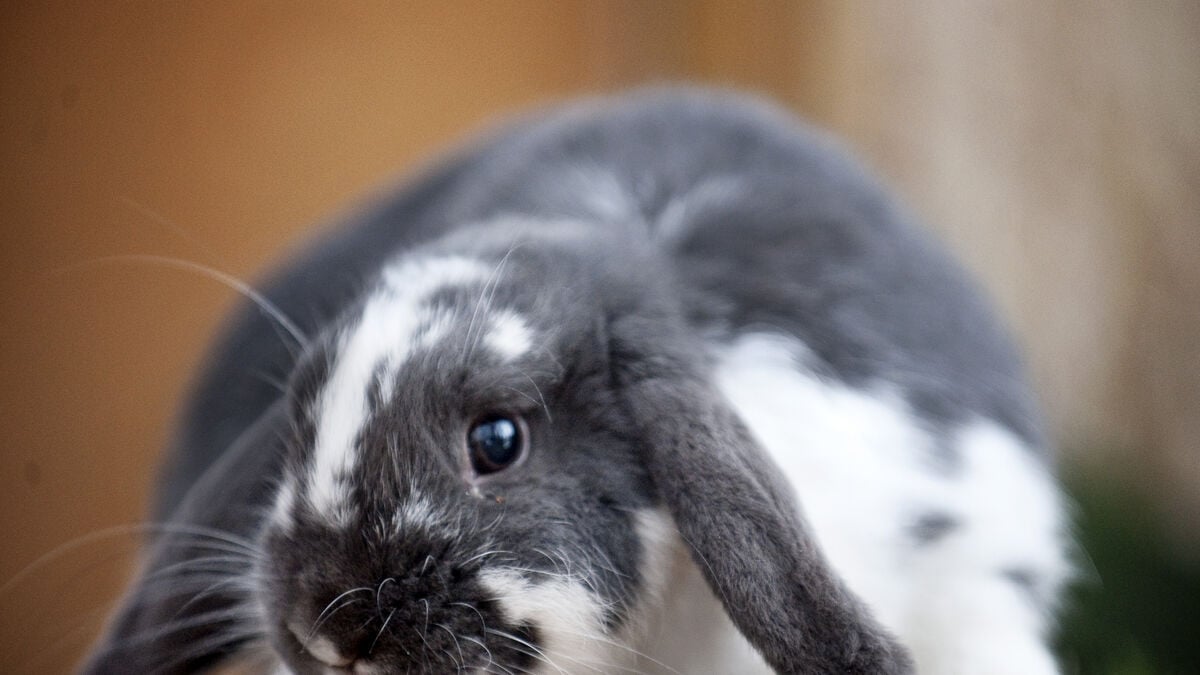
The study, led by the Royal Veterinary College, shows that ear shape plays a key role in whether rabbits develop ear problems. Out of a total of eleven problems identified, rabbits with floppy ears were more likely to have nine of them, including narrow ear canals, eczema, discharge, and other abnormalities that can be signs of painful inflammation or infection.
Head shape and weight were also found to affect the risk of ear problems.
The study's lead author, Maria Jackson, urges anyone who has a rabbit with floppy ears to pay attention to small signs of ear pain, such as their rabbit scratching its ears or shaking its head more than normal.
Rabbits naturally have ears that stand straight up, and hanging ears are an anomaly.
In the 19th century, rabbits began to be bred specifically for their drooping ears.
The English Aries, characterized by its very long, drooping ears, is usually cited as the first rabbit breed with drooping ears.
Today, there are a number of different breeds with drooping ears. The French Aries was developed in the 19th century by crossing the English Aries with the Belgian Giant, while the popular Dwarf Aries emerged in the mid-20th century by crossing the French Aries with the Ermine rabbit.
It has long been known that breeds with drooping ears are more likely to have ear problems, but no more extensive studies have been conducted.